Choosing the right Semkin Bipolar Forceps requires more than comparing prices or product photographs. Global buyers must examine jaw design, tip geometry, insulation quality, cable length, and generator compatibility. Small details matter. A 1 mm tip can influence visibility during delicate procedures.
This guide reviews the 2026 Semkin Bipolar Forceps types commonly considered by hospitals, distributors, and surgical equipment specialists. It considers straight, angled, bayonet, irrigating, and fine-tip models. Each type serves different surgical preferences. Coated and non-coated surfaces also create different cleaning and durability considerations. Dr. Elena Marovic, an electrosurgical equipment consultant with operating-room procurement experience, observes, “The safest choice is rarely the most impressive model; it is the forceps that matches the procedure, generator, and reprocessing system.”
That point deserves attention. A forceps may perform well in one theatre and poorly in another. User grip, tissue access, sterilization workflow, and staff training can change the result. Buyers should verify technical documents, intended use, material composition, and regional registration requirements before purchase. Supplier communication matters too. Ask for samples, compatibility information, warranty terms, and traceable quality records.
No ranking fits every operating room. Some specifications remain unclear until practical testing begins. That is a useful limitation, not a weakness. Reliable purchasing combines published data with clinician feedback and controlled evaluation. This introduction helps international buyers compare Semkin Bipolar Forceps with greater care, fewer assumptions, and a clearer understanding of real surgical needs.
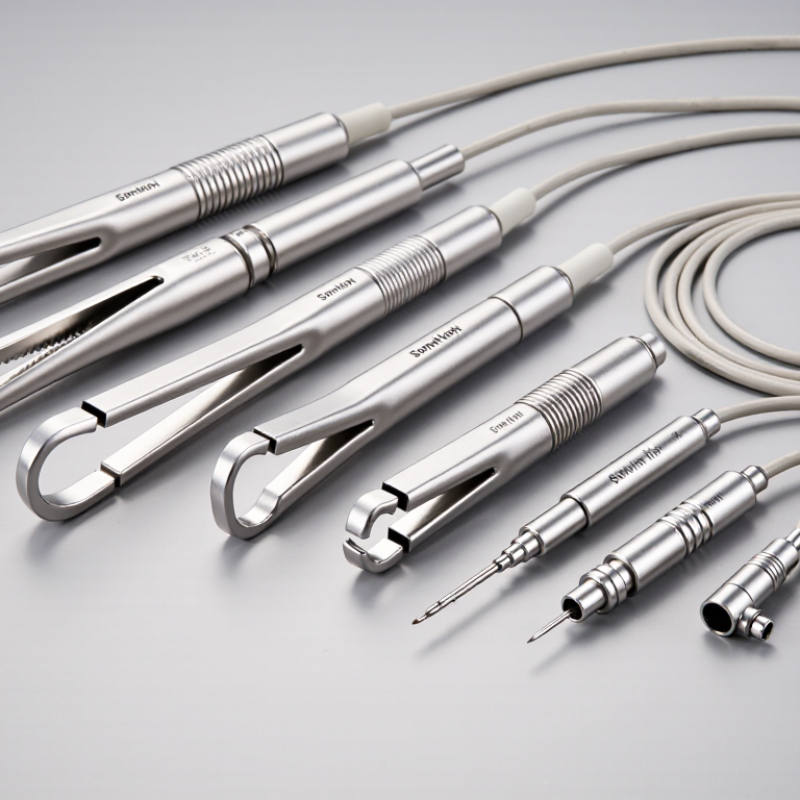
Bipolar forceps are precision surgical instruments used to grasp tissue and apply controlled electrical energy. Unlike monopolar tools, they pass current between two tips on the same instrument. This focused pathway can limit energy spread when used correctly. They are not ordinary tweezers. Their insulated shafts, fine tips, and ergonomic handles support delicate work in narrow surgical fields.
Surgeons commonly use bipolar forceps for coagulation during procedures involving small blood vessels or soft tissue. One tip contacts the target area, while the other completes the electrical circuit. The generator then delivers energy according to the selected setting. Pressure should remain gentle and deliberate. Excessive force may crush tissue, while excessive energy may cause unwanted thermal damage. Settings depend on tissue type, moisture, tip design, and the generator’s compatibility.
For global buyers, type selection should match the intended procedure. Fine angled tips can improve access in confined spaces. Wider tips may suit broader tissue handling. Reusable models require validated cleaning, inspection, and sterilization processes. Disposable versions can simplify workflow, but packaging and traceability still matter. The first attempt is rarely perfect. Users should receive hands-on training and follow institutional protocols. Even experienced teams should check insulation, alignment, cable condition, and tip cleanliness before use. A small defect can affect performance, visibility, and patient safety.
Bipolar forceps are electrosurgical instruments that deliver electrical energy between two insulated tips. The representative tip-width values below reflect common design categories: fine tips support precise coagulation, standard tips suit general hemostasis, wide tips provide broader tissue contact, and needle tips are intended for highly localized work. Actual dimensions vary by instrument design and surgical specialty.
2026 Top Semkin Bipolar Forceps Types for Global Buyers
Which Semkin Bipolar Forceps Types Are Available in 2026?
In 2026, global buyers can generally choose bipolar forceps by tip shape, insulation, length, and reuse model. Straight tips support clear, direct access in open procedures. Curved and angled tips can improve visibility around tissue edges. Bayonet patterns keep the surgeon’s hand away from the viewing line. Shape matters.
Fine, blunt, and fenestrated tips serve different handling needs. Fine tips suit delicate coagulation and precise dissection. Blunt tips may offer steadier tissue contact during broader work. Fenestrated tips can reduce tissue capture when controlled pressure is important. Non-stick coatings are also available in some product ranges, but performance depends on cleaning, power settings, and tissue condition. That assumption fails.
Buyers should compare reusable and single-use configurations carefully. Reusable forceps require validated cleaning, inspection, and sterilization procedures. Single-use models can simplify workflow, though packaging integrity and supply continuity need attention. Check shaft length, connector compatibility, insulation quality, tip alignment, and rated electrical specifications before approval. A visible gap between tips is not a minor defect; it can affect grasping and energy delivery. Product documentation, traceability, and applicable market certifications should support procurement decisions. The cheapest option may create hidden workload. Even experienced teams should reassess their preferred tip shape after observing real operating-room access, surgeon feedback, and repeated instrument inspection.
| Bipolar Forceps Type | Jaw Configuration | Typical Tip Profile | Common Surgical Applications | Main Functional Benefit | Key Limitation or Consideration | Insulation Requirement | Reusable or Single-Use Availability | Buyer Selection Notes |
|---|---|---|---|---|---|---|---|---|
| Standard Straight Bipolar Forceps | Two aligned, electrically insulated straight tips | Fine or medium-width pointed tips | General electrosurgery, tissue grasping, coagulation, and dissection | Versatile handling and straightforward visual alignment | Less suitable for deep or angled anatomical sites | Insulation should extend to the distal working area without exposed conductive surfaces except at the jaws | Both commonly available | Suitable as a general-purpose option; verify tip geometry, working length, and connector compatibility |
| Angled Bipolar Forceps | Jaws positioned at a fixed angle to the shaft | Angled fine, blunt, or tapered tips | Access around structures where a straight instrument may obstruct the operative view | Improves approach angle and hand positioning | Angle may limit use in confined spaces if it does not match the surgical approach | Continuous, durable insulation is required around the angled shaft | Both commonly available | Compare the angle, jaw opening, shaft length, and left- or right-handed handling requirements |
| Bayonet Bipolar Forceps | Offset shaft with tips aligned beyond the hand line | Fine tapered or blunt tips | Microsurgery, neurosurgery, ophthalmic procedures, and other precision work | Helps maintain a clear line of sight and reduces hand obstruction | Offset geometry may require user familiarity and careful tip alignment | Insulated shaft and controlled exposed jaw area are essential | Both commonly available | Check offset height, tip length, balance, and compatibility with the intended microscope or magnification system |
| Curved Bipolar Forceps | Curved or swept jaws following the instrument axis | Curved pointed, tapered, or blunt tips | Dissection and coagulation around curved or difficult-to-reach tissue planes | Facilitates lateral access and tissue approach from a non-linear direction | Curvature can reduce precision when a direct approach is required | Insulation must remain intact along the curved shaft and neck | Both commonly available | Select the curve radius and direction according to the operative field and preferred hand technique |
| Fine-Tip Micro Bipolar Forceps | Small, closely aligned jaws for delicate manipulation | Ultra-fine pointed or micro-tapered tips | Microsurgical coagulation and manipulation of small vessels or delicate tissue | High precision with limited contact area | Fine tips can bend, chip, or become misaligned if handled improperly | High-quality insulation and accurate jaw alignment are particularly important | Both commonly available | Review tip straightness, closing force, surface finish, and cleaning instructions before purchase |
| Blunt-Tip Bipolar Forceps | Parallel jaws with rounded or blunt distal ends | Rounded, atraumatic, or broad blunt tips | Coagulation where reduced tissue puncture is preferred | Lower risk of catching or puncturing tissue compared with sharp tips | May provide less pinpoint access in narrow anatomical spaces | Insulation should prevent unintended current flow along the shaft | Both commonly available | Compare jaw width and compression profile to balance tissue contact with required coagulation control |
| Broad-Jaw Bipolar Forceps | Wider opposing jaws with increased tissue contact area | Flat, broad, or slightly rounded surfaces | Coagulation of larger tissue sections or vessels when broad contact is appropriate | Distributes pressure and energy across a larger area | Less appropriate for highly localized coagulation or delicate microdissection | Insulated handles and shaft are required; exposed jaw dimensions should be clearly specified | Both commonly available | Confirm jaw width, maximum tissue thickness guidance, and generator requirements |
| Non-Stick Bipolar Forceps | Standard or angled jaws with a low-adherence surface treatment or material design | Fine, tapered, or blunt non-stick tips | Repeated coagulation where reduced tissue adherence is desirable | May reduce tissue sticking and simplify cleaning between applications | Surface performance can decline with improper cleaning, abrasion, or excessive thermal exposure | Insulation and any non-stick coating must be inspected before each use | Both commonly available | Ask for coating or material details, reprocessing limits, and maintenance instructions |
| Irrigating Bipolar Forceps | Bipolar jaws integrated with an irrigation channel or fluid outlet | Fine or medium tips with controlled irrigation delivery | Procedures requiring simultaneous irrigation and bipolar coagulation | Can help manage heat, smoke, and tissue drying during electrosurgery | More complex design; fluid path blockage and connector requirements must be managed | Electrical insulation and fluid-channel integrity must both be verified | Both may be available | Confirm tubing connection, irrigation flow requirements, cleaning method, and generator compatibility |
| Foot-Controlled or Integrated-Switch Bipolar Forceps | Forceps paired with a compatible activation control system | Varies from fine pointed to broad or blunt tips | Procedures requiring controlled activation without changing hand position | May improve workflow and activation convenience | Requires confirmed compatibility with the electrosurgical generator and accessories | Insulation, cable integrity, and activation controls require routine inspection | Both may be available | Verify connector type, activation method, cable length, generator settings, and applicable regulatory documentation |
Bipolar forceps differ mainly in tip geometry, shaft angle, insulation, and handling. Straight tips suit open procedures and direct tissue access. Bayonet or curved shafts improve visibility in narrow fields. Fine, blunt, and serrated tips also behave differently. Fine tips support precise coagulation near small vessels, while broader tips distribute pressure across thicker tissue.
Function depends on more than appearance. A slim insulated shaft can reduce accidental contact, but it may feel less rigid during deep manipulation. Irrigation channels may limit tissue sticking, although they add cleaning and maintenance demands. Reusable models require validated reprocessing; disposable models can simplify turnover but increase clinical waste. No design wins everywhere. That is worth questioning.
The Lancet Commission on Global Surgery estimated about 313 million surgical procedures occur worldwide each year. Even small handling differences can affect many operating rooms. The WHO Global Patient Safety Action Plan 2021–2030 emphasizes safer devices, training, and reliable workflows. Buyers should therefore compare tip temperature control, insulation integrity, generator compatibility, and cleaning instructions. A 2023 AAMI sterilization guidance update also reinforces documented reprocessing procedures for reusable instruments. Testing should include wet tissue, repeated activation, and awkward angles. Manufacturer claims are useful, but independent bench data is better. In practice, a forceps pair that feels perfect on a tray may become tiring after an hour. That detail is easy to miss.
Global buyers should match the forceps type to the procedure, not only the advertised price.
Fine, blunt, angled, and bayonet designs offer different handling advantages. Fine tips support delicate dissection, while blunt tips may suit broader tissue contact. Angled shafts can improve access in narrow surgical fields. Shaft length also matters when working through deeper cavities. A small mismatch can make a familiar procedure feel surprisingly awkward.
Check the tip material, insulation quality, jaw alignment, and closure pressure. The jaws should meet evenly without excessive force. Inspect sample units under bright light.
Look for rough edges, exposed metal, uneven coating, or loose joints. I would not trust catalog images alone. They often hide details that affect control.
Confirm connector compatibility with the intended generator, including power settings and monitoring features. A forceps that connects physically may still perform poorly electrically.
Sterilization and documentation deserve equal attention.
Verify whether the model is reusable or single-use, and request validated processing instructions. Check packaging strength, lot traceability, shelf life, and language-specific instructions for use.
Export documents should match the destination market’s medical-device requirements. Ask for test reports covering insulation, leakage current, thermal spread, and repeated sterilization cycles when relevant.
Clinical feedback is useful, but it can be incomplete. A short trial with trained staff may reveal hand fatigue, poor visibility, or an unsuitable jaw profile before a large order.
International buyers now evaluate bipolar forceps beyond price and delivery speed. Fortune Business Insights’ 2024 electrosurgical instruments report projects sustained market growth through 2032, increasing pressure on suppliers to prove consistency. Procurement teams should request material certificates, batch traceability, sterilization instructions, and inspection records. Stainless steel grade matters. So does jaw alignment.
Clinical evaluation should follow ISO 14971 risk-management principles and ISO 13485 quality-system controls. Buyers commonly inspect insulation under magnification, test electrical leakage, and measure jaw closure across repeated cycles. IEC 60601-2-2 provides relevant requirements for high-frequency surgical equipment. The forceps must also match the generator, cable, connector, and intended tissue procedure.
Reusable models require validated cleaning and sterilization data, not vague claims. Disposable models need secure packaging and clear shelf-life evidence. The World Health Organization reports that approximately one in ten patients experiences harm in healthcare, with many incidents considered preventable. Instrument reliability is only one part of that risk, but it deserves practical attention. A supplier may provide polished samples while production batches vary. Independent pre-shipment testing can expose this weakness. Buyers should compare thermal spread, sticking, grip pressure, and performance after repeated sterilization. Some evaluation plans remain too laboratory-focused. Operating-room feedback should influence the final decision.
Bipolar forceps grasp tissue and deliver controlled electrical energy during surgery. Current travels between two tips on the same instrument. They are not ordinary tweezers.
Bipolar forceps create a focused electrical pathway between their two tips. This design may limit energy spread when used correctly. Technique still matters.
Straight tips support direct access in open procedures. Curved and angled tips can improve visibility around tissue edges. Bayonet shapes keep the hand away from the viewing line.
Fine tips support delicate coagulation and precise dissection. Blunt tips may provide steadier contact across broader tissue areas. Fenestrated tips can reduce unwanted tissue capture.
No. Their performance depends on cleaning, power settings, and tissue condition. That assumption can fail.
Inspect insulation, tip alignment, cable condition, and tip cleanliness. Confirm connector compatibility and electrical ratings. A small defect can affect visibility and patient safety.
Reusable models require validated cleaning, inspection, and sterilization procedures. Single-use models can simplify workflow, but packaging and traceability still matter. Convenience is not everything.
Settings depend on tissue type, moisture, tip design, and generator compatibility. Excessive pressure may crush tissue. Excessive energy may cause thermal damage.
Users should receive hands-on training and follow institutional protocols. Teams should review real access, surgeon feedback, and inspection findings. The first attempt is rarely perfect.
Semkin Bipolar Forceps are specialized surgical instruments used with compatible electrosurgical systems to grasp tissue and apply controlled bipolar energy for coagulation. In 2026, global buyers may encounter several types, including standard, fine-tip, angled, curved, bayonet, and longer-shaft configurations. These options are designed for different surgical fields and access requirements, with variations in tip geometry, working length, grip style, insulation, and visibility. Some models emphasize precise dissection, while others are intended for stable handling or access to narrow and deep areas.
Before selecting a type, buyers should compare the intended procedure, tissue requirements, connector compatibility, reusable or single-use format, material quality, insulation performance, ergonomic design, packaging, and sterilization specifications. International sourcing should also involve supplier verification, product documentation, quality-control records, sample evaluation, consistency between batches, delivery capability, and compliance with applicable import and medical-device requirements. A careful comparison of design, function, safety information, and total procurement cost can help buyers choose suitable Semkin Bipolar Forceps for reliable clinical use.