[email protected] +92-320-6688665 Defence Road, Sialkot 51310, Pakistan
ISO 13485:2016 · CE Marked · FDA Registered Exporting to 45+ Countries
0%

Choosing Cleveland Bone Forceps is not a simple matter of comparing prices, finishes, or catalogue photographs. These instruments must match the surgeon’s technique, the bone’s location, and the pressure required during grasping. A forceps that feels balanced in the hand may still slip, damage tissue, or fatigue quickly during repeated procedures.

Atul Gawande, a surgeon and patient-safety authority, wrote, “The volume and complexity of what we know has exceeded our individual ability to deliver its benefits correctly, safely, or reliably.” His observation applies to surgical instrument purchasing. A reliable buying decision needs more than brand familiarity. It requires attention to jaw design, ratchet control, working length, stainless-steel quality, surface finishing, and sterilization compatibility.

Small details matter.

This guide presents seven practical tips for evaluating Cleveland Bone Forceps before purchase. It considers grip comfort, jaw alignment, closing pressure, durability, cleaning access, manufacturer documentation, and supplier support. These points can help hospitals, surgical distributors, and operating-room teams reduce avoidable purchasing mistakes.

Still, no checklist can replace clinical judgment. A product may perform well in one procedure and feel unsuitable in another. That is an important limitation. Buyers should request samples, inspect the hinge under light, and assess the instrument with gloved hands. They should also confirm whether the supplier provides traceability, maintenance guidance, and responsive after-sales service.

The best choice is not always the cheapest one. It is the forceps that delivers controlled handling, dependable performance, and consistent quality across real surgical conditions.
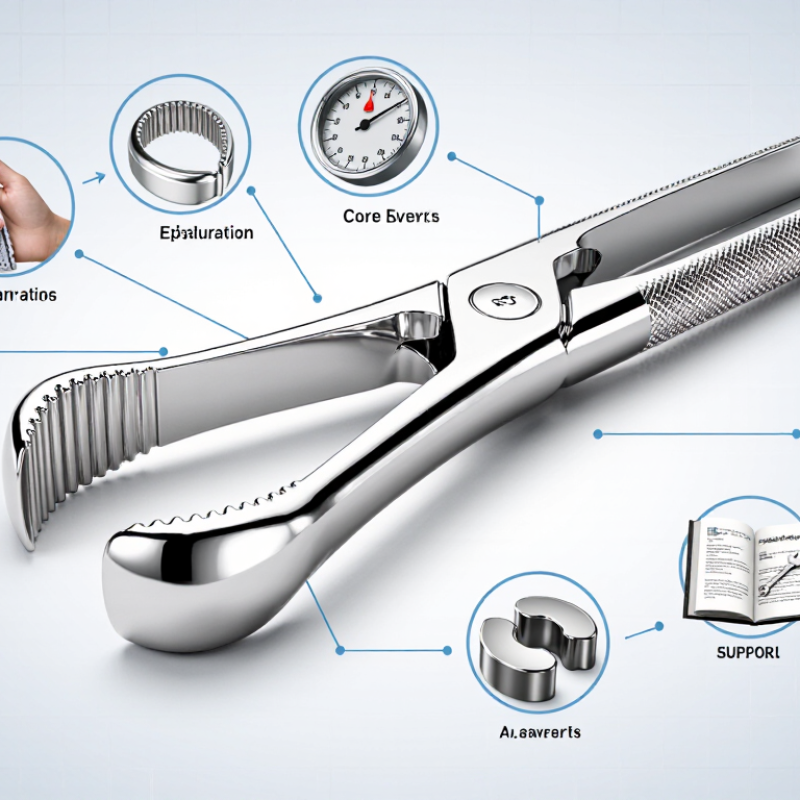
7 Tips for Buying Cleveland Bone Forceps?

Understanding Cleveland Bone Forceps and Their Surgical Uses

Understanding Cleveland bone forceps begins with their working role. These hand instruments help surgeons grasp, trim, or remove small bone fragments during controlled procedures. Their jaws deliver focused pressure where visibility and access are limited. In orthopedic, spinal, and selected dental settings, the correct pattern can improve handling around delicate tissue. Jaw shape matters. A narrow profile reaches confined spaces, while broader jaws support firmer bites. Serrations can improve grip, but they may mark softer material. The instrument should feel balanced, not merely heavy. A smooth hinge and consistent closure often reveal better workmanship. Yet no forceps replace careful technique, anatomical knowledge, or a clear surgical plan.

When buying Cleveland bone forceps, inspect the jaw alignment under bright light. Closed jaws should meet evenly without a visible gap. Test the ratchet, if present, through every position. It should engage cleanly and release without a sudden snap. Choose corrosion-resistant surgical steel with a finish that tolerates validated cleaning and sterilization cycles. Confirm the intended procedure, jaw length, bite width, and handle comfort with the clinical team. A reusable instrument also needs traceable maintenance and regular inspection. Single-use options require secure packaging and an intact sterile barrier. Be cautious with vague specifications. “Strong” is not a measurement. “Universal” may hide poor access. I would also question whether a smaller jaw offers better control; more metal is not always better. Manufacturer instructions and facility protocols remain essential, because cleaning failures can damage both performance and patient safety.

7 Tips for Buying Cleveland Bone Forceps

Cleveland bone forceps are rongeur-style instruments used to bite, trim, or remove small bone fragments. Before purchase, compare jaw design, cutting function, handling, and sterilization requirements with the intended surgical application.

The chart maps seven practical buying checks to the surgical functions they support. “1” indicates that the feature is directly relevant to the listed task, while “0” indicates that it is not the primary purpose. Cleveland bone forceps are intended for bone handling and should not be selected as general-purpose tissue forceps or wire cutters.

Assessing Jaw Design, Size, and Bone-Cutting Capacity

Choosing Cleveland bone forceps requires more than checking the handle shape. Jaw design controls access, grip, and cutting behavior. A narrow, angled jaw suits confined posterior areas. A wider jaw offers stronger contact on thicker cortical bone. Serrations should hold fragments without crushing them excessively. I have found that polished jaws can look precise, yet poor alignment may cause sliding. That small defect matters.

Tip 1: Match the jaw to the target bone. Measure jaw length, width, opening angle, and bite depth. Do not assume a larger jaw cuts better. Excessive size can obstruct the surgical field. The instrument should open smoothly and close evenly. A 2024 AORN guideline emphasizes selecting instruments according to the procedure, tissue, and required control.

Bone-cutting capacity depends on geometry and leverage. Review the stated cutting range, jaw hardness, and manufacturer test method. Compare results only when testing conditions match. A forceps designed for delicate trimming should not be used on dense cortical sections. That shortcut can deform the jaws. WHO’s Global Patient Safety Report 2024 estimates that one in ten patients experiences harm during healthcare, with over half considered preventable. Instrument selection is one practical control point.

Tip 2: Ask for measurable evidence. Tip 3: Inspect the bite under bright light. Hold the forceps closed and check for gaps. Test the hinge for looseness, then examine the cutting edges for nicks. Documentation should include cleaning compatibility and inspection intervals. I would also reassess size after a trial procedure. The first choice is not always the best choice.

7 Tips for Buying Cleveland Bone Forceps? - Assessing Jaw Design, Size, and Bone-Cutting Capacity

Tip Buying Dimension What to Assess Common Options or Reference Range Why It Matters Practical Selection Check
1 Jaw Design Confirm whether the jaws are designed for end-cutting, side-cutting, or a combined cutting action. Check that the jaws meet evenly without visible gaps. End-cutting jaws are useful for trimming projecting bone; side-cutting jaws are useful when access is lateral. Some patterns combine both functions. The cutting direction affects visibility, access, and how much surrounding tissue must be displaced during the procedure. Close the instrument without force. The cutting edges should align consistently from heel to tip and should not rock laterally.
2 Jaw Profile and Working Depth Compare jaw width, length, thickness, and profile. A narrow, tapered jaw generally provides more access in confined areas, while a broader jaw supports larger bites. Slim jaws for restricted approaches; medium jaws for general bone trimming; broader jaws for stronger purchase on accessible bone. Jaw geometry influences reach, visibility, bite control, and the amount of bone removed with each closing action. Select the smallest jaw that can safely grasp the intended bone. Avoid choosing a wider jaw solely to increase bite size.
3 Overall Instrument Length Match the shaft length to the operative field and the required reach. Excessively long instruments can reduce tactile control, while short instruments may limit access. Common surgical rongeur lengths are approximately 15–25 cm, with shorter and longer patterns available for specific access requirements. Length changes leverage, hand position, visibility, and the ability to work around adjacent structures. Hold the instrument in the intended grip and confirm that the jaw can reach the target without the handle contacting the patient or drape.
4 Bone-Cutting Capacity Review the manufacturer’s stated intended use and maximum recommended bite. Do not assume that a larger jaw or heavier handle can cut every type of bone. Use for controlled removal of small bone fragments, thin cortical projections, or cancellous bone as appropriate. Dense or thick cortical bone may require a different instrument. Forcing the jaws beyond their design capacity can damage the cutting edges, joint, or alignment and may produce uncontrolled bone fracture. Look for a clearly stated capacity or intended tissue range. If no capacity is provided, ask the supplier before purchase rather than estimating by appearance.
5 Single-Action or Double-Action Mechanism Determine whether the forceps use a single-action or double-action joint. Double-action designs typically provide greater jaw opening with less handle travel and improved mechanical advantage. Single-action for simpler, lighter-duty designs; double-action for larger jaws, deeper access, or applications requiring increased leverage. The mechanism affects hand effort, opening width, control, and the force transmitted to the jaw tips. Open and close the instrument repeatedly. Movement should be smooth, with no catching, excessive play, or sudden snap at the joint.
6 Handle Comfort and Control Assess ring size, handle shape, spring tension, grip texture, and whether the instrument allows controlled one-handed operation. Ring handles support familiar finger control; contoured or textured handles may improve stability when wearing surgical gloves. A comfortable handle reduces fatigue and helps the user regulate bite depth instead of applying excessive force. Check that the fingers do not contact the rings or spring under compression and that the handle does not twist during a simulated bite.
7 Material, Finish, and Reprocessing Verify that the instrument is made from surgical-grade stainless steel or another validated material and is compatible with the facility’s cleaning, disinfection, and sterilization process. Look for corrosion-resistant construction, smooth accessible surfaces, a durable satin or polished finish, and documented sterilization instructions. Proper material and reprocessing compatibility help preserve jaw alignment, cutting performance, surface integrity, and patient safety. Request care instructions, inspect the hinge and serrations for areas that retain debris, and confirm that replacement or repair service is available.
Selection note: Bone-cutting capacity depends on jaw geometry, instrument leverage, bone density, and the manufacturer’s validated intended use. Always follow the product instructions and facility protocols; do not use excessive force to compensate for an unsuitable jaw pattern or size.

Checking Material Quality, Finish, and Sterilization Compatibility

7 Tips for Buying Cleveland Bone Forceps

When evaluating Cleveland bone forceps, start with material quality. Surgical-grade stainless steel should resist corrosion, repeated handling, and mechanical stress. Ask for the steel specification and production traceability. Vague descriptions deserve caution. Check jaw hardness, alignment, and closing pressure by hand. The jaws should meet evenly without wobbling or catching. Small defects matter.

Inspect the finish under bright light. A smooth, uniform surface supports easier cleaning and reduces places where residue can hide. Look closely at serrations, box joints, and hinge areas. Pitting, discoloration, sharp burrs, or uneven polishing are warning signs. The instrument should feel balanced, not overly heavy at the tip.

I once focused too much on appearance and overlooked hinge movement, which was a useful correction.

Sterilization compatibility needs documented evidence, not assumptions. Confirm whether the forceps tolerate the facility’s validated steam cycle, temperature, exposure time, and drying process. If low-temperature sterilization is used, request specific compatibility data. Follow the cleaning and lubrication instructions, especially around joints. Inspect instruments after several cycles, because finish changes may appear gradually. A supplier should provide clear instructions for use, inspection criteria, and maintenance limits. If those details are missing, pause the purchase. Clearance alone does not prove dependable performance.

Comparing Handle Comfort, Control, and Operating Precision

When buying Cleveland bone forceps, judge the handle before the jaw. Tip 1: Hold the instrument with gloved hands for one minute. Tip 2: Check whether the rings fit without stretching your thumb. Tip 3: Prefer smooth finger rings with rounded edges. Small details matter during repeated use. The U.S. Bureau of Labor Statistics reported a hospital recordable injury rate of about 6 cases per 100 full-time workers in 2023. Awkward gripping can add unnecessary strain.

Tip 4: Test the spring tension with controlled opening and closing. Excessive resistance may reduce precision during delicate bone removal. Tip 5: Look for a lock that engages easily, but does not interrupt hand movement. Experienced users should test this while wearing double gloves. Tip 6: Compare jaw alignment under bright light. The tips should meet evenly, without lateral play or visible gaps. I prefer moderate handle resistance, although that preference may not suit every operator.

Tip 7: Inspect cleanability around the hinge, lock, and finger rings. The World Health Organization’s 2022 infection-prevention report estimated healthcare-associated infections in 7 of 100 acute-care patients in high-income countries. Reprocessing design therefore affects operating reliability, not only hygiene. Select corrosion-resistant construction and verify compatibility with your facility’s validated sterilization cycle. A forceps may feel excellent initially, yet become stiff after repeated processing. That deserves a trial.

Verifying Manufacturer Standards, Pricing, and Supplier Support

Tip 1: Confirm the manufacturer’s quality system before comparing prices. Ask for current certificates, inspection records, and material specifications. Standards should cover stainless steel composition, hardness, surface finishing, and functional testing.

Tip 2: Request a sample Cleveland bone forceps. Check jaw alignment, ratchet engagement, handle comfort, and smooth movement. A close visual inspection can reveal rough edges or uneven polishing.

Tip 3: Compare complete quotations, not unit prices alone. Include packaging, shipping, taxes, replacement terms, and minimum order quantities. A cheaper instrument may require more inspection and create hidden costs.

Tip 4: Ask how each batch is traced. Reliable manufacturers should provide lot numbers and documented inspection results. Records matter when performance questions appear later.

Tip 5: Evaluate supplier support before placing a large order. Clear replies, realistic lead times, and technical documents show operational reliability. Ask who handles damaged goods and how quickly they respond.

Tip 6: Check whether the supplier offers customization carefully. Jaw patterns, handle finishes, and packaging can affect price and delivery. I have learned that small changes sometimes cause unexpected delays.

Tip 7: Seek references from professional purchasers or clinical equipment distributors. Their experience may reveal recurring problems that product photos hide. Do not rely on polished claims alone.

Manufacturer standards can be difficult to interpret without technical knowledge. When uncertain, ask an independent quality professional to review the documents. That extra step may feel slow, but it protects the purchase.

FAQS

How should I test the handle comfort of bone forceps?

Wear gloves and hold the instrument for one minute. The rings should fit without stretching your thumb. Rounded edges usually feel better during repeated use. Still, hand size changes the result.

What spring tension supports precise operation?

Open and close the handles slowly with controlled pressure. Excessive resistance may reduce precision during delicate bone removal. Moderate resistance is often comfortable. That preference is not universal.

How can I check jaw alignment?

Inspect the jaws under bright light. The tips should meet evenly, without gaps or sideways movement. Uneven contact can affect control. Small defects matter.

What should I examine around the lock and hinge?

The lock should engage easily without interrupting hand movement. Test it while wearing double gloves if possible. Inspect the hinge, lock, and finger rings for cleanability. Hidden residue can create maintenance problems.

Why does sterilization compatibility matter?

Confirm compatibility with your facility’s validated sterilization cycle. Repeated processing may make an instrument stiff. Choose corrosion-resistant construction. Test it over time.

Which documents should I request before purchasing?

Request current quality certificates, inspection records, and material specifications. Documents should address steel composition, hardness, surface finish, and functional testing. Ask for batch traceability and lot numbers. Paperwork alone is not proof.

Why should I request a sample instrument?

A sample lets you assess jaw alignment, ratchet engagement, comfort, and movement. Look for rough edges or uneven polishing. Photos can hide these details. A sample may reveal inconvenient truths.

What costs should a complete quotation include?

Compare packaging, shipping, taxes, replacement terms, and minimum order quantities. Do not compare unit prices alone. A cheaper instrument may require extra inspection. The final cost can surprise you.

How can I evaluate supplier support?

Check response speed, realistic lead times, technical documents, and damaged-goods procedures. Ask who handles problems and how quickly they respond. Professional references may reveal recurring issues. I would not trust polished claims alone.

Conclusion

Choosing the right Cleveland Bone Forceps requires careful evaluation of their design, performance, and long-term usability. Begin by understanding how the instrument is used in different surgical procedures, then assess the jaw shape, size, opening range, and bone-cutting capacity to ensure they match the intended application. A well-designed jaw should provide stable contact, controlled force, and reliable cutting performance without unnecessary tissue disruption.

Material quality and surface finish are also essential, as durable, corrosion-resistant construction supports repeated sterilization and professional use. In addition, consider handle comfort, grip security, balance, and the level of precision the instrument allows during operation. Finally, compare pricing based on overall value rather than cost alone, and verify the supplier’s quality standards, documentation, warranty terms, and after-sales support. These factors can help professionals select Cleveland Bone Forceps that provide dependable control, safe handling, and consistent performance.

Ethan Caldwell

Ethan Caldwell

Ethan Caldwell is a professional marketing specialist dedicated to helping businesses understand products, markets, and customer needs through clear, practical, and well-researched content. With a strong knowledge of the company’s solutions, service standards, and industry applications, Ethan......