[email protected] +92-320-6688665 Defence Road, Sialkot 51310, Pakistan
ISO 13485:2016 · CE Marked · FDA Registered Exporting to 45+ Countries
0%

Choosing among the 5 Best Fat Injection Cannula Type I options requires more than comparing prices or product photos. In practice, cannula performance depends on tip design, shaft flexibility, inner diameter, side-port geometry, and compatibility with the injection system. These details affect handling, pressure control, and the consistency of fat delivery. Small differences matter.

Dr. Sydney R. Coleman, a leading pioneer in structural fat grafting, has emphasized a key principle: “Fat is living tissue, not an inert filler.” That perspective remains important when evaluating any Fat Injection Cannula Type I. A well-designed cannula should support controlled placement while limiting unnecessary mechanical stress. However, no cannula can replace careful preparation, sterile technique, anatomical knowledge, or appropriate patient selection.

This guide examines five Type I options through a practical clinical lens. We consider cannula length, gauge, material quality, connector security, and tip configuration. We also discuss how each option may feel during use, from smooth advancement to subtle resistance near delicate tissue planes. The ranking is not absolute. Surgeon preference, graft viscosity, treatment area, and local regulatory requirements can change the outcome. Product descriptions can also be incomplete. That is worth questioning. Readers should verify technical specifications, manufacturer documentation, and validated instructions before making a professional decision.
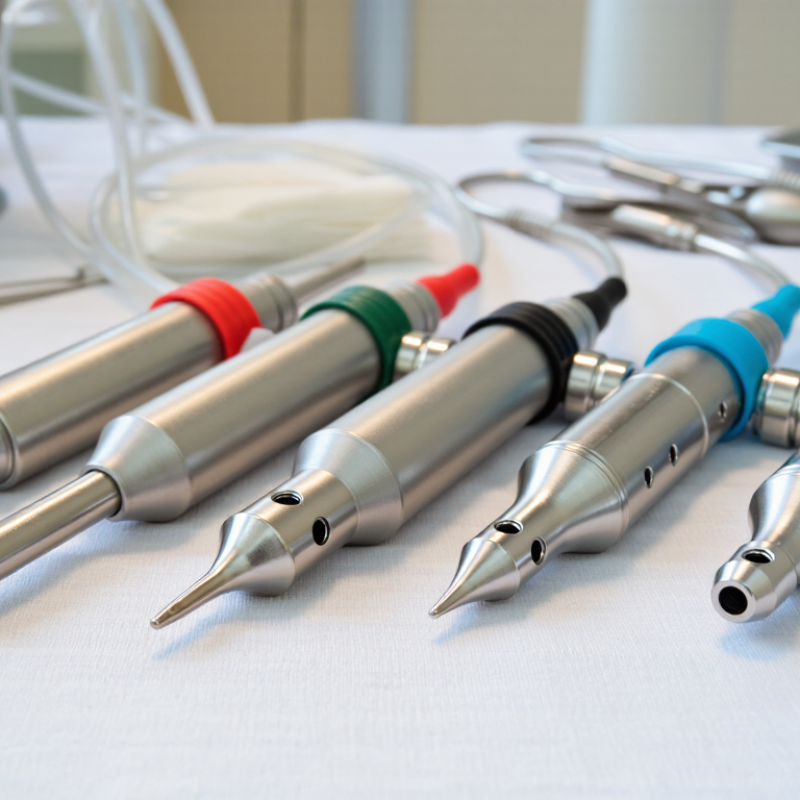
5 Best Fat Injection Cannula Type I Options?

Understanding Type I Fat Injection Cannulas and Their Clinical Role

Type I fat injection cannulas are designed for controlled placement of processed fat, but “Type I” may differ across technical standards. Clinicians should confirm the definition, port design, diameter, and intended tissue plane before use. A blunt, rounded tip can reduce cutting trauma, while side openings may support smoother deposition. Selection should match the graft texture, injection site, and operator’s anatomical experience.

Five practical Type I configurations
include a short straight cannula for facial areas, a longer straight cannula for broader access, a gently curved cannula for contour transitions, a multiport cannula for distributed placement, and a smaller-bore option for fine correction. These are not universal “best” choices. Tissue resistance, cannula control, and graft consistency can change the result. Clinical training, sterile handling, gentle pressure, and documented protocols remain essential. Even experienced users should reassess technique when bruising, blockage, or uneven flow appears. Small details matter.

Tips: Check the manufacturer’s instructions and institutional protocol before treatment. Prime the cannula carefully, avoid excessive force, and observe resistance continuously. Keep the instrument moving during deposition when clinically appropriate. Inspect packaging and integrity before use. A useful reflection is simple: if flow feels unusually difficult, changing the cannula may be safer than pushing harder.

Key Design Features That Define Cannula Performance

5 Best Fat Injection Cannula Type I Options?

Key Design Features That Define Cannula Performance

A Type I fat injection cannula should be judged by design, not appearance. Five features matter: rounded tip, side ports, shaft rigidity, internal diameter, and surface finish. A rounded tip may reduce tissue catching during controlled movement. Side ports can distribute material more evenly than a single end opening. However, port placement changes pressure and flow. That detail deserves careful attention.

Shaft rigidity helps the cannula follow the intended path without excessive bending. Too much flexibility may reduce control, while excessive stiffness can feel harsh in delicate tissue. Internal diameter also affects resistance, delivery speed, and the force required for injection. In practical testing, smooth inner walls support steadier flow. They may also reduce unwanted retention, though performance depends on material properties and preparation.

The outer surface should move smoothly and show consistent finishing. Small defects can increase drag or complicate cleaning. Sterile packaging, traceable manufacturing, and validated quality checks support reliable clinical use. Yet no design is perfect. A larger port is not automatically better. A thinner shaft is not always more precise. Clinicians should match cannula geometry with the treatment area, material characteristics, and their own handling technique. I would also review real-world feedback instead of trusting specifications alone. That step is easy to overlook. A careful selection process remains more dependable than chasing one “best” option.

Five Type I Cannula Options for Different Injection Procedures

For this guide, Type I means a blunt, side-opening fat-injection cannula. Terminology can vary, so confirm the supplier’s classification before purchase. The ISAPS 2023 Global Survey recorded more than 2.2 million liposuction procedures worldwide. That volume highlights the need for controlled, consistent instruments.

Five Type I cannula options suit different procedures. A short, single-opening cannula supports precise facial fat placement. A fine multi-hole cannula helps create smoother breast contours. A three-hole Mercedes-style cannula distributes small fat parcels evenly.

A curved cannula can follow the cheek, jawline, or hip contour. A wider-bore cannula supports larger-volume transfer, but it may reduce precision. Length, diameter, hole design, and surgeon handling all affect deposition.

Published reports often compare survival rates, yet cannula choice remains only one variable. That point is easy to overlook.

Tips: Match the cannula to tissue thickness and injection volume. Use blunt, low-trauma handling. Confirm sterility, flow resistance, and hole symmetry before use. Clinical experience matters more than a catalog label. I would not select a cannula from diameter alone. A practical trial with saline may reveal poor control before a procedure. Follow current training, device instructions, and applicable medical regulations.

How to Compare Cannula Size, Tip Shape, and Material

5 Best Fat Injection Cannula Type I Options?

Choosing a Type I fat injection cannula requires more than comparing prices. Cannula size affects flow, pressure, and control during tissue placement. Smaller diameters may support finer delivery, but they can increase resistance and clogging risks. Larger diameters often allow smoother passage of thicker fat. Measure the inner diameter, not only the gauge label. Labels can vary between manufacturers.

Tip shape changes handling. A rounded, blunt tip may reduce snagging and provide predictable movement. Side ports can distribute material across a wider area, while a single opening may offer more focused placement. Port position matters, too. Reviewers should inspect the tip under magnification. Tiny burrs or uneven edges deserve attention. They are easy to overlook.

Material also influences performance. Surgical stainless steel usually provides firm control, durability, and straightforward inspection. Flexible polymer options may feel gentler and reduce metal contact, but they can bend or offer less tactile feedback. Check surface finish, connector security, cleaning instructions, and compatibility with the intended syringe. A practical comparison should include validated testing, traceability, and applicable regulatory documentation. Do not rely on marketing photographs alone. Even experienced users can misjudge a cannula when comfort replaces measurement. Use qualified clinical judgment and follow approved protocols.

5 Best Fat Injection Cannula Type I Options: Comparing Size, Tip Shape, and Material

Nominal outside diameters are based on commonly used gauge dimensions. Tip shape and material should be verified against the specific cannula’s technical documentation.

Option Nominal Gauge Outside Diameter Typical Tip Shape Common Material Typical Selection Rationale
Option A 12G 2.70 mm Rounded blunt, single side port Medical-grade stainless steel Higher flow potential for larger-volume transfer
Option B 14G 2.10 mm Rounded blunt, single side port Medical-grade stainless steel Balanced choice for flow and access
Option C 16G 1.65 mm Rounded blunt, multiple side ports Medical-grade stainless steel More controlled distribution through smaller access points
Option D 18G 1.20 mm Rounded blunt, small side port Medical-grade stainless steel Useful where a smaller external diameter is preferred
Option E 20G 0.90 mm Rounded blunt, small side port Medical-grade stainless steel Smallest profile among the compared options

Larger cannulas generally provide a greater nominal passage area, while smaller cannulas may support access through smaller openings. A rounded blunt tip is commonly selected to reduce cutting action compared with a sharp tip. Actual flow, tissue handling, and compatibility depend on the cannula’s internal diameter, wall thickness, port geometry, length, and intended clinical use.

Safety, Sterilization, and Selection Considerations

5 Best Fat Injection Cannula Type I Options?

Safety begins with the cannula, not the product label. For Type I fat injection procedures, clinicians may compare five practical designs: blunt single-hole, multi-hole, curved-tip, flexible-shaft, and ultrasound-compatible cannulas. A blunt tip can reduce accidental vessel entry, while side openings may distribute fat more evenly. Curved models can improve access around tight contours. Flexible shafts feel less traumatic, but they may reduce placement control. That trade-off is easy to underestimate.

Sterilization requires documented processing, not visual confidence. AAMI ST79 recommends validated cleaning, packaging, sterilization, and biological monitoring for reusable surgical instruments. ISO 17665 also emphasizes validated moist-heat sterilization processes. Cannulas must be fully disassembled when designed for disassembly. Narrow lumens can retain tissue. They can look clean and still fail inspection. The Centers for Disease Control and Prevention classifies tissue-penetrating instruments as critical items, requiring sterilization before reuse. Single-use cannulas should never enter a reprocessing cycle unless legally authorized and validated.

Selection should match anatomy, injection depth, visibility, and staff training. The 2018 multisociety advisory reported gluteal fat-grafting mortality estimates as high as one in 3,000 procedures, reinforcing the need for subcutaneous placement and real-time imaging where appropriate. A 2023 professional society statistics report also recorded more than 20,000 gluteal fat-grafting procedures in the United States, showing continued demand. Numbers do not replace judgment. My earlier assumption that a larger cannula always improves safety was too simple. Tip geometry, pressure, depth control, and sterilization records matter together. Small details matter.

5 Best Fat Injection Cannula Type I Options? - Safety, Sterilization, and Selection Considerations

Option Typical Design Common Working Range Best-Suited Use Safety Considerations Sterilization Considerations Selection Notes
1. Blunt Rounded-Tip Cannula Smooth, rounded distal tip with one or more lateral openings. Approximately 1.2–2.5 mm outer diameter, depending on the treatment area and graft particle size. General-purpose subcutaneous fat placement and contour refinement. A blunt tip may reduce cutting compared with a sharp needle, but it does not eliminate the risk of vascular or tissue injury. Use controlled advancement, low injection pressure, and small aliquots. Reusable metal versions are commonly steam-autoclavable when permitted by the instructions for use. Confirm cleaning, lumen-flushing, and drying requirements. A practical first choice when one cannula must support several routine injection tasks.
2. Multiport Side-Hole Cannula Several side openings distributed near the distal end to spread the graft. Approximately 1.5–3.0 mm outer diameter; opening size should match the processed fat. Broad, even deposition where a relatively uniform distribution is desired. Multiple openings can lower the flow from each port, but excessive force may still increase tissue trauma. Avoid forceful bolus injection and monitor resistance continuously. All ports and the internal lumen must be thoroughly cleaned before sterilization. Incomplete cleaning can leave biologic material in side holes. Useful for larger areas, but less suitable when highly precise placement or very small aliquots are required.
3. Single-Port Precision Cannula One distal or near-distal opening designed for directed placement. Approximately 0.9–1.5 mm outer diameter for fine-detail work, subject to graft processing and device instructions. Small-volume correction, facial contouring, and narrow treatment planes. Smaller lumens can clog more easily and may require greater plunger force. Do not increase pressure to overcome obstruction; withdraw and inspect the cannula instead. Cleaning validation is important because narrow lumens are difficult to flush. Use only a validated sterilization cycle specified for the device. Choose when precision is more important than rapid delivery or high-volume coverage.
4. Flexible Curved Cannula Flexible shaft with a gentle curve that follows anatomical contours. Commonly selected in approximately 1.2–2.5 mm diameters, with length and curvature chosen for the access route. Curved surfaces and areas where a straight instrument may create an awkward access angle. Flexibility can improve maneuverability but may reduce tactile feedback. Advance gently, avoid bending beyond the intended radius, and never use excessive force. Sterilization depends on shaft materials, bonded components, and device labeling. Some flexible or disposable designs may require a specified low-temperature process or may not be reusable. Best when access geometry is the primary challenge; verify that the cannula retains structural integrity after repeated processing.
5. Rigid Straight Cannula Straight metal shaft with a blunt tip and a defined injection opening. Approximately 1.2–3.0 mm outer diameter, selected according to the target plane and fat consistency. Direct access routes, predictable linear passes, and applications requiring stronger tactile feedback. The rigid shaft may transmit more force to tissue. Keep the tip moving, avoid deep blind advancement, and use anatomical knowledge rather than relying on aspiration as a safety test. Stainless-steel versions are often compatible with steam sterilization when the device instructions allow it. Inspect for burrs, lumen blockage, deformation, and surface damage. A suitable option when control, durability, and tactile feedback are prioritized over flexibility.
Important selection and safety notes:
  • Cannula diameter, opening geometry, length, and curvature should be matched to the processed fat, anatomical plane, access route, and intended injection volume.
  • A blunt cannula does not guarantee vascular safety. Use appropriate anatomical technique, low pressure, slow controlled passes, and small-volume deposition. Aspiration alone is not a reliable method for excluding intravascular placement.
  • Reusable devices must be cleaned, flushed, inspected, packaged, and sterilized according to the validated instructions for use. Do not reprocess a labeled single-use device.
  • Final selection and use should be performed by appropriately trained clinicians under applicable local regulations and institutional protocols.

FAQS

How does cannula size affect fat delivery?

Smaller inner diameters support finer delivery but may increase pressure and clogging. Larger diameters usually pass thicker fat more smoothly. Measure the inner diameter directly. Gauge labels can vary.

Should I compare gauge labels between cannulas?

No. Different manufacturers may use inconsistent gauge references. Compare measured inner diameter, outer diameter, length, and flow behavior. Labels alone can mislead.

Which tip shape offers better control?

A rounded, blunt tip may move predictably and reduce tissue snagging. Curved tips can help reach tight contours. Tip shape should match anatomy and injection depth.

What is the difference between single-hole and multi-hole cannulas?

A single opening may provide focused placement. Side ports can distribute material across a wider area. Port position also affects control and pressure.

Why should the cannula tip be inspected closely?

Magnification can reveal burrs, uneven edges, or damaged openings. These details are easy to miss. A smooth tip supports more predictable handling.

How do stainless steel and flexible polymer materials differ?

Stainless steel usually provides firm control, durability, and clear tactile feedback. Flexible polymer may feel gentler but can bend during placement. The trade-off deserves careful testing.

What should be checked before selecting a Type I cannula?

Review surface finish, connector security, syringe compatibility, cleaning instructions, and traceability. Confirm applicable regulatory documentation. Marketing photographs are not enough.

What are the key sterilization concerns for reusable cannulas?

Tissue-penetrating instruments require validated sterilization before reuse. Narrow lumens can retain tissue while appearing clean. Follow documented cleaning, packaging, sterilization, and monitoring procedures.

Can single-use cannulas be reprocessed?

Only when legally authorized and validated for that purpose. Otherwise, they should not enter a reprocessing cycle. Visual confidence is insufficient.

Does a larger cannula always improve safety?

No. I once assumed that, but the idea was too simple. Safety also depends on tip geometry, pressure, depth control, imaging, training, and sterilization records.

Conclusion

This guide explains how a Fat Injection Cannula Type I supports controlled, precise fat transfer procedures. It introduces the cannula’s clinical role and examines the design features that influence performance, including outer diameter, working length, internal flow, tip configuration, flexibility, and surface finish. By understanding these factors, practitioners can better match a cannula to the intended injection technique, treatment area, and desired level of control.

The article presents five Type I cannula options suited to different procedural needs, ranging from general-purpose designs to models intended for delicate, localized, or higher-volume delivery. It also outlines how to compare cannula size, tip shape, and material while considering tissue handling, injection consistency, and operator comfort. Finally, it emphasizes safety-focused selection, appropriate sterilization procedures, product integrity, and adherence to professional clinical protocols. These considerations help support responsible decision-making and predictable use in qualified medical settings.

Charlotte Harper

Charlotte Harper

Charlotte Harper is a dedicated marketing professional with a strong understanding of the company’s products, customers, and evolving industry needs. Through a combination of market research, strategic planning, and clear communication, she helps present complex product information in practical and......