[email protected] +92-320-6688665 Defence Road, Sialkot 51310, Pakistan
ISO 13485:2016 · CE Marked · FDA Registered Exporting to 45+ Countries
0%

Fractures are common, but restoring a broken bone is rarely as simple as lining up two pieces. A 2021 Global Burden of Disease analysis estimated 178 million new fractures worldwide in 2019. That figure describes the scale of injury, not the number of operations or instruments used. Still, it shows why reliable fracture management matters. During open reduction, surgeons may use Bone Holding Reduction Forceps to grasp and steady bone fragments while they restore alignment and prepare for fixation. The instrument can provide a controlled hold. It does not make the reduction automatically accurate.

AO Surgery Reference describes reduction and stable fixation as core considerations in fracture care. In practice, forceps may help maintain a reduced position while a surgeon places a plate, screw, or other fixation device. Their design and use vary with the bone, fracture pattern, and surgical approach. A clamp placed near a fracture can also affect surrounding tissue, so selection and placement require anatomical judgment and trained handling. The tool is not suitable for every fracture or every stage of treatment. And it is not a substitute for definitive fixation. The global fracture estimate alone cannot establish how often these forceps are used; that distinction matters. This article explains why surgeons may choose them, how they assist reduction, and what their role does not include.
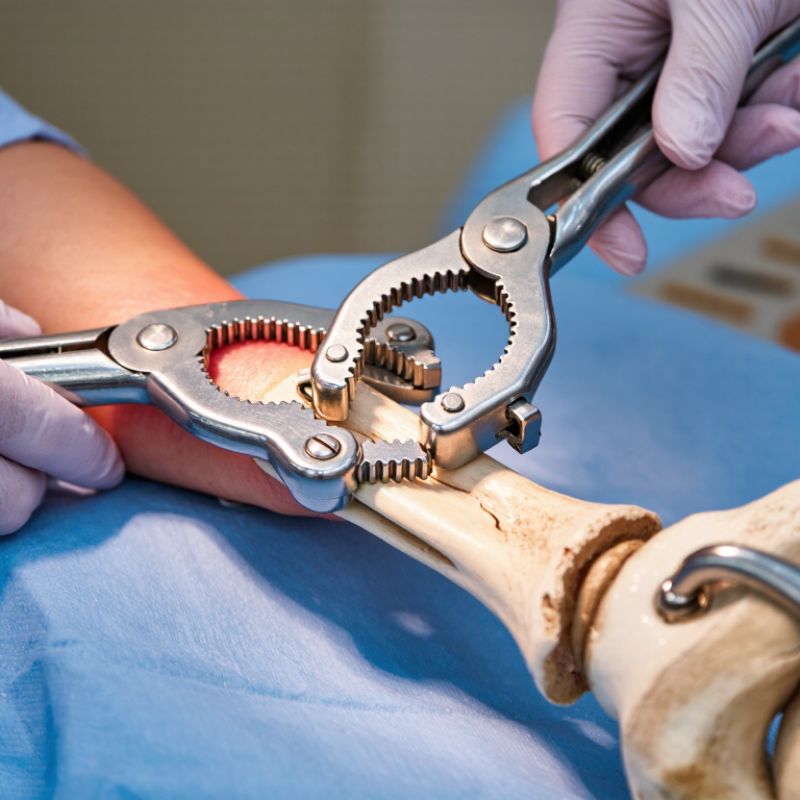
Why Are Bone Holding Reduction Forceps Used in Surgery?

Definition and Design of Bone-Holding Reduction Forceps

Bone-holding reduction forceps are surgical clamps designed to steady bone fragments while a fracture is aligned. Unlike soft-tissue forceps, their jaws are shaped to grip firm bone surfaces. Many designs have opposed tips, textured or toothed contact faces, long shanks, and finger rings. A ratchet may lock the handles, keeping the clamp closed during part of a procedure. Some models use pointed tips for a focused grip; others have broader jaws for different bone sizes and access. Designs vary.

The instrument’s shape balances grip, visibility, and access around the fracture. Its tips must hold securely, but excessive pressure can damage weak bone or interfere with alignment. Surgeons select jaw width and tip style according to the bone, fracture pattern, and surgical approach. A clamp may sit close to a bone edge while another fixation device is positioned nearby. That space can be tight. Materials and locking mechanisms vary, so inspection and sterilization follow the facility’s validated protocols. The design is not perfect: awkward angles or fragile fragments can make secure holding difficult.

How the Forceps Align and Stabilize Bone Fragments

Bone holding reduction forceps help surgeons bring fractured bone ends into position and keep them steady during fixation. Their jaws grip each fragment, while controlled pressure can close a visible gap and limit unwanted rotation. Small adjustments matter. A few millimeters can change how the bone surfaces meet.

The surgeon checks alignment by sight and, when needed, with imaging from more than one angle. Once the fragments appear aligned, the forceps can hold them while screws, plates, or other fixation devices are placed. They are a temporary aid, not a guarantee of perfect reduction. Excessive squeezing may damage bone or shift a fragment, so grip and position need continual reassessment. The tool can also obstruct the view; that trade-off is easy to underestimate.

The scale of fracture care is substantial. A 2021 analysis in The Lancet Healthy Longevity, using Global Burden of Disease 2019 data, estimated 178 million new fractures worldwide that year and 25.8 million years lived with disability. These population figures do not measure forceps effectiveness, but they show why dependable fracture management matters. In practice, the forceps’ role is precise and limited: maintain the chosen alignment while the surgeon confirms it and completes fixation.

Surgical Procedures That Use Bone-Holding Forceps

Bone-holding reduction forceps are used when surgeons need to align and temporarily steady bone during fixation. In open reduction and internal fixation, they can hold a fracture while the team checks alignment and places a plate or screws. They may also assist during pelvic fracture repair, corrective osteotomy, and selected joint or spinal procedures. The exact instrument depends on the bone, fracture pattern, and surgical approach.

The scale of these procedures is substantial. The OECD’s Health at a Glance 2023 reported an average of 182 hip replacements per 100,000 people across OECD countries in 2021. That figure describes procedure rates, not forceps use; it is a useful reminder that bone-focused surgery is common, but it cannot tell us which tools a particular operation requires. Small, steady movements matter. Forceps provide temporary control, not a guarantee of perfect alignment. The surgeon must reassess the bone and surrounding tissue throughout the procedure.

Tips: Choose forceps suited to the bone’s size and shape, and avoid excessive pressure that could damage fragile bone. Keep the operative field visible, then confirm alignment before fixation. A tool can help—but judgment still matters.

Why Are Bone-Holding Reduction Forceps Used in Surgery?

Bone-holding forceps help surgeons grasp, align, and temporarily stabilize bone during procedures. They may be used in the surgical settings below when appropriate; they do not provide definitive fixation.

A value of 1 means the instrument may be used as a temporary aid in that procedure; it does not indicate how often the procedure is performed or guarantee its use in every case.

Common Forceps Designs and Their Uses

Bone-holding reduction forceps temporarily control bone fragments while a surgeon aligns them for fixation. Their design affects access, grip, and how pressure reaches the bone.

The Global Burden of Disease 2019 analysis estimated 178 million new fractures worldwide that year (Lancet Healthy Longevity, 2021). That figure describes fracture burden, not forceps use, but it shows the scale of injuries requiring careful treatment.

Pointed reduction forceps use narrow tips to engage fragments through a smaller operative opening. They can help with precise alignment, though concentrated pressure may mark fragile bone. Serrated or broad-jaw bone-holding forceps provide a wider grip on larger fragments. The extra surface contact can improve control, but bulky jaws may obstruct a tight surgical field.

Fit matters. Collinear forceps apply compression along a bone’s length and are useful when access is limited. Pelvic reduction forceps have longer arms and shaped tips for reaching deep pelvic fractures.

A small caveat: no jaw shape is universally gentle. Bone quality, fracture pattern, and the available approach all influence instrument choice. Surgeons check that the tips sit securely without trapping soft tissue or obscuring the fracture line. Even a familiar clamp can slip if its contact points do not match the fragment. Not always obvious.

These instruments hold a reduction temporarily; plates, screws, or other fixation methods provide lasting stability.

Safe Handling and Key Limitations During Surgery

Why Are Bone Holding Reduction Forceps Used in Surgery?

Safe Handling and Key Limitations During Surgery

Bone-holding reduction forceps help a surgical team align fractured bone ends and hold them steady while fixation is prepared. Their jaws grip bone, leaving the surgeon’s hands available for drilling, plate placement, or imaging checks. A controlled hold matters: even a small shift can affect fracture alignment or stress nearby tissue.

The instrument should suit the bone’s size and the planned approach. Before use, the team checks jaw integrity, locking action, and sterile readiness. Keep the tips in view when practical.

Small detail, real difference.

Safe use depends on training, clear visualization, and deliberate pressure. Place the jaws only where the operative plan allows, avoiding trapped soft tissue, vessels, or nerves. Do not squeeze harder to compensate for a poor grip. Repositioning may be safer.

A locked instrument can still slip, while excessive compression can damage fragile bone or create additional fragments. These forceps provide temporary control, not definitive fixation. They may obstruct access or imaging, and may be unsuitable when bone quality, fragment size, or exposure prevents a stable grip.

If alignment changes, release and reassess rather than continuing blindly. Technique should reflect patient anatomy and the surgeon’s judgment.

FAQS

What are bone-holding reduction forceps used for?

They temporarily align and steady bone fragments while the surgical team prepares fixation. They are not permanent fixation.

Which procedures may use these forceps?

They may assist with fracture repair, pelvic fracture repair, corrective osteotomy, and selected joint or spinal procedures. The operation matters.

How do forceps help during fracture fixation?

Their jaws hold bone while the surgeon checks alignment or places a plate or screws. Hands stay available.

How should a team check forceps before use?

Check jaw integrity, locking action, and sterile readiness. Keep the tips visible when practical.

Can forceps guarantee correct bone alignment?

No. They provide temporary control, and the surgeon must reassess alignment and surrounding tissue throughout the procedure.

What can happen if the forceps grip is too tight?

Excess pressure may damage fragile bone or create additional fragments. Repositioning may be safer than squeezing harder.

When might these forceps be unsuitable?

A stable grip may be difficult with poor bone quality, tiny fragments, or limited exposure. They can also obstruct access or imaging.

What should the team do if alignment shifts?

Release the forceps and reassess before continuing. A locked instrument can still slip.

Do hip replacement rates show how often these forceps are used?

No. An OECD report recorded 182 hip replacements per 100,000 people across member countries in 2021. That rate does not identify the tools used.

Conclusion

Bone Holding Reduction Forceps are surgical instruments designed to grasp and steady bone fragments while a surgeon brings them into proper alignment. Their jaws and handles provide controlled pressure, helping maintain a stable position during procedures such as fracture repair and other operations that require temporary bone fixation. By keeping fragments from shifting, the forceps can support accurate positioning while the surgeon assesses alignment and prepares the next steps.

Different designs suit different bones, access needs, and levels of grip, with variations in jaw shape, size, and locking mechanisms. Selection depends on the anatomy and the task at hand. Safe use requires a secure but measured hold, careful placement, and awareness that excessive pressure may damage bone or nearby tissue. These forceps are not a substitute for definitive fixation: they provide temporary control, and their limitations should be considered throughout the procedure.

Oliver Bennett

Oliver Bennett

Oliver Bennett is a professional marketing specialist with a strong understanding of product strategy, customer needs, and digital communication. As a regular contributor to the company’s professional blog, he transforms complex product information into clear, practical, and engaging content that......