[email protected] +92-320-6688665 Defence Road, Sialkot 51310, Pakistan
ISO 13485:2016 · CE Marked · FDA Registered Exporting to 45+ Countries
0%

A Small Fragment Instrument Set is more than a tray of drills, guides, and screwdrivers. In fracture care, reliable instruments help surgical teams place plates and screws with control. Fit, handling, sterilization compatibility, and dependable replacement parts matter. So does the quality of the manufacturer’s technical documentation.

The scale of need is substantial. The World Health Organization’s Musculoskeletal Conditions fact sheet reports that about 1.71 billion people worldwide live with musculoskeletal conditions. This figure describes a broad health burden, not demand for any single device. Still, it helps explain why dependable orthopaedic equipment deserves careful attention. The WHO’s Global Health Estimates also provide context on injuries and related health needs, though they do not rank instrument suppliers.

Details matter. This guide compares manufacturers using practical criteria: product range, materials, instrument design, quality systems, service support, and availability across regions. Readers should also verify current certifications and product specifications directly with manufacturers. Catalogs can look similar. Actual usability may differ.

No single ranking fits every hospital or surgical team. A set suited to one workflow may not suit another, and public product information can be incomplete. That caveat matters. The aim here is a balanced overview of notable worldwide manufacturers, not a substitute for clinical evaluation, procurement review, or local regulatory checks.
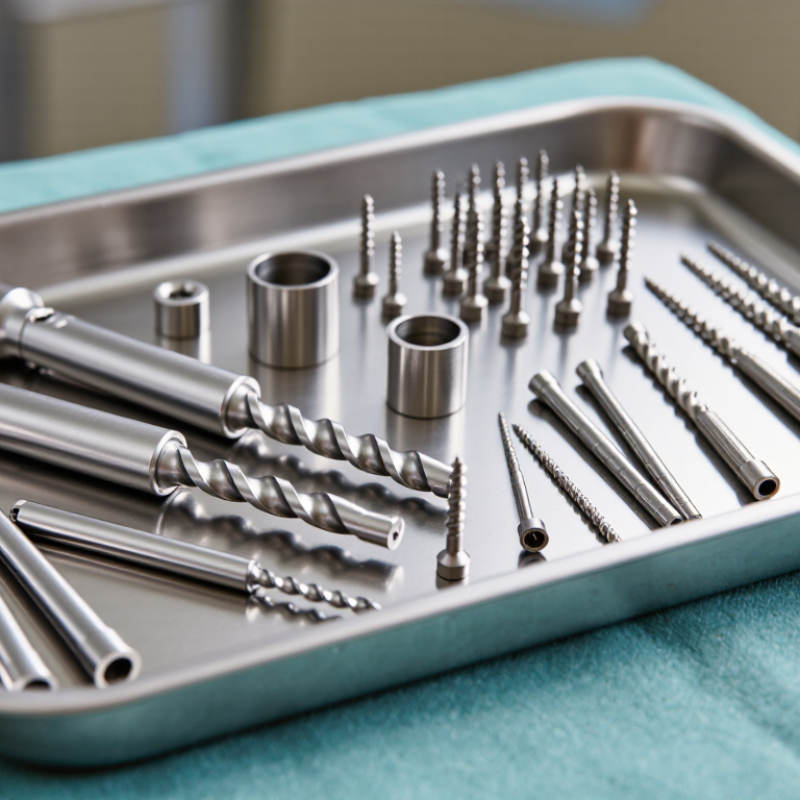
Top Small Fragment Instrument Set Manufacturers Worldwide?

What Defines a Small-Fragment Set? AO Systems Use 2.7- and 3.5-mm Screws

A small-fragment instrument set is defined less by its tray label than by screw diameter, plate compatibility, and intended anatomy. In conventional AO terminology, 3.5-mm screws are associated with small-fragment fixation; 2.7-mm screws are often used in mini-fragment or lower-profile systems. AO Foundation technical guidance distinguishes these implant sizes, but naming can vary between manufacturers.

Here is the catch. Check the implant catalogue rather than assuming every “small-fragment” tray includes both sizes.

The International Osteoporosis Foundation estimates 37 million fragility fractures occur annually among adults aged 55 and older—more than 100,000 per day. This figure does not predict demand for a particular set, but it shows why reliable sizing and handling matter.

For procurement, verify compatible 2.7- and 3.5-mm drill bits, depth gauges, taps, screwdrivers, and plates. ASTM F543 outlines mechanical test methods for metallic bone screws, including torsional testing; it does not certify a complete instrument set.

One practical gap remains: comparable public data on tray-level compatibility and instrument failure rates are limited. Test the exact configuration with surgeons and sterile-processing staff before adoption.

Major Global Suppliers: DePuy Synthes, Stryker, Zimmer Biomet, and Arthrex

Major global orthopedic suppliers compete through complete small-fragment systems, not just individual plates or screws. A typical set pairs low-profile plates with color-coded drill guides, depth gauges, calibrated drills, and matching drivers. In the operating room, clear tray layouts and reliable instrument fit can save time during repeated measurements. Fit matters. Yet published market-share figures for small-fragment instrument sets are scarce, so supplier rankings should be treated cautiously.

Grand View Research estimated the global orthopedic devices market at USD 57.3 billion in 2023 and forecast 4.4% annual growth from 2024 to 2030. That broad category includes implants and other products; it does not measure small-fragment sets alone. For buyers comparing multinational suppliers, practical checks include plate geometry, screw compatibility, instrument durability, sterilization instructions, and local service availability. Requesting trial trays can expose issues that catalogs miss, such as crowded compartments or awkward driver handles. One limitation remains: published growth estimates do not prove that every supplier’s set performs equally well. The comparison can be imperfect. Good evaluations combine documented specifications with hands-on review and feedback from surgical teams.

Comparing Set Designs: 2.7/3.5-mm Compatibility and Instrument Coverage

A small fragment set should be judged by how its instruments match the intended screw sizes, not by tray appearance alone. The 2.7-mm and 3.5-mm designations refer to different screw systems, so drills, guides, taps, depth gauges, and drivers must be checked against the relevant specifications. A shared tray does not guarantee that every instrument serves both sizes.

That distinction matters. Some sets provide separate color-coded instruments, while others use components with clearly marked size ranges. Buyers should verify plate compatibility, locking and nonlocking screw support, drill-stop options, and the availability of replacement parts. Check the manufacturer’s technical documentation rather than assuming that a familiar-looking driver fits. Small details count.

Coverage also affects workflow. Confirm that the set includes the needed handles, sleeves, measuring tools, and sterilization containers, then compare those contents with local surgical protocols. One practical check is to lay out each instrument and match its markings to the intended screw system. A complete-looking tray can still have gaps. It is worth reviewing those gaps with clinical and sterile-processing teams before purchase; compatibility claims can be easy to misread.

Manufacturing Quality Benchmarks: ISO 13485:2016 and EU MDR 2017/745

Top Small Fragment Instrument Set Manufacturers Worldwide?

Manufacturing Quality Benchmarks: ISO 13485:2016 and EU MDR 2017/745

For small fragment instrument sets, quality starts with repeatable processes, not polished certificates. The ISO Survey 2022 recorded roughly 35,000 ISO 13485 certificates worldwide. This signals broad adoption, but certificates are not a count of unique factories or proof that every instrument performs well. That distinction matters.

ISO 13485:2016 expects a documented quality system covering design, supplier controls, production, traceability, and corrective action. For a plate-and-screw set, buyers can examine material records, machining tolerances, cleaning validation, and inspection results. Ask how nonconforming instruments are segregated. Check that process changes are reviewed. Small gaps can travel far.

EU MDR 2017/745 adds obligations for risk management, clinical evaluation, post-market surveillance, and technical documentation. The European Commission’s MDR transition guidance also makes clear that legacy-device transition periods have conditions; they are not a substitute for compliance. A useful supplier audit therefore connects certificate scope to the actual set and its intended use. Review sample records, not just policy manuals. The paperwork may look tidy; shop-floor evidence can be less tidy, and that deserves a second look.

Top Small Fragment Instrument Set Manufacturers Worldwide? - Manufacturing Quality Benchmarks: ISO 13485:2016 and EU MDR 2017/745

Benchmark guide: This table describes verifiable quality-system and regulatory criteria for evaluating manufacturers of small-fragment orthopedic instrument sets. It does not rank or make performance claims about individual manufacturers.

Assessment dimension Quality benchmark Evidence to review Relevant reference
Quality management system A documented medical-device quality management system should cover applicable design, production, supplier, feedback, and corrective-action processes. ISO 13485 certification applies to the stated certified scope and sites. Current certificate, certification scope, covered manufacturing sites, audit status, and documented quality-system procedures. ISO 13485:2016, Clauses 4 and 5; EU MDR Article 10(9)
Design and technical documentation Device design and technical documentation should support the intended purpose, device configuration, risk controls, and applicable General Safety and Performance Requirements (GSPRs). Design and change-control records; device specifications; risk-management records; verification and validation reports; technical documentation index. ISO 13485:2016, Clause 7.3; EU MDR Annex I and Annex II
Risk management Risks should be identified and controlled throughout the device life cycle, including foreseeable use and risks associated with reusable surgical instruments where applicable. Risk-management plan and file, hazard analysis, risk-control verification, and review of production and post-market information. ISO 13485:2016, Clauses 7.1 and 7.3.3; EU MDR Annex I
Supplier controls Purchased materials, components, and outsourced processes should be controlled according to their effect on product conformity and risk. Supplier qualification and monitoring records, purchasing specifications, incoming inspection records, and controls for outsourced processes. ISO 13485:2016, Clause 7.4
Manufacturing and process validation Production should take place under controlled conditions. Processes whose outputs cannot be fully verified by later inspection should be validated as applicable. Work instructions, equipment and process records, validation protocols and reports, operator qualification, and change-control records. ISO 13485:2016, Clauses 6.3 and 7.5.1–7.5.6
Instrument inspection and release Acceptance criteria should be defined and applied before release. Inspection should address the characteristics relevant to each instrument’s intended function and specification. Approved specifications, inspection plans, measurement records, nonconformity records, and documented product-release authorization. ISO 13485:2016, Clauses 8.2.6, 8.3, and 8.5
Identification and traceability Product identification and traceability controls should match applicable regulatory requirements and the manufacturer’s documented procedures. Lot or batch records, device identification and labeling, distribution records, and traceability procedures. UDI obligations depend on device and market requirements. ISO 13485:2016, Clauses 7.5.8–7.5.9; EU MDR Article 27 and Annex VI
Cleaning and reprocessing information For reusable instruments, the manufacturer’s information should provide the applicable instructions for cleaning, disinfection, sterilization, and reuse, supported by appropriate validation where required. Validated reprocessing instructions, labeling and user information, validation reports, and evidence that instructions are consistent with the device design and intended use. EU MDR Annex I, including Section 23; ISO 13485:2016, Clause 7.5.1
EU classification and conformity assessment EU classification depends on intended purpose and the applicable MDR rules. Reusable surgical instruments may fall under Class I with the “Ir” qualification when the Rule 6 conditions are met; classification must be assessed for the specific device. Documented classification rationale, applicable conformity-assessment route, Declaration of Conformity, CE-marking information, and notified-body certificate where required. EU MDR Article 52; Annex VIII, Rule 6; Annex IX or Annex XI, as applicable
Post-market surveillance Manufacturers should operate a post-market surveillance system proportionate to the device and maintain processes for complaints, vigilance, and corrective action. Post-market surveillance plan and reports, complaint and vigilance procedures, trend analysis, and corrective and preventive action records. ISO 13485:2016, Clauses 8.2.1 and 8.5; EU MDR Articles 83–86 and Annex III
Measuring equipment and records Monitoring and measuring resources used to verify conformity should be controlled and suitable for their intended use; required records should be maintained. Calibration or verification status, equipment identification, measurement traceability where applicable, and retained production and quality records. ISO 13485:2016, Clauses 4.2.5 and 7.6

Interpretation: ISO 13485 certification alone does not establish EU MDR compliance or prove that every product in a manufacturer’s portfolio follows the same conformity-assessment route. Confirm the certificate scope, device-specific classification, intended purpose, and current regulatory documentation before procurement.

How Hospitals Evaluate Suppliers: Sterilization, Service, and Regulatory Compliance

For small fragment instrument sets, supplier evaluation begins before a purchase order. Sterilization instructions should be clear, validated for the specified packaging and cycle, and consistent with the instrument materials. Staff need guidance on cleaning narrow joints, inspecting tips, and drying components fully. A vague manual can turn a routine tray into a delay. Small details matter.

Hospitals should review service response as carefully as product specifications. Ask how damaged instruments are assessed, whether replacement parts are available, and how urgent repair requests are tracked. A useful service record includes dates, actions, and follow-up. Ask for evidence. Consider a real scenario: a bent pin is found before a scheduled case. Who responds, and when? The answer should be specific, not merely reassuring.

Regulatory compliance also needs evidence. Request current quality-system documentation, applicable device registration or listing information, material disclosures, and traceability records. Requirements vary by market, so procurement and infection-prevention teams should verify local expectations rather than rely on broad supplier claims. Compare document revisions and confirm they match delivered items. This check can feel tedious. It is still worth doing. No supplier is perfect; even a strong process can leave unanswered questions. Record them and resolve them before routine use.

How Hospitals Evaluate Small Fragment Instrument Set Suppliers

Example evaluation priorities on a 1–5 scale. These are illustrative rubric scores, not survey results or ratings of specific manufacturers.

Hospitals commonly review sterilization instructions and validation, quality-system and regulatory documentation, service and repair support, traceability, and instrument quality. Relevant requirements depend on the device and market; examples of standards include ISO 13485 for medical-device quality management and ISO 17665 for moist-heat sterilization.

FAQS

What defines a small-fragment instrument set?

Its screw sizes, plate compatibility, and intended anatomy matter more than the tray label. Names vary.

Which screw sizes may be included?

Conventional small-fragment systems commonly use 3.5-mm screws. Some lower-profile or mini-fragment systems use 2.7-mm screws.

How can buyers check whether instruments fit the implants?

Confirm compatibility among plates, screws, drill bits, depth gauges, taps, and screwdrivers. Check the actual catalogue.

Does ASTM F543 certify a complete instrument set?

No. It describes mechanical test methods for metallic bone screws, including torsional testing. It does not certify the whole set.

What quality records should a buyer review?

Examine material records, machining tolerances, cleaning validation, and inspection results. Ask how nonconforming instruments are separated.

What does ISO 13485:2016 cover?

It covers a documented quality system, including design, supplier controls, production, traceability, and corrective action. A certificate alone proves little about each instrument.

What should an audit check beyond certificates?

Confirm that certificate scope matches the set and its intended use. Review sample records and shop-floor evidence.

Why does EU MDR 2017/745 matter to buyers?

It includes requirements for risk management, clinical evaluation, post-market surveillance, and technical documentation. Transition periods have conditions.

Should a set be tested before adoption?

Yes. Test the exact configuration with surgeons and sterile-processing staff. Public data on tray compatibility and failure rates remain limited.

Conclusion

A Small Fragment Instrument Set is designed for procedures involving smaller bones and fragments, commonly using 2.7-mm and 3.5-mm screw systems. A well-planned set may support both sizes and provide the instruments needed for tasks such as drilling, measuring, guiding, and screw placement. Compatibility across components and practical instrument coverage can help clinical teams select an appropriate configuration for different procedural needs.

When evaluating a set, hospitals may consider manufacturing quality, validated sterilization processes, and clear documentation of regulatory compliance, including relevant quality-management and medical-device requirements. Reliable supplier support also matters: staff training, instrument maintenance, replacement availability, and responsive service can affect day-to-day usability. Comparing these factors alongside set design helps healthcare organizations assess whether an offering meets their clinical, operational, and compliance requirements.

Oliver Bennett

Oliver Bennett

Oliver Bennett is a professional marketing specialist with a strong understanding of product strategy, customer needs, and digital communication. As a regular contributor to the company’s professional blog, he transforms complex product information into clear, practical, and engaging content that......