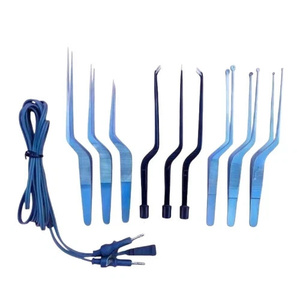
Neurosurgery Tools
Explore our premium-grade OEM surgical suite components, certified under ISO 13485 and compliant with EU MDR specifications for international healthcare importers.
Comprehensive Analysis of Biological Barrier Efficacy, Non-Woven Textile Mechanics, and Ergonomic Instrument Synergies in Modern Operating Theatres
In modern surgical environments, maintaining absolute aseptic continuity within the operating field represents the single most critical factor in preventing Surgical Site Infections (SSIs). As a globally recognized CE certified surgical drapes manufacturer and exporter, SalarSurgicals bridges the essential standard between advanced medical non-woven barrier textiles and high-precision surgical instrumentation. Operating from Sialkot, Pakistan—a world-renowned hub for medical device manufacturing—our facility integrates ISO 13485:2016 quality management systems to produce procedure-specific drape packs, electrosurgical instruments, and reusable stainless steel tools for importers across North America, the European Union, the Middle East, and Asia-Pacific.
Information Gain Insight: The efficacy of a sterile surgical drape extends far beyond basic fluid repellency. Modern infection control protocol under EN 13795 and AAMI PB70 mandates multi-layered fabric structures (SMS/SMMS/SMMMS) engineered to maintain tensile integrity under fluid saturation, suppress lint particle dissemination, and provide impenetrable microbial migration barriers during prolonged surgical procedures.
Surgical drapes serve as the primary defensive barrier separating non-sterile patient skin surfaces from sterile operative zones. Technical procurement officers must evaluate three core material parameters when specifying patient draping solutions:
| Performance Specification | AAMI Level 3 Standard Drapes | AAMI Level 4 Critical Zone Drapes | Reusable Surgical Instrument Synergy |
|---|---|---|---|
| Fluid Resistance (Hydrostatic) | > 50 cm H₂O (AATCC 127) | Viral Barrier (ASTM F1671) | Stainless steel passivated surface (AISI 420/304) |
| Linting & Cleanliness | ISO Class 3 Low-Linting Matrix | Zero-Particle Shedding Non-Woven | Ultrasonic cleaned, zero-particulate residue |
| Tensile Strength (Dry/Wet) | > 100 N (MD) / > 70 N (CD) | > 150 N (MD) / > 110 N (CD) | High HRC Rockwell Hardness (48 - 54 HRC) |
| Sterilization Compatibility | EtO, Gamma Irradiation | EtO, E-Beam, Autoclave Trays | Steam Autoclave (134°C validated) |
| Regulatory Compliance | EN 13795 / CE Mark (MDR) | US FDA 510(k) / EU MDR Class I/IIa | ISO 13485:2016 / CE / FDA Registered |
Market Analysis for Hospital Purchasing Directors, OEM Distributors, and Supply Chain Managers
The global market for single-use surgical drapes and procedural instrument kits is undergoing a profound structural shift driven by stringent regulatory frameworks, eco-design directives, and the consolidation of vendor bases. Hospital procurement teams are rapidly moving away from fragmented sourcing toward integrated, full-range procedure kit manufacturers capable of delivering bundled solutions.
Healthcare providers are standardizing surgical setups by demanding Custom Procedure Trays (CPTs) that combine high-performance drapes, fluid collection pouches, micro-forceps, and electrosurgical cables within a single sterile barrier packaging unit. This trend reduces room turnover times by up to 35%, minimizes packaging waste, and streamlines hospital inventory management.
With the transition from MDD to EU MDR, non-compliant medical textile converters and white-label exporters are being phased out. Importers are now requiring full lot-to-lot traceability, validated bio-compatibility testing (ISO 10993 series), and transparent technical documentation files from their manufacturing partners.
Future drape production utilizes ultrasonic seaming technology rather than conventional needle stitching, guaranteeing zero fluid leakage through needle punctures. Furthermore, the development of sustainable, recyclable polypropylene and plant-based poly-lactic acid (PLA) fibers is creating new market demand for eco-conscious operating theatres.
To guard against global supply chain disruptions, regional distributors are bypassing trading agents in favor of direct OEM partnerships with certified manufacturing facilities. Factory-direct sourcing offers lower minimum order quantities (MOQs), personalized laser marking, bespoke fenestration dimensions, and direct engineer-to-engineer communication.
Vertical integration, hand-crafted precision, and modern quality assurance protocols engineered for zero-defect exports.
Our manufacturing facility operates under an audited ISO 13485:2016 quality system. Every production batch undergoes raw material verification, tensile testing, bio-burden assessment, and final AQL sampling.
We source premium German-grade stainless steels (AISI 410, 420, 304) and Titanium Grade 5. Our precision instruments feature micro-serrated jaws, non-stick insulation coatings, and vacuum heat-treatment up to 54 HRC.
From high-speed fiber laser branding, SKU/UDI barcoding, and custom catalog numbering to tailored drape dimensions and private-label box packaging, we transform your specifications into finished products.
All reusable surgical tools undergo multi-stage ultrasonic de-greasing and nitric acid passivation to reconstruct the chromium oxide layer, guaranteeing maximum resistance against autoclave pitting and corrosion.
Exporting to over 45 countries, our export desk manages complete customs documentation—including Certificates of Origin, Declarations of Conformity, Packing Lists, and FOB/CIF/DDP Incoterms shipping.
Work directly with dedicated production engineers who understand your blueprint dimensions and functional criteria. We provide rapid pre-production samples within 10–15 business days.
Essential Technical and Commercial Answers for Hospital Purchasing Agents, Medical Importers, and OEM Brand Owners
Our manufacturing facility operates under an audited ISO 13485:2016 Quality Management System. Our medical drapes and reusable stainless steel surgical instruments carry the CE mark under applicable EU regulations and are registered with the US FDA. Full Technical Files, Declarations of Conformity, and ISO Certificates are provided to authorized importers under NDA.
Our surgical drapes are manufactured using high-grade SMMS/SMMMS non-woven textiles that comply fully with EN 13795 standards for performance in critical and standard zones. They meet AAMI Level 3 and Level 4 liquid barrier specifications, providing validated resistance against hydrostatic pressure and viral penetration (ASTM F1671 testing).
We utilize medical-grade German martensitic stainless steel (AISI 410, 420, 420B) for holding and cutting instruments to maintain blade hardness (48–54 HRC). For microsurgical bipolar forceps, we supply both high-durability insulated stainless steel and non-stick titanium alloy tips (Titanium Grade 5) designed for high-frequency electro-coagulation without tissue adhesion.
For standard catalog instrument references, our standard MOQ starts at 50 pieces per reference. For specialized OEM procedure drape kits or custom-forged surgical instruments requiring dedicated tooling dies, our standard starting MOQ ranges between 100 to 250 units, ensuring tooling amortisation remains cost-effective for the importer.
Yes. High-precision fiber laser marking is a standard component of our OEM private-label service. We can engrave your company logo, catalog SKU, lot traceability codes, CE mark, and Unique Device Identification (UDI) 2D matrix barcodes onto instrument surfaces. All marked tools undergo secondary passivation to ensure the markings survive repeated autoclave sterilization cycles.
Our single-use surgical drapes and procedure packs are validated for Ethylene Oxide (EtO) and Gamma irradiation sterilization. Our reusable stainless steel surgical instruments, bipolar cables, and sterilization trays are engineered for repeated steam autoclave sterilization cycles at 134°C (273°F) without surface degradation or insulation breakdown.
Repeat catalog orders typically ship within 15–25 business days from our Sialkot production center. First-time OEM projects involving custom packaging and laser branding take 30–45 business days following sample approval. We offer flexible Incoterms including FOB Karachi, CIF port of entry, or DDP direct to your distribution warehouse via air express or ocean freight.
A Deep Dive into Material Science, Passivation Metallurgy, and Zero-Defect Manufacturing Workflows
Surgical instruments manufactured in Sialkot, Pakistan, represent an enduring legacy of artisan hand-finishing paired with state-of-the-art CNC engineering. However, the true clinical reliability of a surgical tool lies in its chemical stability. Stainless steel relies on a microscopic, passive film of chromium oxide (Cr₂O₃) to resist chemical attack from saline solution, blood proteins, and harsh enzymatic detergents.
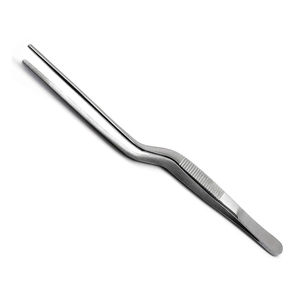
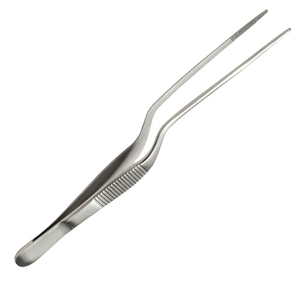
At SalarSurgicals, every instrument—whether an Adson Bayonet Dressing Forceps or a Non-Stick Bipolar Coagulation Forceps—undergoes a controlled passivation protocol in accordance with ASTM A967 standards. Following precision machining and manual jaw alignment, instruments enter multi-stage ultrasonic baths to remove microscopic metal fines and drawing oils. Subsequently, immersion in heated nitric or citric acid solutions selectively dissolves free iron particles from the steel matrix, yielding a rich, corrosion-resistant chromium surface that withstands hundreds of 134°C steam autoclave sterilization cycles.
Modern surgical drapes must balance contradictory physical requirements: absolute liquid impermeability coupled with soft drapeability and low-linting performance. The integration of SMMS (Spunbond-Meltblown-Meltblown-Spunbond) non-woven fabrics resolves this challenge:
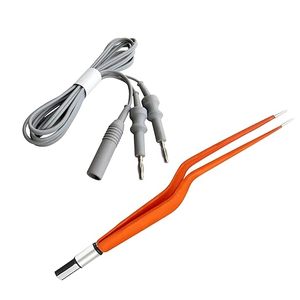
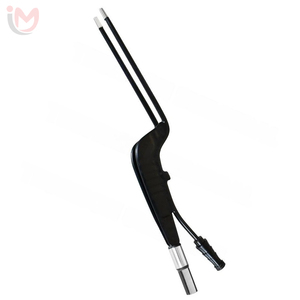
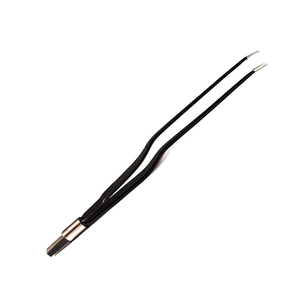
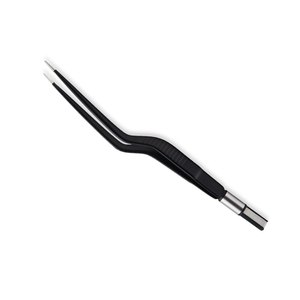
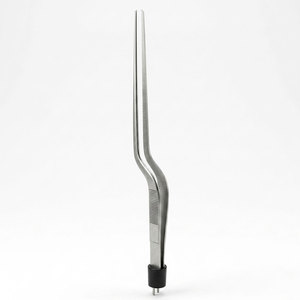
Electrosurgery demands absolute dielectric integrity. Bipolar bayonet forceps are routinely deployed in neurosurgery and micro-vascular procedures where targeted thermal coagulation is required without lateral heat dissipation. Our bipolar forceps feature high-grade medical silicone or nylon coatings that withstand high dielectric stress (up to 3000V peak voltage testing), eliminating leakage currents that could compromise patient safety or damage delicate neural pathways.
Quality Assurance Benchmark: Every bipolar cable and insulated forceps produced in our facility undergoes 100% electrical continuity testing and high-potential dielectric breakdown inspection prior to sterile barrier packaging.
For medical brand owners seeking to establish their own proprietary line of surgical drapes, drape kits, or microsurgical forceps, SalarSurgicals offers a transparent 5-stage OEM development workflow:
Streamline your medical device supply chain with ISO 13485 quality, factory-direct OEM pricing, and reliable global delivery from Sialkot, Pakistan. Contact our export desk today for pricing, technical datasheets, or custom sample orders.