Precision Microsurgical Instruments & Bipolar Forceps Series
Engineered to German DIN specifications from medical-grade AISI 420/304 stainless steel and Grade 5 Titanium. Certified for high-pressure steam autoclave sterilization.
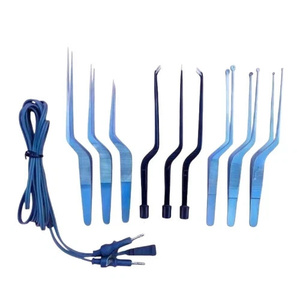
10 PCS Micro Bayonet Forceps Surgical Instrument Set Neurosurgery Tools
Ultra-delicate tissue handling tips, spring-action ergonomic balance, non-reflective satin finish for operating microscopes.
Send an Inquiry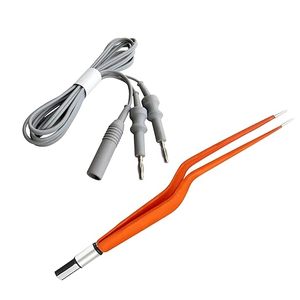
Bayonet Bipolar Forceps Professional Surgical Tool Stainless Steel
Fine tip precision coagulation, biocompatible insulation coating tested to 500+ autoclave cleaning cycles.
Send an Inquiry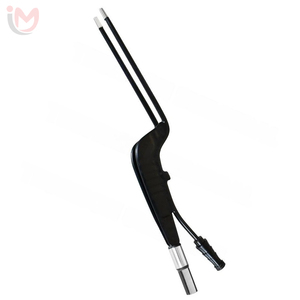
Wholesale Bayonet Bipolar Forceps Insulated Reusable Silicon Cable
High-flexibility silicone cable assembly, universal connector compatibility, custom private label laser etching available.
Send an Inquiry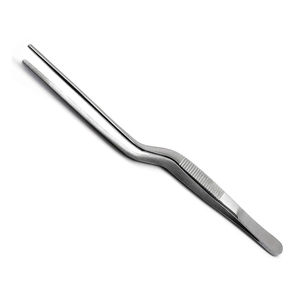
Adson Bayonet Forceps 16cm Serrated Tip Stainless Steel Surgical Tweezer
Atraumatic serrated jaw geometry, 16cm bayonet offset profile ensuring unobstructed line of sight under magnification.
Send an Inquiry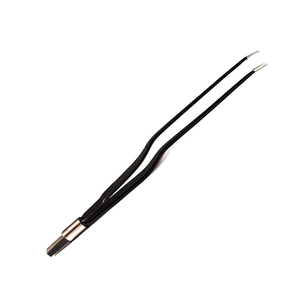
Neurosurgery Bayonet Non Stick European Bipolar Curved Forceps 22 cm
0.5mm angled tip with guide stop, thermal conductive alloy technology to eliminate tissue adhesion during hemostasis.
Send an Inquiry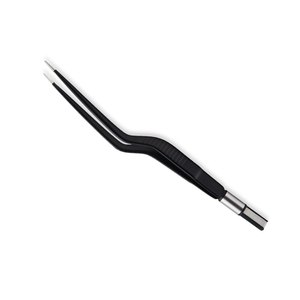
Premium Quality Bipolar Bayonet Forceps Black Color Coated Set
Specialized anti-glare black insulation coating, enhanced dielectric barrier strength for demanding surgical electrosurgery.
Send an Inquiry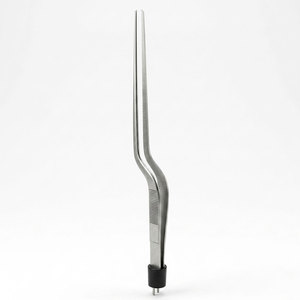
Wholesale Bayonet Non Insulated Bipolar Forceps 24cm (0.5mm-2.0mm Tip)
Solid surgical stainless steel construct, available in 0.5mm, 1.0mm, and 2.0mm precision tip specifications.
Send an Inquiry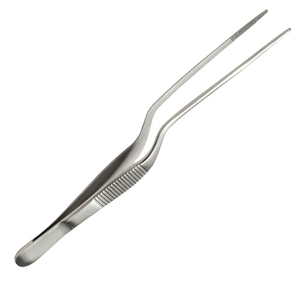
Stainless Steel High-quality CE Certified Manual Bayonet Ear Dressing Forceps
Ergonomic manual control handle, passivated corrosion-resistant finish optimized for otology and nasal clinical procedures.
Send an InquiryManufacturing Excellence: China Instrument Trays & Precision Tooling
An in-depth guide on metallurgical standards, passivation protocols, and modular sterilization tray containment systems engineered for global healthcare importers.
Medical-Grade Steel Metallurgy
Our manufacturing protocols utilize certified German-standard martensitic stainless steels (AISI 410, 420, 420B) for cutting blades and gripping teeth, combined with premium austenitic AISI 304 and 316L for sterilization trays, wire mesh baskets, and non-cutting shafts. Each heat lot undergoes chemical composition spectral testing to guarantee maximum structural integrity and corrosion resistance.
Passivation & Autoclave Longevity
To eliminate surface contaminants and prevent pitting, every instrument tray and bipolar forceps undergoes multi-stage ultrasonic de-greasing followed by chemical nitric and citric acid passivation according to ASTM A967 and ISO 16061 standards. This re-establishes a dense passive chromium oxide layer capable of enduring over 500+ repeated 134°C high-pressure steam autoclave cycles.
Sterilization Tray System Engineering
Modern surgical suites demand organized instrument containment. Our perforated aluminum and stainless steel instrument trays feature medical silicone holding fixtures, securing fine bayonet forceps, micro scissors, and electrosurgical leads. Perforated hole patterns are mathematically calculated for optimal steam penetration and rapid condensate drainage during vacuum drying.
Information Gain Insight: The Critical Role of Surface Chemistry in Instrument Tray Longevity
Importers often face micro-pitting and surface discoloration on instrument trays after repeated CSSD processing. This failure mode typically stems from incomplete removal of free iron particles during final finishing. By implementing automated 5-stage ultrasonic bath cleaning and validated citric-acid passivation chemistry, leading manufacturers eliminate surface iron contamination, boosting corrosion resistance by over 300% compared to conventional hand-polished alternatives.
Future Procurement Trends in Global Instrument & Tray Sourcing (2025–2030)
Key market vectors shaping how hospital purchasing groups, medical device distributors, and OEM brands source sterilization trays and surgical tools from Asian manufacturing hubs.
1. Direct Factory Contract Manufacturing & Low MOQs
Global procurement desks are shifting away from multi-tiered trading brokers to establish direct relationships with original equipment manufacturers. Importers require flexible batch sizes—such as 50-piece baseline MOQs for standard catalogue items and 100-piece runs for custom forged dies—allowing distributors to maintain lean inventory while scaling private-label product lines dynamically.
2. EU MDR Compliance & Full Material Traceability
With the implementation of the European Union Medical Device Regulation (EU MDR 2017/745) and US FDA UDI (Unique Device Identification) mandates, buyers demand 100% material lot traceability. Modern factories must supply material mill certificates, biocompatibility test records, and permanent fiber-laser marked UDI DataMatrix codes directly onto instruments and sterilization basket frames.
3. Modular & Standardized DIN Sterilization Systems
Hospitals are replacing obsolete single-wrapper drape packaging with rigid container systems and modular DIN-spec wire baskets. Trays equipped with heat-resistant silicone insert mats ensure that delicate microsurgical bayonet tips and electrosurgical forceps remain motionless during transport, dramatically reducing costly tip damage and perioperative delays.
Comparative Technical Specifications for Surgical Trays & Forceps
Evaluation of raw material properties, hardness standards, and target surgical applications across primary product lines.
| Material Grade | Hardness Range (HRC) | Primary Application | Corrosion Resistance | Sterilization Compatibility |
|---|---|---|---|---|
| AISI 420 / 420B Stainless Steel | 48 - 54 HRC | Micro Scissors, Cutting Blades, Forceps Tips | High (Passivated) | Steam Autoclave (134°C), ETO, Gamma |
| AISI 304 / 316L Stainless Steel | 20 - 30 HRC (Work-hardened) | Sterilization Trays, Baskets, Retractors | Exceptional (High Ni/Cr content) | Steam Autoclave, Automated Washer-Disinfector |
| Titanium Grade 5 (Ti-6Al-4V) | 36 - 42 HRC | Non-Stick Bipolar Forceps, Micro-Tools | Superior / Non-magnetic | All Standard Healthcare Sterilization Protocols |
| Medical Silicone (Platinum-Cured) | 40 - 70 Shore A | Tray Insert Fixations, Cable Jackets | Inert / Biocompatible | Steam Autoclave, Dry Heat (up to 200°C) |
Product Development Trends in Surgical Instrumentation & Trays
How technological advances in non-stick coatings, ergonomic design, and digital asset management are redefining surgical handpieces and tray systems.
Advanced Non-Stick Thermal Conductive Coatings
Electrosurgical coagulation frequently suffers from tissue charring and ESCHAR accumulation on bipolar tips. Future product developments heavily feature solid silver-alloy cores combined with specialized titanium-nitride (TiN) or ceramic non-stick coatings. These innovations quickly dissipate excess heat, allowing surgeons to perform continuous tissue coagulation without requiring manual tip scraping.
Ergonomic Bayonet Offset Engineering
In microsurgery and neurosurgery, straight forceps obstruct the surgeon's direct vision under magnification cameras. Modern bayonet configurations offset the hand grip out of the optical axis. Advanced 3D forging techniques now yield spring-tensioned handles that minimize hand fatigue during lengthy 8+ hour surgical procedures.
Smart RFID & Matrix Code Integrated Trays
Central Sterile Supply Departments (CSSD) are rapidly adopting automated instrument tracking. Advanced tray manufacturers are embedding heat-resistant RFID microchips and high-contrast 2D DataMatrix laser etchings into tray handles. This allows healthcare facilities to automatically track tray cycle counts, maintenance intervals, and sterilization compliance.
Why Global Importers Partner With Our Manufacturing Hub
Integrated manufacturing capabilities—from raw billet forging to final cleanroom packaging and international regulatory clearance.
In-House Forging & CNC Machining
Unlike trading entities that outsource production to unverified workshops, our facilities operate closed-die forging hammers, 5-axis CNC machining centers, and automated vacuum heat treatment furnaces under one roof. This guarantees rigid dimensional tolerances within 0.05 mm across large production runs.
ISO 13485, CE & FDA Regulatory Support
Our Quality Management System is independently certified to ISO 13485:2016. We maintain comprehensive technical documentation files, Declarations of Conformity under EU MDR guidelines, and US FDA Establishment Registrations, enabling seamless regulatory approvals for our global distribution partners.
Custom Private Label OEM & Rapid Tooling
We provide full-spectrum OEM services including custom laser marking (Logo, SKU, Lot Code, CE Mark), specialized tip geometries, non-standard working lengths, and bespoke sterilization tray layouts. Pre-production prototype samples are typically delivered within 10 to 15 working days from CAD approval.
Frequently Asked Questions (FAQ) for Medical Device Purchasing
Authoritative answers to essential technical, regulatory, and logistics queries for international medical procurement directors.
Partner With China's Leading Instrument Tray & Tooling Manufacturer
Consult with our senior biomedical engineering team today to review your technical drawings, request pre-production samples, or receive a competitive factory-direct quote within 24 business hours.