Precision Infiltration, Neurosurgical & Electrosurgical Instruments
Direct-from-factory high-precision surgical tools, tumescent infiltration solutions, and bipolar coagulation instruments for wholesale importers and OEM brand distributors.
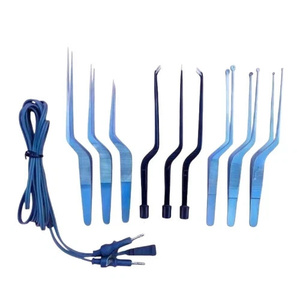
10 PCS Micro Bayonet Forceps Surgical Instrument Set Neurosurgery Tools
Engineered for delicate tissue handling, featuring micro-fine tips, ergonomic spring tension, and German AISI 420 stainless steel construction.
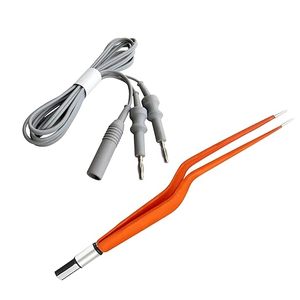
Bayonet Bipolar Forceps Professional Fine Tip Coagulation Forceps
High-precision bipolar forceps with insulated shanks for minimal thermal spread and precise haemostasis in narrow surgical fields.
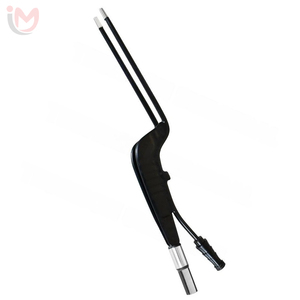
Bayonet Bipolar Forceps Set with Reusable Silicone Cable Assembly
Complete electrosurgical set featuring steam-autoclavable silicone cabling compatible with major high-frequency ESU generators.
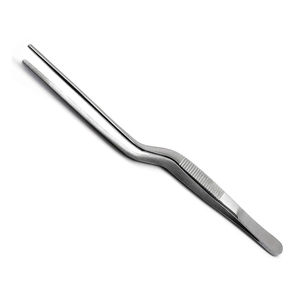
Adson Bayonet Forceps 16cm Serrated Tip Stainless Steel Tweezers
Atraumatic serrated tip design delivering secure hold on delicate dermal tissue and surgical dressings without tissue trauma.
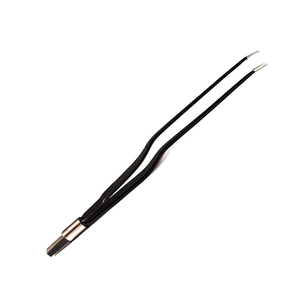
Neurosurgery Bayonet Non-Stick European Bipolar Curved Forceps 22cm
Solid non-stick alloy tips with guide pin stop, angled 0.5mm tip geometry, and standard EU connector plug fitting.
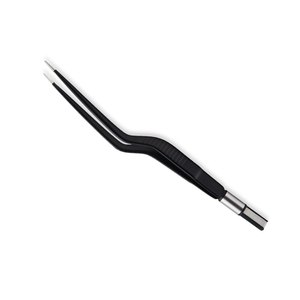
Premium Black Ceramic Coated Stainless Steel Bipolar Bayonet Forceps
Glare-reducing black insulation layer engineered for microscopic surgical visualization and prolonged thermal protection.
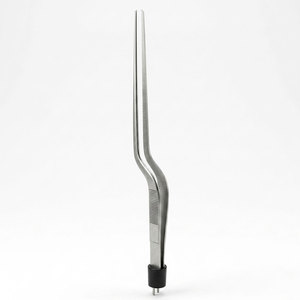
Wholesale Bayonet Non-Insulated Micro Forceps 24cm (0.5mm - 2.0mm)
Ultra-long reach 24cm microsurgical forceps available in multi-tip specifications (0.5mm, 1.0mm, 2.0mm) for deep anatomical dissection.
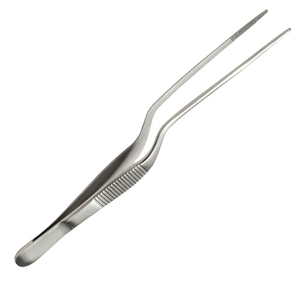
Stainless Steel Manual Bayonet Ear Dressing Forceps Instrument Set
CE-certified otology and nasal dressing forceps designed with fine angled shanks to maintain an unobstructed line of sight.
Engineering Architecture of Wholesale Infiltration Cannulas & Surgical Infusion Systems
In modern plastic, reconstructive, and cosmetic surgical procedures—specifically tumescent liposuction, body contouring, and large-volume fat grafting—tumescent infiltration cannulas serve as the critical conduit for targeted fluid dispersion. The primary clinical objective of infiltration is the hydro-dissection of subcutaneous adipose tissue matrix coupled with uniform delivery of Klein solution (a vasoconstrictive tumescent anesthetic containing lidocaine, epinephrine, and sodium bicarbonate). Achieving optimal clinical outcomes while minimizing micro-vascular trauma requires infiltration cannulas manufactured to exacting metallurgical tolerances, advanced fluid dynamics geometry, and rigorous surface passivating standards.
As leading B2B surgical instrument OEMs and direct export suppliers based in major precision manufacturing hubs (incorporating state-of-the-art CNC micro-machining and legacy hand-finishing mastery), our manufacturing facility engineers reusable and single-use infiltration cannulas that satisfy stringent global standards including ISO 13485:2016, EU MDR 2017/745, and US FDA Establishment Regulations.
Fluid Dynamic Principles: Port Distribution and Flow Rate Uniformity
The efficiency of a tumescent infiltration cannula is fundamentally dictated by its lumen inner diameter (ID), wall thickness, distal tip geometry, and the radial arrangement of its infusion ports. Substandard cannulas often suffer from localized pressure jetting—where liquid exiting the proximal ports starves the distal tip—resulting in uneven tissue tumescence, prolonged infiltration times, and localized tissue bruising.
- Multi-Hole Spiral Infiltration Patterns: Engineered with 12 to 24 micro-perforations arranged in a 360-degree helical array. This configuration ensures omnidirectional, low-velocity dispersion of anesthetic fluids, achieving rapid tissue saturation without mechanical shear stress on capillary networks.
- Mercedes & Tri-Port Infiltrators: Designed with larger side-dispersion apertures situated near a bullet-shaped atraumatic tip, ideal for rapid high-volume tumescence in abdominal or flank procedures.
- Single-Port / Infusion-Spike Cannulas: Utilized primarily for precise fascial plane separation and localized nerve-block hydro-dissection where directional control is paramount.
Infiltration Cannula Metallurgy & Dimensional Specifications
The following engineering matrix outlines standard technical parameters available for wholesale and custom OEM private-label production runs:
| Parameter | Standard Specification Range | Material / Clinical Benefit |
|---|---|---|
| Lumen Diameter (Gauge) | 14G (2.1mm), 16G (1.65mm), 18G (1.25mm), 12G (2.77mm) | Optimized flow rates balancing mechanical stiffness with patient comfort. |
| Working Lengths | 150mm, 200mm, 250mm, 300mm, 350mm (Custom up to 450mm) | Enables single-incision access across extensive anatomical zones. |
| Raw Material Grade | German AISI 316L Stainless Steel / Titanium Grade 5 (Ti-6Al-4V) | Superior tensile strength, zero flex-fatigue, and complete corrosion resistance. |
| Hub Connection Types | Luer-Lock (Brass/SS), Toomey 60cc Hub, Threaded Handle Mount | Universal compatibility with standard peristaltic infiltration pumps & syringes. |
| Surface Polish | Electropolished Internal & External Finish (< 0.2 µm Ra) | Prevents protein adhesion, bacterial bio-burden buildup, and simplifies cleaning. |
| Sterilization Rating | Autoclavable up to 134°C (273°F) for 500+ cycles / Gamma Sterilized | Fully validated for repeated steam vacuum autoclave sterilizers. |
Looking for Custom OEM Infiltration Cannulas or Private Label Manufacturing?
We provide full drawing-to-production engineering services including laser logo branding, custom hub development, packaging design, and low minimum order quantities (MOQ starting at 50 pcs per reference).
Future Procurement & Technological Trends in Surgical Cannulas (2025–2030)
Key technological shifts shaping global B2B sourcing, regulatory compliance demands, and medical instrument manufacturing workflows.
1. Integration of Hydro-Dissection & Energy-Assisted Delivery
Future procurement cycles show accelerated demand for hybrid infiltration system designs that interface directly with radiofrequency (RF), ultrasound (VASER), and power-assisted liposuction devices. Modern cannulas are increasingly specified with insulated outer shafts and conductive tips to allow simultaneous tissue hydro-dissection and thermal pre-coagulation, cutting operating times by up to 35%.
2. Shift Toward Ultra-Smooth Electropolished Internal Lumens
Hospitals and accredited surgical centers are elevating standard hygiene requirements. Mechanical reaming of interior cannula shafts leaves microscopic burrs and ridges where cellular debris accumulates. Advanced suppliers now utilize multi-stage chemical electropolishing to guarantee an interior lumen roughness average (Ra) under 0.2 µm, dramatically lowering biofilm formation risks.
3. Strict Traceability & Unique Device Identification (UDI)
Regulatory bodies worldwide—including the US FDA (GUDID) and European EUDAMED database—mandate complete lot traceability down to the raw stainless steel heat number. Wholesale procurement directors now mandate fiber laser etching of high-density QR/Matrix codes directly onto cannula handles to enable automated hospital inventory scanning and sterilizer tracking.
4. Dual Sourcing & Direct Factory OEM Supply Chains
Distributors are shifting away from third-party broker networks in favor of direct-from-factory partnerships with certified Chinese and Asian manufacturers. By establishing direct OEM technical protocols, medical device importers secure 20%–40% cost efficiencies while retaining direct control over custom lumen sizing, hub styling, and brand branding.
Why Leading Global Importers Choose Our Instrument Workshop
Combining legacy hand-craftsmanship with modern automated CNC machinery, rigorous QA protocols, and global medical device certification compliance.
Certified ISO 13485:2016 Quality System
Our complete manufacturing operation functions under an audited ISO 13485 quality management framework. Every infiltration cannula, electrosurgical bipolar forceps, and neurosurgical tool is subject to rigorous receiving material validation, in-process dimensional tolerance checks, and 100% final inspection prior to release.
Advanced Passivation & Ultrasonic Decontamination
To eliminate post-sterilization surface oxidation, all surgical instruments undergo automated multi-stage citric/nitric acid chemical passivation according to ASTM A967 standards. This process rebuilds a uniform chromium oxide surface layer, guaranteeing zero pitting or staining over hundreds of autoclave steam cycles.
Full Private-Label & Custom OEM Program
From low MOQ trial runs (50–100 pieces per reference) to high-volume commercial production, we support OEM partners with fiber-laser branding, customized tip hole patterns, bespoke hub machining (Luer Lock, Toomey, Threaded), custom color-coded anodization, and retail-ready sterile pouch packaging.
Frequently Asked Questions (B2B Procurement FAQ)
Essential operational, regulatory, and metallurgical answers for surgical instrument importers and medical device distributors.
What is the minimum order quantity (MOQ) for wholesale infiltration cannulas and OEM instruments?
For standard catalogue items and existing cannula designs, our MOQ starts at just 50 pieces per reference number. For bespoke OEM instruments requiring custom tooling, specialized handle die-casting, or novel perforation machining, we recommend an initial run of 100 to 250 pieces to keep unit tooling costs commercially competitive for your brand.
Which stainless steel grades are utilized in your infiltration cannula manufacturing?
We strictly utilize German-standard surgical stainless steel grades. For cannula shafts and structural tubular components, austenitic AISI 316L (1.4404) stainless steel is selected due to its exceptional ductility, zero pitting risk in saline environments, and superior corrosion resistance. For cutting instruments and micro-forceps, martensitic AISI 420 (1.4021) and 420B are used to maintain exact Rockwell hardness (48-54 HRC).
Are your manufacturing facilities and product ranges CE marked and FDA registered?
Yes. Our enterprise operates under a certified ISO 13485:2016 Quality Management System. Reusable surgical instrument lines are CE marked under EU MDR regulations, and our manufacturing establishment is registered with the US FDA. Full technical files, Declarations of Conformity, material test reports (MTRs), and lot release documentation are supplied with every order.
What hub fittings and connection options are available for infiltration cannulas?
We offer full compatibility across all major clinical infusion devices. Options include standard Luer-Lock hubs (plated brass or solid 316L stainless steel), 60cc Toomey syringe adapter hubs, aluminum ergonomic handle hubs with quick-connect mechanisms, and direct-thread connections compatible with automated peristaltic infiltration pumps.
What are standard production lead times and global shipping options?
Repeat catalogue orders typically ship within 15 to 25 business days. Custom OEM orders requiring initial laser etching setup, custom hub production, or bespoke packaging generally take 30 to 45 business days following pre-production sample approval. We ship via express air freight (DHL, FedEx, UPS), air cargo, or ocean container under FOB, CIF, or DDP terms with complete customs paperwork.
Partner with a Leading Infiltration Cannula Manufacturer Today
Contact our engineering sales team to request full product catalogues, pricing tiers, material certifications, or pre-production sample units for evaluation.