Featured OEM Microsurgical & Bayonet Instruments
Explore our export-ready surgical forceps, micro bayonet shears, and bipolar electro-coagulation instruments manufactured under strict ISO 13485 quality standards.
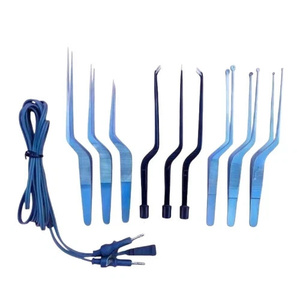
10 PCS Micro Bayonet Forceps Surgical Instrument Set Neurosurgery Tools for Delicate Tissue Handling
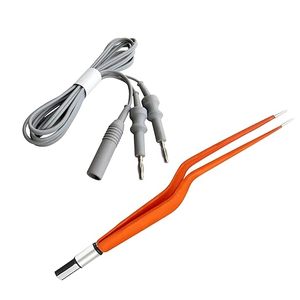
Bayonet Bipolar Forceps Professional Surgical Tool Stainless Steel Bipolar Coagulation Forceps With Fine Tips
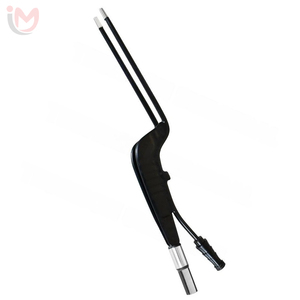
Wholesale Bayonet Bipolar Forceps Insulated Reusable Silicon Cable Surgical Instruments OEM Services
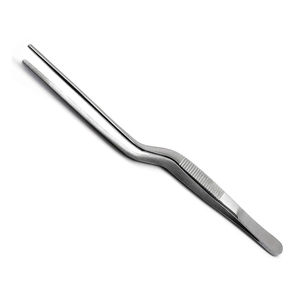
Adson Bayonet Forceps 16cm Serrated Tip Stainless Steel Surgical Dressing Tweezer
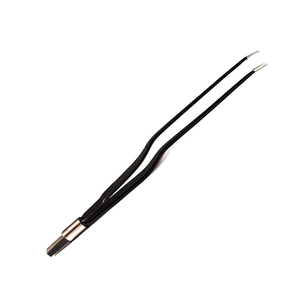
Neurosurgery Bayonet Non Stick European Bipolar Curved Forceps 22 cm W/Stop, Insulated Angled up 0.5mm
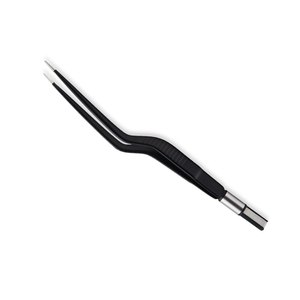
Premium Quality Bipolar Bayonet Forceps Black Color Coated Stainless Steel Manual Tweezers Instrument Set
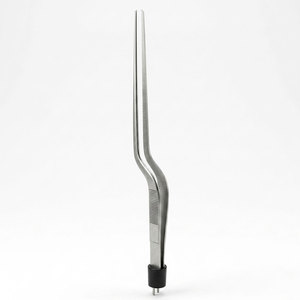
Wholesale Bayonet Non Insulated Bipolar Forceps 24cm 0.5mm 1.0mm 2.0mm Tip Microsurgery Surgical Instrument
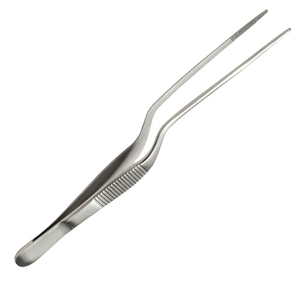
Stainless Steel Customized High-quality CE Certified Manual Bayonet Ear Dressing Forceps Instrument Set
Engineering Standards for OEM Surgical Scissors & Micro-Cutting Tools
In modern surgical environments—ranging from delicate cardiovascular procedures and ophthalmic operations to complex neurosurgical dissections—the performance of a surgical scissor blade directly impacts operative precision and tissue healing. As a specialized OEM Surgical Scissors Manufacturer and Exporter based in Sialkot, Pakistan, our production processes combine more than two decades of hand-finishing heritage with rigid ISO 13485:2016 quality control frameworks.
Surgical scissors are not merely cutting implements; they are precision mechanical systems requiring precise bevel alignment, uniform shear stress distribution, and exceptional resistance to galvanic corrosion. To provide genuine Information Gain for B2B procurement managers and medical device brand owners, this technical whitepaper outlines the metallurgical science, manufacturing workflows, and regulatory compliance criteria essential for global sourcing.
1. Metallurgy & Alloy Selection Criteria
The operational lifespan of a reusable surgical scissor depends primarily on the stainless steel grade selected during closed-die forging. We utilize German-standard martensitic and austenitic stainless steels certified according to ASTM F899 specs:
- AISI 420 (X20Cr13 / 1.4021): The industry standard for general operating room scissors (Metzenbaum, Mayo, Iris patterns). Offers an optimal balance between ductility, ease of resharpening, and corrosion resistance following passivating heat treatments.
- AISI 420B / 420C (X30Cr13 / 1.4028): Formulated with elevated carbon content to achieve higher Rockwell hardness (50–54 HRC). Ideal for micro-scissors and delicate plastic surgery instruments where edge retention under micro-serration is critical.
- Tungsten Carbide (TC) Insets (Sintered WC/Co): High-density Tungsten Carbide tiles gold-brazed onto blade cutting edges. TC scissors achieve hardness ratings exceeding 68–70 HRC, providing up to 5 times longer edge life under repeated clinical use.
- AISI 304 / 316L Stainless Steel: Utilized for non-cutting structural components, handles, and sterilization trays due to superior resistance to pitting corrosion in chloride-rich disinfection baths.
| Steel Grade / Material | Hardness Range (HRC) | Primary Clinical Application | Autoclave Cycle Resistance | Passivation Standard |
|---|---|---|---|---|
| AISI 420 Martensitic | 48 – 52 HRC | General Operating Room Scissors (Mayo, Metzenbaum) | 500+ Autoclave Cycles | ASTM F1081 / ISO 16061 |
| AISI 420C High-Carbon | 52 – 56 HRC | Micro-Surgical & Ophthalmic Shears (Vannas, Castroviejo) | 600+ Autoclave Cycles | ASTM A967 Citric Passivation |
| Tungsten Carbide (TC) Inserts | 68 – 72 HRC | Heavy Tissue Cutting, Suture Cutting, Supercut Scissors | 1,200+ Autoclave Cycles | Gold Electro-plated Handles |
| Titanium Grade 5 (Ti-6Al-4V) | 36 – 40 HRC (Non-Magnetic) | MRI-Compatible Neurosurgical & Microsurgical Tools | 2,000+ Autoclave Cycles | Anodized Anti-Reflective Surface |
2. Precision Manufacturing & Tolerances
Producing OEM surgical scissors requires multi-stage machining and manual setting by master craftsmen. Unlike mass-market hardware tools, surgical shears feature a deliberate double-bevel curvature that creates continuous single-point contact along the entire length of the blade movement. This mechanism guarantees clean shearing action rather than tissue crushing.
Precision CNC Joint Milling
Box locks and screw joints are milled within ±0.02 mm tolerances to eliminate blade lateral wobble, maintaining perfect alignment under heavy scissor leverage.
Vacuum Heat Treatment
Controlled vacuum furnace hardening prevents surface decarburization, followed by multi-stage tempering to achieve exact hardness without brittleness.
Micro-Serration & Supercut
One blade is razor-honed while the opposing blade features microscopic serrations (30 to 50 teeth per inch) to grip slippery vascular tissue without slippage.
Future Procurement Trends in Surgical Scissor Manufacturing (2025–2030)
As health systems, hospital networks, and medical device brand owners optimize their supply chains post-pandemic, the global market for surgical instruments is undergoing structural shifts. Buyers are shifting from low-cost spot purchasing toward long-term contracts with verified OEM partners capable of managing regulatory overhead.
Key Trends Shaping B2B Surgical Instrument Sourcing:
- Rise of Minimal Invasive & Micro-Scissors: Growth in endoscopic, laparoscopic, and robotic surgeries has heightened demand for fine-tip bayonet micro-scissors (0.5 mm to 1.0 mm tip dimensions) with anti-glare matte black or ceramic coatings.
- Stricter Traceability Requirements (EU MDR & US FDA UDI): Importers now require direct part marking (DPM). Every scissor must carry fiber-laser etched Unique Device Identification (UDI) 2D DataMatrix codes alongside catalog numbers and lot tracking code.
- Sustainable Reusable Instruments vs. Disposable Kits: Environmental sustainability mandates across European healthcare trusts are driving a resurgence in high-durability, autoclavable reusable surgical instruments over single-use plastic alternatives.
- Custom Ergonomic & Private Label Branding: OEM buyers increasingly demand tailored handle designs—such as ergonomic stream-lined finger rings, non-reflective satin finishes, or titanium-nitride (TiN) color-coded rings for quick OR identification.
Why Partner With SalarSurgicals for OEM Custom Manufacturing
Operating from Sialkot, Pakistan—the international hub for surgical instrument craftsmanship—SalarSurgicals provides contract manufacturing and private label production to medical equipment distributors in over 45 countries. We bridge the gap between traditional artisanal forging and modern ISO-certified production.
ISO 13485 & FDA Registered
Our Quality Management System is audited annually. Technical documentation files, Declarations of Conformity, and Material Mill Certificates are available under NDA.
Flexible OEM Tooling & Low MOQ
Standard catalog items start at just 50 pieces per reference. For bespoke patterns, we deliver pre-production engineering samples within 10 to 15 working days.
Ultrasonic Cleaning & Passivation
Every instrument undergoes multi-stage ultrasonic chemical cleaning and citric/nitric acid passivation to rebuild the protective chromium oxide layer for lifetime anti-corrosion.
Frequently Asked Questions (FAQ) for B2B Surgical Instrument Buyers
What is the minimum order quantity (MOQ) for custom OEM surgical scissors?
For standard catalog patterns with private label laser marking, our minimum order quantity starts at 50 pieces per item reference. For custom instruments requiring specialized forging dies or custom CNC tooling, we recommend 100 to 250 pieces to keep unit development costs economically efficient for importers.
How do you prevent rusting or pitting on stainless steel scissors after autoclaving?
Corrosion prevention begins with raw material verification (using genuine German AISI 420/420B steel). Post-machining, all instruments undergo vacuum heat treatment followed by automated ultrasonic cleaning and chemical passivation (ASTM F1081 / ISO 16061). This process removes free surface iron and develops a robust chromium oxide layer that withstands repeated steam sterilization cycles at 134°C.
Can you provide UDI laser etching and custom packaging for European MDR compliance?
Yes. We offer fiber-laser etching of brand logos, catalog reference numbers, lot tracking codes, CE marks, and high-density 2D DataMatrix UDI barcodes. We also supply custom sterile pouching, tray-mounted set assemblies, printed IFU inserts, and custom barcode labeling customized to your warehouse SKU system.
What are the typical lead times for sample development and bulk export shipments?
Pre-production engineering samples are typically completed within 10 to 15 working days after drawing sign-off. Repeat catalog production orders ship in 20 to 30 days, while large-scale OEM contract runs require 35 to 45 working days. We support FOB Karachi, CIF air freight, and DDP door-to-door shipping terms via global courier partners.
Are third-party factory audits and pre-shipment inspections accepted?
We welcome third-party inspections (such as SGS, Bureau Veritas, TÜV, or client-appointed inspectors) at our manufacturing facility in Sialkot, Pakistan. Final AQL sampling (typically Level II, Normal Inspection) is conducted prior to releasing commercial export documentation.
Start Your OEM Surgical Instrument Project Today
Connect with our technical export team to discuss custom patterns, metallurgical specifications, private label branding, or wholesale price quotes. We reply within one business day.