Precision Bipolar Forceps & Microsurgical Series
Explore our premium electrosurgical coagulation instruments engineered with high-grade martensitic steel, non-stick titanium alloys, and thermal-stable silicone assemblies.
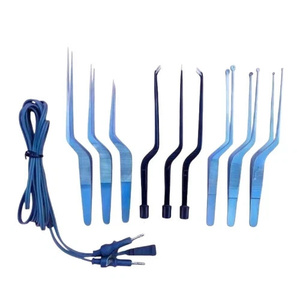
10 PCS Micro Bayonet Forceps Surgical Instrument Set Neurosurgery Tools for Delicate Tissue Handling
Get Catalog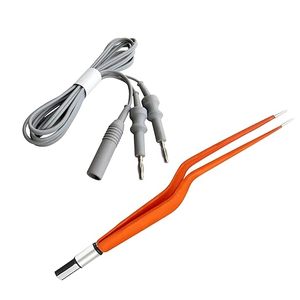
Bayonet Bipolar Forceps Professional Surgical Tool Stainless Steel Coagulation Forceps Fine Tips
Get Catalog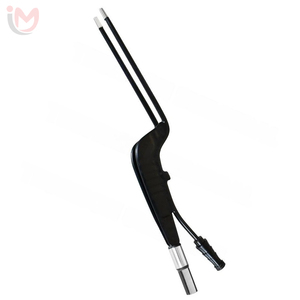
Wholesale Bayonet Bipolar Forceps Insulated Reusable Silicon Cable Surgical Instruments OEM Services
Get Catalog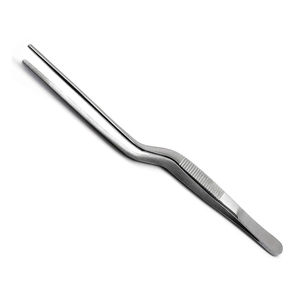
Adson Bayonet Forceps 16cm Serrated Tip Stainless Steel Surgical Dressing Tweezer
Get Catalog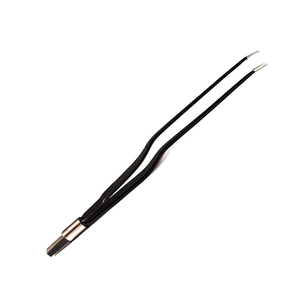
Neurosurgery Bayonet Non Stick European Bipolar Curved Forceps 22 cm W/Stop, Insulated 0.5mm Tip
Get Catalog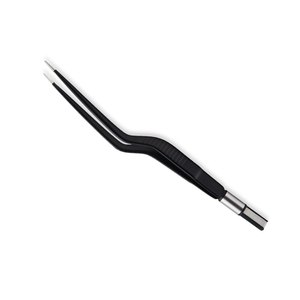
Premium Quality Bipolar Bayonet Forceps Black Color Coated Stainless Steel Manual Tweezers Set
Get Catalog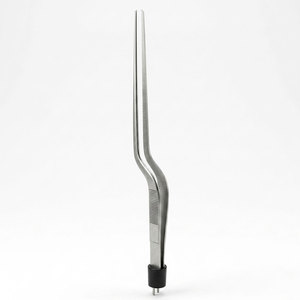
Wholesale Bayonet Non Insulated Bipolar Forceps 24cm 0.5mm 1.0mm 2.0mm Tip Microsurgery Tool
Get Catalog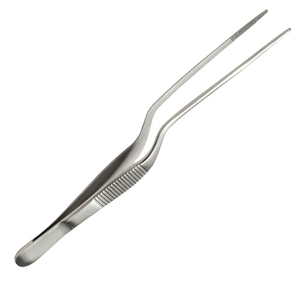
Stainless Steel Customized High-quality CE Certified Manual Bayonet Ear Dressing Forceps Set
Get Catalog1. Technical Whitepaper: Anatomy & Engineering Standards of Modern Bipolar Forceps
Electrosurgical hemostasis has undergone significant technological evolution over the past three decades. In modern neurosurgery, ophthalmic procedures, otolaryngology (ENT), and minimally invasive soft-tissue surgery, bipolar forceps represent the gold standard for targeted micro-coagulation. Unlike monopolar electrosurgical circuits—which require a patient return electrode pad and pass high-frequency electrical current through vast paths of body tissue—bipolar instrumentation confines the radiofrequency (RF) electrical circuit strictly between the two working tips of the forceps.
This localized energy delivery drastically reduces collateral thermal damage, eliminates lateral heat propagation, and prevents unintended neuromuscular stimulation. As a specialized OEM/ODM Bipolar Forceps Supplier & Exporter, our engineering architecture centers on mastering three critical variables: precise electrical impedance matching, uniform dielectric insulation integrity, and superior tip thermal dissipation.
Dielectric Insulation Coating & Autoclave Durability
The insulation applied to reusable bipolar forceps shanks must withstand severe physical and chemical stresses. We utilize high-grade bio-compatible polymer coatings including Nylon 11, PTFE, and PEEK (Polyether ether ketone), applied via electrostatically controlled powder coating or fluid bed immersion. Each insulated instrument undergoes mandatory 100% high-voltage spark testing (typically 1.5 kV to 3.0 kV AC dielectric breakdown testing) to ensure zero pinhole defects along the shank.
This rigorous process guarantees that our reusable bipolar forceps maintain structural and electrical integrity over 150+ standard steam sterilization cycles (autoclaved at 134°C for 18 minutes under 2.1 bar pressure), protecting surgeons from accidental peripheral burns during deep surgical cavity access.
2. Metallurgical Science, Precision Forging & Manufacturing Engineering
At our Sialkot manufacturing center, raw material selection dictates the mechanical life, tactile response, and corrosion resistance of every bipolar forceps line. We process surgical grade stainless steels imported with full mill test certificates, alongside medical grade Titanium alloys for ultra-lightweight ergonomic requirements.
| Material Grade | Composition & Standard | Hardness Range (HRC) | Thermal Conductivity | Primary Surgical Application |
|---|---|---|---|---|
| AISI 420 / 420B | Martensitic Chromium Steel (12-14% Cr) | 48 – 54 HRC | 24.9 W/m·K | Standard Reusable Bipolar Forceps, Serrated Tips |
| AISI 304 / 316L | Austenitic Stainless (18/8 & Low Carbon) | 25 – 35 HRC (Work Hardened) | 16.3 W/m·K | Non-cutting components, Instrument Trays, Cables |
| Titanium Grade 5 (Ti-6Al-4V) | Alpha-Beta Titanium Alloy | 36 – 40 HRC | 6.7 W/m·K | Non-Stick Neuro Forceps, Ultra-lightweight Micro Tools |
| Silver-Nickel Alloy Tips | High Conductivity Solid Silver Core | Non-structural Tip Core | 429 W/m·K | Premium Non-Stick Coagulation Bipolar Tweezer Tips |
Precision Vacuum Heat Treatment & Passivation
To eliminate internal stress residual from cold forging and machining, all instrument bodies pass through computer-controlled vacuum heat treatment furnaces. Tempering cycles are carefully calibrated to achieve an optimal balance between tip springiness (modulus of elasticity) and fatigue resistance. This guarantees that bayonet and straight forceps tips re-align perfectly after thousands of compression cycles without tip crossing or jaw distortion.
Following final hand-alignment by master craftsmen, instruments are subjected to multi-stage ultrasonic cleaning and chemical passivation according to ASTM F1089 / ISO 13485 protocol. Nitric or citric acid passivation strips free iron from the surface, forming a dense, self-healing Chromium Oxide ($Cr_2O_3$) passive layer that resists pitting corrosion from saline immersion and aggressive enzymatic detergents.
OEM / ODM Customization Capabilities
We empower OEM brand owners, medical distributors, and hospital procurement networks with tailored manufacturing, custom CAD prototyping, and full compliance documentation.
Custom Tip Geometry
Engineered tip widths ranging from 0.3mm micro-tips for neurosurgery up to 2.0mm broad tips for general hemostasis. Curved, angled, or straight configurations available.
Universal Connector Matrix
Full compatibility with major electrosurgical generators (Erbe, Martin, ValleyLab, Codman, Aesculap). Options for European Flat Plug, 2-Pin US, and Flying Lead connections.
Laser Branding & UDI Marking
High-precision fiber laser etching of customer logo, REF catalogue codes, LOT batch identifiers, and GS1-compliant Unique Device Identification (UDI) DataMatrix codes.
3. Global Procurement Trends & Future Market Dynamics (2025 – 2035)
The global market for electrosurgical market instruments is projected to expand at a CAGR of 6.8% over the next decade. As hospital group purchasing organizations (GPOs) and international medical device importers re-evaluate their supply chains, several macro trends are reshaping bipolar forceps procurement requirements:
1. Shift Toward Non-Stick & Thermal-Regulated Technologies
Surgical teams increasingly demand bipolar forceps that prevent eschar accumulation and tissue adherence. Standard stainless steel forceps can char tissue when energy is applied continuously, leading to tissue tearing upon jaw opening and renewed bleeding. Procurement managers are systematically replacing traditional inventory with solid silver alloy tip forceps or high-conductivity titanium non-stick lines. Sourcing agents should focus on manufacturers with proven proprietary thermal-sink bonding techniques.
2. Transition to Integrated Single-Use vs High-Cycle Reusables
While environmental sustainability initiatives favor high-cycle autoclavable reusable instruments, single-use sterile disposable bipolar forceps are seeing rapid uptake in ambulatory surgical centers (ASCs) due to strict cross-contamination prevention guidelines. As a full-service OEM/ODM supplier, we offer both dual-track options: ultra-durable 150+ cycle autoclavable forceps paired with medical-grade silicone cables, and cost-optimized sterile single-use packaged forceps tailored for high-volume ASC contracts.
3. Stringent Regulatory Compliance under EU MDR & US FDA
With the transition from EU MDD to EU MDR (2017/745) and heightened US FDA post-market surveillance requirements, regulatory documentation has become a key differentiator. Importers can no longer rely on unverified white-label suppliers. Reliable export partners must provide complete Technical Files, Clinical Evaluation Reports (CER), Risk Management documentation (ISO 14971), and biocompatibility data (ISO 10993) alongside physical shipments.
4. Frequently Asked Questions (FAQ) for B2B Importers & Procurement Directors
5. Enterprise Advantages & Sialkot Manufacturing Infrastructure
Situated in Sialkot, Pakistan—the world's premier cluster for surgical instrument manufacturing—our facility bridges over a century of traditional handcrafting expertise with state-of-the-art CNC machining, robotic polishing, and automated quality control testing. We operate a fully integrated, single-roof production center spanning raw forging, precision machining, heat treatment, dielectric coating application, packaging, and regulatory release.
In-House Tooling & Dies
Proprietary CAD/CAM mold making reduces custom project lead times by 40% compared to outsourced supply chains.
100% Lot Traceability
Every shipped batch is tied to raw material heat numbers, hardness test records, and inspector sign-off logs.
Dedicated Account Engineers
Direct communication with technical engineers who oversee production, avoiding middleman miscommunications.
Partner with a Trusted OEM/ODM Bipolar Forceps Exporter
Expand your product catalog with high-margin, ISO 13485 certified electrosurgical instruments. Contact our export desk today for full dimensional specifications, OEM volume pricing, and custom sample requests.
Get Catalog