Precision Surgical & Electrosurgical Instrument Offerings
Explore our ISO 13485:2016 certified microsurgical instruments, bayonet bipolar forceps, and precision cutting tools engineered for OEM/ODM global distribution.
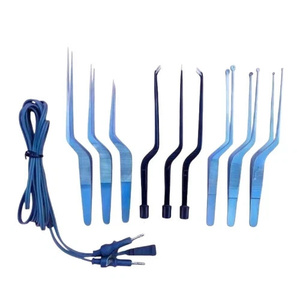
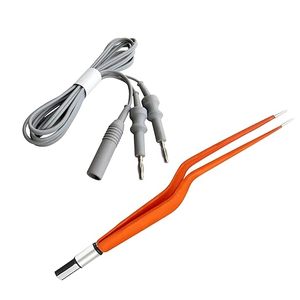
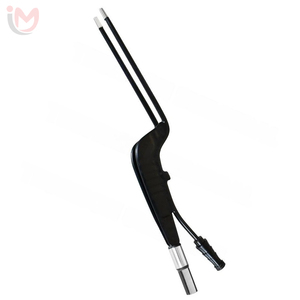
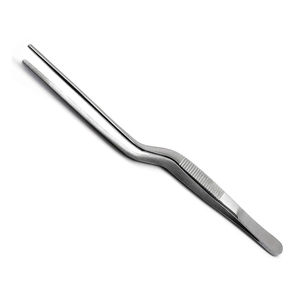
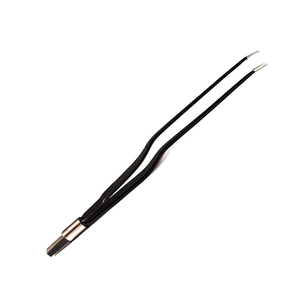
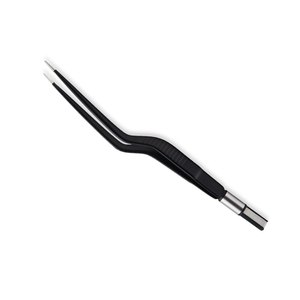
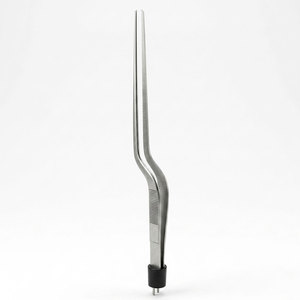
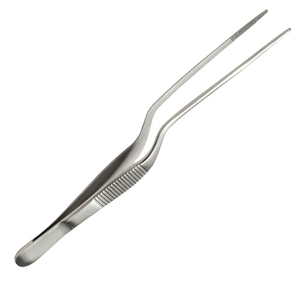
1. The Metallurgy & Engineering Blueprint of OEM/ODM Scalpel Handles & Microsurgical Instruments
In modern surgical environments, surgical cutting and tissue dissection demand absolute mechanical stability, unyielding corrosion resistance, and micro-metric dimensional accuracy. The scalpel handle serves as the direct tactile interface between the surgeon’s hand and the tissue interface. Whether executing delicate ophthalmic incisions, complex neurosurgical dissections, or major orthopedic trauma reconstructions, the structural integrity of the scalpel handle directly impacts surgical outcomes.
As a specialized OEM/ODM scalpel handles manufacturer based in Sialkot, Pakistan—the global epicenter of surgical instrument metallurgy—SalarSurgicals adheres to strict European and American material standards. Standard commercial grade stainless steel is fundamentally inadequate for professional surgical scalpels and microsurgical bayonet forcep systems. We utilize German-standard martensitic stainless steel (AISI 420 / 420B / DIN 1.4021) for cutting-edge holding mechanisms, and austenitic AISI 304/316L for non-cutting handle components, along with Titanium Grade 5 (Ti-6Al-4V) for non-stick, ultra-lightweight microsurgical variants.
Technical Specification Matrix: Surgical Instrument Steel Alloys
| Material Designation | Metallurgical Composition | Hardness Rating (HRC) | Primary Clinical Application | Autoclave Cycling Tolerance |
|---|---|---|---|---|
| AISI 420B / DIN 1.4021 | Martensitic (12-14% Cr, 0.26-0.35% C) | 50 - 54 HRC | Scalpel Handle Fitment Slots, Blade Locking Locks | 500+ Standard Steam Cycles |
| AISI 316L / DIN 1.4404 | Austenitic (16-18% Cr, 10-14% Ni, 2-3% Mo) | 25 - 30 HRC | Ergonomic Scalpel Body Handles, Tray Assemblies | 1,000+ High-Temp Sterilization Cycles |
| Titanium Grade 5 (Ti-6Al-4V) | Alpha-Beta Titanium Alloy (6% Al, 4% V) | 36 - 40 HRC | Non-Magnetic Neurosurgical Bayonet Handles & Forceps | 2,500+ Autoclave & Chemical Sterilizations |
Standard scalpel handle fitments include the universal No. 3 fitment (compatible with standard blades 10, 11, 12, and 15) and the No. 4 fitment (engineered for heavy-tissue blades 20, 21, 22, 23, and 24). For OEM clients requiring specialized micro-scalpels, we manufacture customized No. 7 slim handles, bayonet-shaped ergonomic handles for deep-cavity visualization, and safety quick-release mechanisms that eliminate manual blade contact during surgical breakdown.
2. Global Procurement & Technological Trends in Surgical Cutting Tools
The global medical device market is undergoing a structural transformation. Hospital procurement committees, surgical group purchasing organizations (GPOs), and private-label distributors are no longer evaluating suppliers based solely on unit pricing. Sourcing decisions are now governed by strict regulatory compliance, traceable supply chain logistics, human factors engineering (ergonomics), and unique device identification (UDI) mandates.
UDI & Laser Traceability
Global regulatory bodies (US FDA and EU MDR 2017/745) require permanent Unique Device Identification. Modern OEM handles feature fiber-laser etched GS1 DataMatrix barcodes and lot codes capable of surviving thousands of washer-disinfector cycles.
Ergonomic & Bayonet Architectures
Surgical fatigue is a primary operational hazard in prolonged microsurgery. Industry demand is rapidly shifting toward hollow rounded handles, knurled non-slip tactile grips, and offset bayonet geometry that clears the surgeon's line of sight under magnification microscopes.
Hybrid Non-Stick Coatings
In electrosurgical and thermal cutting applications, tissue adhesion causes thermal necrosis and procedure delays. Future procurement favors surgical instruments coated with medical-grade titanium nitride (TiN) or PTFE non-stick insulation barriers.
Strategic buyers are consolidating their supply bases. Instead of buying scalpel handles, bipolar bayonet forceps, and microsurgical scissors from fragmented trading vendors, distributors are partnering directly with integrated OEM/ODM factories capable of managing raw material forging, precision CNC machining, hand grinding, passivation, laser etching, and custom sterile packaging in a single certified workflow.
3. Inside the Factory: OEM/ODM Manufacturing Workflow
Producing a high-precision surgical scalpel handle or a neurosurgical bayonet forcep requires a harmonious blend of heavy industrial forging and refined artisan handcrafting. At SalarSurgicals, every instrument undergoes a rigorous six-stage production lifecycle within our ISO 13485:2016 audited facility in Sialkot, Pakistan.
Stage 1: Closed-Die Forging & CNC Machining
Certified steel billets are drop-forged under extreme thermal pressure to establish internal grain refinement. Computer Numerical Control (CNC) milling shapes the precise blade-fitment slots with tolerances within ±0.02 mm.
Stage 2: Vacuum Heat Treatment & Hardening
Instruments enter computer-controlled vacuum furnaces to undergo heat hardening followed by controlled multi-stage tempering, establishing optimal HRC hardness ratings without introducing surface decarbonization.
Stage 3: Artisan Hand Fitting & Calibration
Master surgical toolmakers hand-balance each handle, setting ratchet tensions, micro-tip alignments, and edge contours. Machine-only production cannot replicate this refined tactile feel for delicate microsurgery.
Stage 4: Ultrasonic Passivation & Electropolishing
Submersed in heated citric or nitric acid baths, instruments undergo complete surface decontamination. Electropolishing removes micro-burrs, producing a mirror, satin, or glare-free matte finish per client specifications.
Stage 5: High-Precision Fiber Laser Marking
Custom logos, OEM catalogue numbers, lot identification codes, material grades, and CE compliance symbols are fiber-laser marked directly onto the stainless body prior to final inspection.
Stage 6: Final Quality Control & Packaging
Every lot is subjected to AQL (Acceptable Quality Limit) sampling, corrosion testing, dimensional verification, and optical microscopic inspection before sealing in protective pouches or custom OEM branding boxes.
SalarSurgicals Enterprise Advantages & OEM Capability
SalarSurgicals Pvt. Ltd. has been a pioneer in medical instrument manufacturing and global exporting from Sialkot, Pakistan since 2005. Operating under an audited ISO 13485:2016 Quality Management System, our products hold full CE Marking (under EU MDR framework) and US FDA Establishment Registration.
We provide full-spectrum OEM (Original Equipment Manufacturer) and ODM (Original Design Manufacturer) private-label solutions tailored to medical device brand owners, regional distributors, and clinical importers across 45+ international markets.
- Low Commercial MOQs: Flexible minimum order quantities starting at just 50 pieces for standard catalogue designs, and 100–250 pieces for custom tooling/die projects.
- Rapid Sample Prototyping: Pre-production functional samples delivered within 10 to 15 working days based on your technical drawings or physical benchmark samples.
- Complete Technical Documentation: We supply Mill Material Test Certificates, Certificates of Conformance (CoC), Declarations of Conformity (DoC), and complete batch traceability logs for easy customs clearance.
- Turnkey Export Logistics: Shipping under FOB Karachi, CIF, or DDP terms via express air freight or sea cargo with complete commercial invoicing and packing lists.
5. Frequently Asked Questions (FAQ) for Surgical Instrument Buyers
Essential guidance for procurement managers, medical device importers, and OEM brand buyers sourcing scalpel handles and surgical tools.
What is the minimum order quantity (MOQ) for OEM scalpel handles and surgical instruments?
For standard catalog references (such as No. 3, No. 4, No. 7 scalpel handles or standard bayonet forceps), our minimum order quantity starts at 50 pieces per item code. For fully customized instruments requiring new forging dies or custom machining molds, the recommended MOQ is 100 to 250 pieces to keep tooling costs commercially economical.
Which steel grades are utilized for cutting handles versus electrosurgical bayonet forceps?
We utilize martensitic stainless steel (AISI 420 or AISI 420B) for scalpel handle fitments and cutting tool jaws that require high Rockwell hardness (50–54 HRC) and wear resistance. For electrosurgical bipolar bayonet forceps and non-cutting handles, we utilize AISI 304/316L austenitic stainless steel or Titanium Grade 5 (Ti-6Al-4V) for non-stick, non-magnetic performance in MRI environments.
Are SalarSurgicals instruments certified for regulatory submission in the US and Europe?
Yes. Our manufacturing plant operates under a certified ISO 13485:2016 Quality Management System. Reusable surgical instrument families carry CE marking under applicable European Medical Device Regulations (EU MDR), and our facility is registered with the United States FDA. Technical dossiers and Declarations of Conformity are provided to authorized distributors under NDA.
Can you custom laser-mark our company logo, catalogue SKU numbers, and UDI codes?
Precisely. Fiber laser marking of client logos, customized SKU catalogue references, lot traceability codes, material identifiers, and CE marks is a standard component of our OEM private label service. Passivation is performed after laser marking to ensure markings resist fading or corrosion across repeated autoclave cycles.
What are the standard production lead times and global shipping options?
Repeat order shipments for standard catalogue items typically dispatch within 15 to 25 working days. Initial OEM custom production runs—including custom laser branding and private label packaging—require 30 to 45 working days following sample approval. We quote on FOB Karachi, CIF, and DDP terms, delivering via DHL, FedEx, air freight, or ocean container shipments.
How do you guarantee corrosion resistance and surface passivation quality?
Every manufacturing batch undergoes automated ultrasonic cleaning and chemical passivation according to ASTM F895 / ASTM A967 standards. Samples from each heat lot are subjected to boil testing and copper sulfate testing to verify that all free iron is removed and that a protective passive chromium oxide layer has formed across all surfaces.