Precision Wire Basket & Instrument Solutions
Explore our export-grade medical wire basket assemblies, micro-tissue bayonet tools, electrosurgical instruments, and reusable sterilization tray components manufactured strictly to ISO 13485 & CE standards.
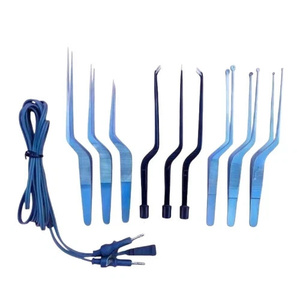
10 PCS Micro Bayonet Forceps Surgical Instrument Set
Designed for delicate neurosurgical tissue handling. Fits perfectly into specialized micro-instrument wire mesh trays with silicone positioning brackets.
Get Catalog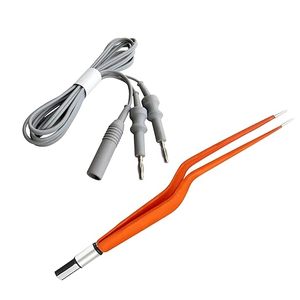
Bayonet Bipolar Forceps Stainless Steel Fine Tip Tool
Premium stainless steel construction with precise bipolar coagulation tips. Compatible with automated electro-polished wire basket washing cycles.
Get Catalog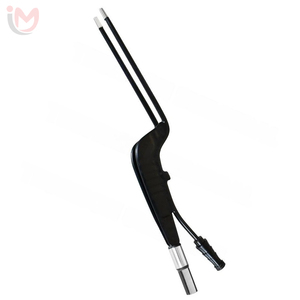
Insulated Bayonet Bipolar Forceps & Silicone Cable Set
Autoclavable insulated electrosurgical series engineered for repeat steam sterilization inside DIN standard wire mesh baskets.
Get Catalog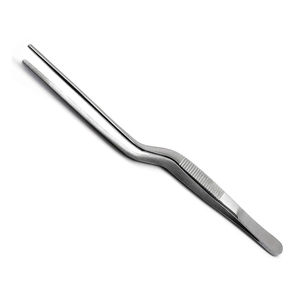
Adson Bayonet Forceps 16cm Serrated Dressing Tweezer
High-grade surgical steel dressing forceps featuring micro-serrated teeth, ideal for loading into surgical basket management kits.
Get Catalog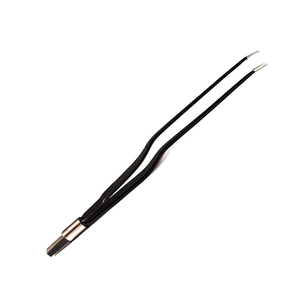
Non-Stick European Bipolar Curved Bayonet Forceps 22cm
Advanced thermal-conductive alloy tips preventing tissue adhesion, engineered for ISO 11607 compliant sterilization tray storage.
Get Catalog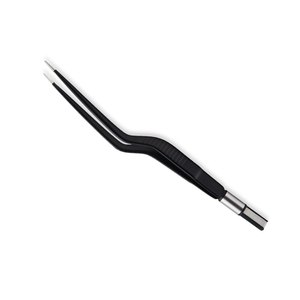
Black Coated Bipolar Bayonet Forceps Instrument Set
Glare-free optical finish with high-dielectric polymer insulation coating. Fits modular sterilization wire tray configurations.
Get Catalog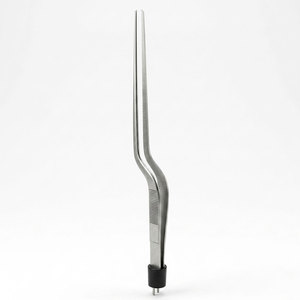
Non-Insulated Bipolar Bayonet Forceps 24cm Microsurgery
Extended 24cm reach with 0.5mm ultra-fine tips. Fully compatible with automated ultrasonic cleaning wire baskets.
Get Catalog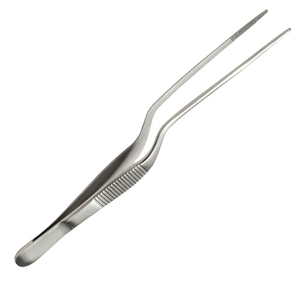
Manual Bayonet Ear Dressing Forceps CE Certified Set
Precision ENT & ear dressing manual forceps. CE and ISO certified OEM private label product for medical device importers.
Get CatalogEngineering Standards of OEM/ODM Wire Baskets & Sterilization Trays
An in-depth metallurgical and structural analysis of stainless steel wire mesh containers, washing baskets, and medical instrument management systems.
In modern healthcare Central Sterile Supply Departments (CSSD), surgical operating theaters, and industrial cleanrooms, the structural integrity of sterilization wire baskets directly impacts surgical outcomes, instrument longevity, and sterilization efficacy. As a premier global OEM/ODM manufacturer headquartered in Sialkot, SalarSurgicals provides comprehensive whitepaper-level engineering solutions tailored for international medical device distributors, hospital procurement groups, and private label importers.
Wire baskets and sterilization trays serve a dual function: protecting expensive surgical instruments (such as neurosurgical bayonet micro-forceps and electrosurgical instruments) during handling, and ensuring maximum penetration of steam, ethylene oxide (EtO), or hydrogen peroxide plasma during automated reprocessing cycles. Choosing the correct OEM/ODM partner requires evaluating metal chemistry, frame design, welding methodology, and passivation standards.
AISI 316L vs 304 Metallurgy
While AISI 304 offers structural rigidness for external holding frames, critical wire mesh baskets exposed to aggressive washer-disinfector detergents and high-salinity steam demand low-carbon AISI 316L stainless steel. The addition of 2-3% Molybdenum in 316L prevents pitting corrosion and crevice oxidation during repeated 134°C autoclave cycles.
TIG & Spot Welding Integrity
Poorly welded wire mesh creates micro-cavities where bioburden accumulates. Our OEM manufacturing process utilizes automated resistance spot welding combined with micro-TIG perimeter welding. This ensures zero sharp wire ends, smooth stress-relief joints, and zero risk of tearing surgical wraps or sterile barrier pouches.
Electro-Polishing & Passivation
Mechanical polishing alone leaves micro-burrs and embedded iron contaminants. All SalarSurgicals wire baskets undergo continuous electro-chemical polishing, creating an ultra-smooth, high-chromium passive oxide layer that eliminates surface roughness (Ra < 0.4 µm) and prevents bacterial bio-film adhesion.
Technical Comparison: Standard vs. OEM/ODM Precision Wire Baskets
| Technical Parameter | Standard Commercial Trays | SalarSurgicals OEM/ODM Wire Baskets | Clinical / Functional Impact |
|---|---|---|---|
| Material Standard | Commercial Grade AISI 201 or 304 | German-Standard AISI 316L / 304 Stainless Steel | Superior corrosion resistance against acidic cleaning agents and thermal shock. |
| Mesh Construction | Crimped woven wire mesh | Punch-formed, welded wire mesh (DIN 58952) | Eliminates dirt pockets; guarantees 100% steam penetration and liquid drainage. |
| Edge Finish | Sheared wire rims with end caps | Continuous top-frame wire wrapping with deburred joints | Prevents glove tearing, nurse injury, and sterile drape puncture. |
| Passivation Standard | Basic acid wash rinse | ASTM A967 Citric/Nitric Electro-Passivation | Exceeds 500+ autoclave cycles without surface discoloration or rust formation. |
| Custom Silicone Holders | Generic fixed brackets | CAD-designed, medical-grade silicone inserts | Secures micro-instruments (e.g., bayonet forceps) preventing tip damage. |
Future Procurement & Sourcing Trends in Wire Basket Manufacturing
Strategic insights for procurement directors, medical device brand owners, and supply chain managers for 2025–2030.
1. Integration of UDI & RFID Smart Tracking
Global healthcare regulations (such as EU MDR and US FDA UDI mandates) require strict track-and-traceability for reusable surgical assets. Future wire baskets are no longer simple wire containers; they are built with integrated laser-etched DataMatrix codes and high-temperature RFID chip brackets. This enables automated CSSD inventory scanning, tracking sterilization cycle history, and monitoring basket usage frequency across hospital networks.
2. Modular & Hybrid Wire-Perforated Designs
Modern surgical sets require flexible layout arrangements. The market is shifting from rigid single-purpose trays toward modular wire baskets equipped with adjustable silicone dividers, drop-in instrument holders, and hybrid perforated sheet bottoms. This allows surgical teams to reconfigure a single DIN wire basket for laproscopic, orthopedic, or neurosurgical instrument sets dynamically.
3. Sustainable & Low-Carbon Footprint Manufacturing
International buyers are actively auditing supplier supply chains for environmental compliance. Sourcing wire baskets from manufacturers who employ closed-loop water electro-polishing, solar-assisted factory heating, and 100% recyclable stainless steel scrap allows distributors to meet stringent corporate ESG (Environmental, Social, and Governance) purchasing criteria.
4. Ergonomic Weight Reduction & High-Durability Alloys
To reduce physical strain on CSSD personnel, hospital purchasing policies limit the maximum weight of loaded sterilization containers. OEM/ODM suppliers are utilizing high-tensile fine wire geometries and titanium-blend frame reinforcements to achieve up to a 20% weight reduction without compromising structural stackability or deformation resistance under heavy loads.
Industry Development Trends & Manufacturing Innovations
How automated CNC fabrication and advanced surface science are reshaping wire mesh container production.
Automated CNC Wire Bending & Robotic Spot Welding
Traditional wire basket manufacturing in developing regions relied heavily on manual wire bending, resulting in dimensional variance and inconsistent stacking behavior. SalarSurgicals has integrated 3D automated CNC wire bending machinery capable of shaping stainless steel wire stock with sub-millimeter tolerances. Coupled with multi-axis robotic spot welding arms, every cross-wire point receives precise thermal energy, ensuring uniform weld strength (burst resistance > 450 N per joint) while preserving the corrosion resistance of the surrounding steel matrix.
Custom Silicone Molded Brackets & Micro-Mesh Technology
As microsurgery, robotic surgery, and ophthalmic procedures advance, surgical tools feature increasingly fragile tips—such as 0.3mm bayonet bipolar forceps and delicate scissors. Modern wire basket development incorporates micro-mesh side panels (mesh opening < 1.5mm) paired with custom 3D-molded, steam-resistant silicone holding strips (tested up to 138°C). This hybrid architecture prevents fine instruments from slipping through mesh openings while dampening vibration during transport.
Why Partner with SalarSurgicals (Sialkot, Pakistan)
Combining over 20 years of Sialkot surgical crafting heritage with modern ISO 13485 quality assurance and full OEM private-label capabilities.
ISO 13485 & CE Compliance
Our Sialkot production facility operates under an ISO 13485:2016 certified Quality Management System. Reusable surgical instrument ranges and sterilization baskets carry full CE marking (EU MDR compliant) and US FDA establishment registration, giving importers seamless market access.
End-to-End Private Labeling
From low MOQ initial orders (starting at 50 units for standard items) to full container export runs, we offer fiber laser logo marking, catalogue reference etching, custom lot numbering, and retail packaging (blister pack, pouch, or tray kits) tailored to your brand identity.
Export Logistics to 45+ Countries
SalarSurgicals ships regularly to distributors across North America, Europe, the Middle East, and Asia-Pacific. We provide complete commercial documentation (Certificate of Origin, Mill Test Reports, Passivation Certificates) under FOB, CIF, or DDP terms.
Frequently Asked Questions (FAQ) for OEM/ODM Wire Baskets
Direct answers to common technical, commercial, and regulatory questions raised by international procurement managers.
Ready to Elevate Your Surgical Instrument & Basket Line?
Contact our engineering export desk today to request product catalogues, technical drawings, or factory-direct OEM quotations. We reply within 24 hours.