Precision Surgical & Bipolar Electrosurgical Instruments
Manufactured in Sialkot under strict EU MDR and US FDA regulatory standards. Designed for high-frequency coagulation, delicate neurosurgical dissection, and general tissue handling.
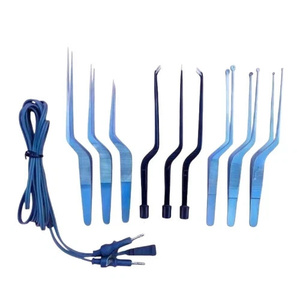
10 PCS Micro Bayonet Forceps Surgical Instrument Set Neurosurgery Tools
- Material: AISI 420 Stainless Steel
- Tip Spec: 0.3mm to 0.7mm Micro Fine
- Application: Deep-seated cranial & tissue handling
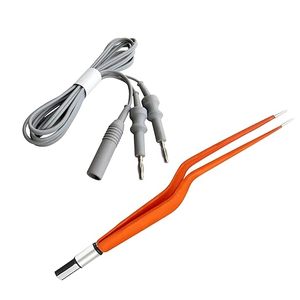
Bayonet Bipolar Forceps Professional Surgical Coagulation Tool
- Coating: Nylon-based high-temp insulation
- Tip Size: 0.5mm / 1.0mm precision alignment
- Autoclave: 134°C Steam Sterilization Ready
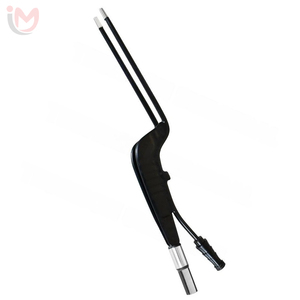
Wholesale Bayonet Bipolar Forceps & Reusable Silicone Cable Kit
- Cable Spec: Medical grade silicone flex jacket
- Compatibility: ValleyLab, Martin, Erbe Sockets
- Customization: OEM private label & packaging
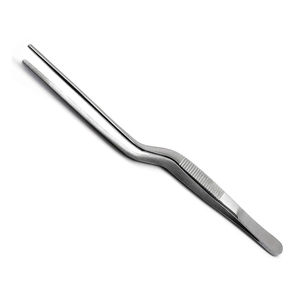
Adson Bayonet Forceps 16cm Serrated Tip Stainless Steel Surgical Tweezer
- Length: 160 mm ergonomics shaft
- Jaw Pattern: Micro-serrated atraumatic grip
- Finishing: Satin glare-free passivation
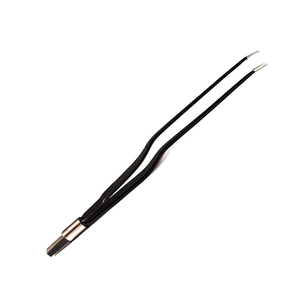
Neurosurgery Bayonet Non-Stick European Bipolar Curved Forceps 22cm
- Technology: Silver-alloy tip thermal dissipator
- Connector: European Flat 2-Pin Plug Standard
- Compliance: CE Marked & ISO 13485 Annex V
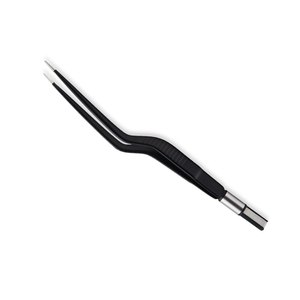
Premium Quality Bipolar Bayonet Forceps Black Polymer Coated
- Surface Finish: Ceramic-grade glare-reducing black coating
- Feature: Guide-pin tip alignment mechanism
- Sterilization: Autoclavable up to 500+ cycles
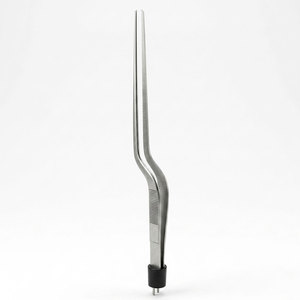
Bayonet Non-Insulated Forceps 24cm (0.5mm/1.0mm/2.0mm Tip)
- Shaft Length: 240 mm long-reach balance
- Steel Hardness: 48 - 52 HRC Rockwell tested
- Market Target: ENT & Microsurgical Centers
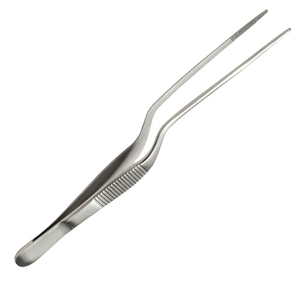
Stainless Steel Manual Bayonet Ear Dressing Forceps Instrument Set
- Design: Offset bayonet structure for line-of-sight
- Certifications: CE Marked, FDA Registered
- MOQ: 50 Pcs for standard catalogue OEM
1. Global Landscape of Surgical Instrument Manufacturing
In modern clinical environments, surgical instruments represent far more than simple manual hand tools—they are direct extensions of the surgeon’s hands. As surgical procedures transition toward minimally invasive techniques, micro-neurosurgery, and energy-based tissue resection, the global demand for high-precision, reliable, and durable medical instruments has surged exponentially.
When procurement officers, medical device distributors, and hospital purchasing managers search for a Top 10 Medical Instruments Supplier & Exporter, the evaluation matrix extends beyond unit pricing. Technical compliance with ISO 13485:2016, compliance with the European Union Medical Device Regulation (EU MDR 2017/745), US FDA Establishment Registration, metallurgical consistency, and long-term autoclave endurance form the core pillars of vendor selection.
The historical manufacturing hub of Sialkot, Pakistan accounts for over 70% of the world’s hand-held surgical instrument supply. By blending traditional forging hand-craftsmanship with modern 5-axis CNC machining, micro-laser welding, and automated chemical passivation, tier-1 suppliers in this region produce international-grade instruments for global medical brands across Europe, North America, Latin America, and the Middle East.
2. Technical Material Standards: Stainless Steel & Titanium Alloys
To ensure high information gain for procurement decision-makers, understanding the precise metallurgy utilized in medical instrument forging is paramount. Selecting the wrong grade of steel leads to premature pitting, jaw misalignment, stress corrosion cracking, and instrument failure in surgical suites.
| Steel Grade Standard | Metallurgical Class | Hardness Rating (HRC) | Primary Clinical Application | Corrosion Resistance Level |
|---|---|---|---|---|
| AISI 420 / 420B (1.4021) | Martensitic Stainless | 48 - 54 HRC | Surgical Scissors, Bone Rongeurs, Cutters | High (Post-Tempering & Passivation) |
| AISI 304 / 304L (1.4301) | Austenitic Stainless | 20 - 25 HRC | Retractors, Sterilization Trays, Handles | Exceptional (Non-Magnetic) |
| AISI 410 (1.4006) | Martensitic Stainless | 40 - 45 HRC | Anatomical Forceps, Hemostatic Clamps | Moderate - High |
| Titanium Grade 5 (Ti-6Al-4V) | Alpha-Beta Titanium Alloy | 36 - 40 HRC | Non-Stick Bipolar Forceps, Microsurgery | Maximum (Lightweight & MRI Safe) |
For high-frequency electrosurgical instruments such as Bayonet Bipolar Forceps, insulation integrity is equally critical. Medical-grade polymer coatings (such as high-density nylon or fluoropolymer insulation) must withstand high dielectric stress (exceeding 1000V peak) without breakdown, while maintaining mechanical resistance against repeated high-temperature steam autoclaving (134°C / 2.1 bar pressure cycles).
3. Future Trends in Medical Instrument Procurement & Technology
As healthcare supply chains face tighter regulatory scrutiny and sustainability directives, strategic buyers must adapt to four transformative macro-trends driving the 2025–2030 surgical instrument market.
Non-Stick Thermal Coating Innovations
Electrosurgical coagulation frequently suffers from tissue charring and adherence to bipolar tips. Future procurement prioritizes solid-silver alloy tips and thermal-conducting core technologies that actively dissipate excess heat, eliminating tissue sticking and reducing surgical procedure times.
Mandatory UDI & Laser Traceability
Under EU MDR and US FDA regulations, single-instrument Unique Device Identification (UDI) via 2D DataMatrix laser engraving is becoming compulsory. Importers must ensure their factory partners possess fiber-laser marking systems that bypass surface degradation during passivation.
Sustainable & Circular Supply Chains
Hospital sustainability mandates are moving away from single-use plastics toward high-durability, reusable stainless steel instruments validated for 500+ autoclave cycles. Selecting certified manufacturing exporters reduces hospital clinical waste and lowers Total Cost of Ownership (TCO).
4. Enterprise Manufacturing Advantages & Quality Control Framework
SalarSurgicals operates as a premier manufacturer and exporter of surgical, electrosurgical, orthopedic, and microsurgical instruments from Sialkot, Pakistan. Operating an ISO 13485:2016 certified Quality Management System, our factory bridge classic hand-forging art with advanced metallurgical engineering to serve hospital distributors in over 45 countries.
Closed-Die Drop Forging & CNC Milling
Raw German steel bars are forged using high-tonnage friction screw presses, followed by CNC box-lock milling to guarantee alignment tolerances within 0.03 mm.
Computer-Controlled Vacuum Heat Treatment
Instruments undergo vacuum quenching and multi-stage tempering to achieve exact Rockwell hardness (HRC), preventing jaw flexure or blade dulling.
Ultrasonic Cleaning & Chemical Passivation
Every lot is subjected to multi-tank citric/nitric acid passivation, forcing the creation of an oxide chrome surface barrier that resists chemical corrosion and steam pitting.
Comprehensive OEM Private Label Services
We provide complete OEM branding including fiber laser logo marking, custom SKU catalogue numbers, lot batch codes, custom blister cards, and tray set packaging with low MOQs (from 50 pcs).
5. Medical Instrument Procurement & Export FAQ
Direct technical and commercial answers addressing common inquiries from medical device importers, distributors, and procurement agents.
What is the typical Minimum Order Quantity (MOQ) for custom OEM medical instruments?
For standard catalogue references, our minimum order quantity starts at just 50 pieces per item. For fully customized instruments requiring new forging dies, special tip geometries, or dedicated CNC tooling, we recommend a minimum run of 100 to 250 pieces to keep unit tooling costs commercially competitive for your market.
How do you verify steel raw material authenticity and quality consistency?
Every production batch is forged strictly from certified surgical-grade steel (AISI 420, 304, or Titanium Grade 5). Mill test certificates detailing the chemical analysis (carbon, chromium, manganese content) are maintained for every heat lot and can be provided alongside your shipment documentation upon request.
Are SalarSurgicals medical instruments CE marked and FDA registered?
Yes. Our facility operates under an ISO 13485:2016 accredited Quality Management System. Reusable surgical and electrosurgical instrument lines carry CE marking under applicable medical device regulations, and our establishment holds US FDA registration for direct export to North American markets.
What passivation test standards are conducted prior to export packaging?
All finished instruments undergo rigorous passivation testing according to ASTM A967 / ISO 16061 standards. Tests include boil testing, water immersion testing, and copper sulfate spot testing to ensure total removal of free iron and complete formation of the protective chromium oxide layer.
What are the standard international shipping terms and delivery lead times?
We offer flexible shipping terms including FOB Karachi, CIF destination port, and DDP (Delivered Duty Paid) via express air freight (DHL, FedEx) or sea cargo. Standard catalogue orders typically ship within 15 to 25 working days, while custom OEM branding projects require 30 to 45 working days post-sample approval.
Connect With Our Export Engineering Desk
Whether you require a custom OEM quotation, technical specification sheets, CAD drawings, or sample evaluations, our team responds within 24 business hours.