Precision Microsurgical Instrument Portfolio
Explore our certified ISO 13485 & CE-marked microsurgery instruments engineered for delicate neurosurgery, ophthalmic, cardiovascular, and electrosurgical procedures.
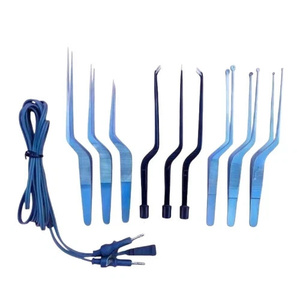
10 PCS Micro Bayonet Forceps Surgical Instrument Set Neurosurgery Tools for Delicate Tissue Handling
Get a Quote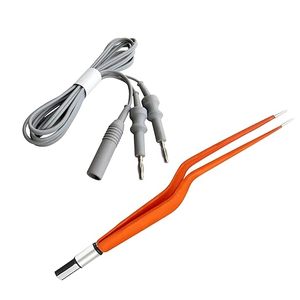
Bayonet Bipolar Forceps Professional Surgical Tool Stainless Steel Bipolar Coagulation Forceps With Fine Tips
Get a Quote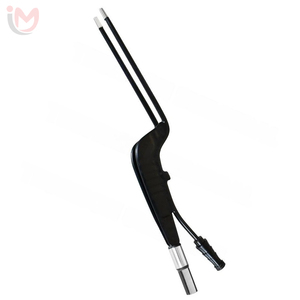
Wholesale Bayonet Bipolar Forceps Insulated Reusable Silicon Cable Surgical Instruments OEM Services
Get a Quote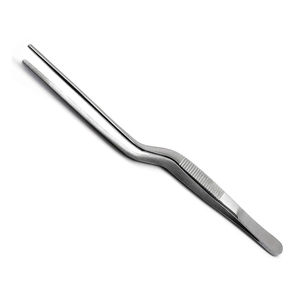
Adson Bayonet Forceps 16cm Serrated Tip Stainless Steel Surgical Dressing Tweezer
Get a Quote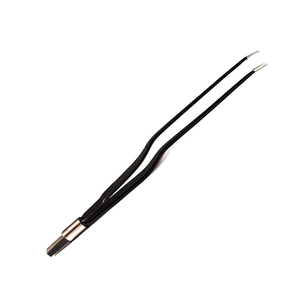
Neurosurgery Bayonet Non Stick European Bipolar Curved Forceps 22 cm W/Stop, Insulated Angled up 0.5mm
Get a Quote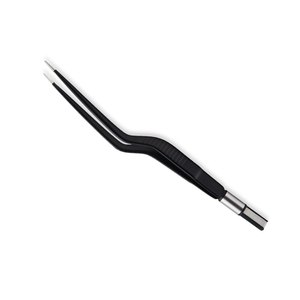
Premium Quality PENTAX SURGICAL Bipolar Bayonet Forceps Black Color Coated Stainless Steel Instrument Set
Get a Quote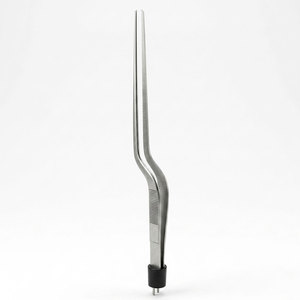
Wholesale Bayonet Non Insulated Bipolar Forceps 24cm 0.5mm 1.0mm 2.0mm Tip Microsurgery Instrument
Get a Quote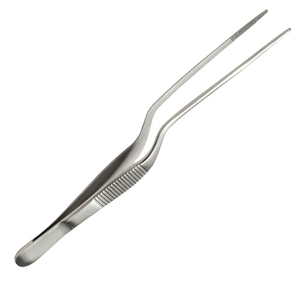
Stainless Steel Customized High-quality CE Certified Manual Bayonet Ear Dressing Forceps Instrument Set
Get a QuoteExecutive Sourcing Report: Navigating Global Micro Scissors Procurement
Micro scissors—incorporating iconic patterns such as Castroviejo, Vannas, Westcott, Noyes, and Jacobson—represent the pinnacle of surgical hand instrumentation. Designed for dissection under high-magnification surgical operating microscopes, these instruments demand sub-millimeter tolerances, pristine blade bevel symmetry, and calibrated spring action. For hospital procurement managers, medical device importers, and OEM brand owners, sourcing micro scissors requires evaluating critical engineering parameters beyond initial unit cost, including tensile metal fatigue resistance, blade hardness retention (HRC scale), and passivated oxide layer integrity for automated steam sterilization (autoclaving).
As healthcare systems prioritize infection control, procedural efficiency, and surgical ergonomic consistency, the global demand for micro scissors and fine microsurgical bayonet tools has expanded rapidly across neurosurgery, ophthalmology, plastic and reconstructive surgery, cardiovascular bypass, and robotic-assisted microsurgical procedures. Selecting a reliable direct manufacturer guarantees direct oversight over raw material supply chains, compliance documentation under EU Medical Device Regulation (MDR 2017/745), and US FDA Establishment Registration standards.
E-E-A-T Sourcing Insight: Instrument failure during delicate neurovascular procedures frequently stems from blade burrs, micro-friction along box-locks, or poor corrosion resistance resulting from improper passivation. Factory-direct procurement backed by ISO 13485:2016 mill certificates eliminates mid-tier broker risk.
Visualizing Procurement Parameters: Material & Quality Metrics
German Stainless Steel
Utilizing high-grade AISI 420B martensitic stainless steel, delivering 50-54 HRC Rockwell blade hardness to maintain razor-sharp cutting edges without premature dulling.
Micro-Edge Calibration
Laser-guided blade sharpening ensuring smooth shear action along the entire cutting length, eliminating tissue slippage or micro-trauma during delicate transection.
ASTM Passivation
Strict immersion passivation under ASTM F1089 standards building a protective chromium oxide skin capable of surviving 500+ autoclave steam cycles without pitting.
Benchmarking the Top 10 Micro Scissors Manufacturers & Suppliers
Evaluating international manufacturers requires an objective framework. Supply chain leaders assess candidate manufacturers across six key operational parameters: Quality Management System (QMS) certifications, raw material traceability, custom private-label OEM capabilities, minimum order quantities (MOQ), global logistics compliance, and direct factory pricing structure. Below is an executive comparison matrix detailing the global market landscape for surgical micro scissors manufacturing.
| Supplier Tier & Region | Primary Material Standard | Compliance & Certifications | OEM & Private Label | Standard Lead Time | Commercial Advantage |
|---|---|---|---|---|---|
| SalarSurgicals (Sialkot Hub) | AISI 420B / 304 & Titanium Gr 5 | ISO 13485:2016, CE (EU MDR), FDA Reg. | Full (Laser, Custom Tooling, Sets) | 15–25 Working Days | Direct Manufacturer Pricing, Low MOQ (50 pcs), High Flexibility |
| Tuttlingen OEM Clusters (Germany) | German DIN 1.4021 / 1.4117 | ISO 13485, CE Marked, FDA | Available (High Tooling Cost) | 45–60 Working Days | Prestigious Brand Equity, Excellent Finishing |
| US Surgical Brand Suppliers | ASTM Stainless Steel / TC Inserts | FDA Registered, ISO 13485 | Limited (Domestic Packing) | 30–45 Working Days | Strong Local Stocking Distribution Networks |
| Swiss Micro-Instrument Specialists | Titanium Alloys / Super-Cut Steel | ISO 13485, CE MDR Class IIa | Custom Micro Patterns Only | 60–90 Working Days | Extreme Micro Precision for Specialized Ophthalmic Surgery |
| Japanese Precision Instrument Firms | High-Carbon Martensitic Alloy | PMDA Approved, ISO 13485 | Selective OEM Contracts | 40–50 Working Days | Ultra-fine Blade Honing and Proprietary Coating Technologies |
| General Medical Trading Distributors | Varied Commercial Grades | Third-party Sub-licensing | Packaging Only | 10–15 Days (Stocked) | Immediate off-the-shelf catalog availability |
While European and North American brand owners command premium prices, direct manufacturing partners in Sialkot, Pakistan—such as SalarSurgicals—have modernized production through automated 5-axis CNC machining, optical comparator inspection, and standardized passivation baths. This evolution allows global distributors to source medical instruments matching German quality benchmarks at a significantly optimized total cost of ownership (TCO).
Future Procurement Trends in Microsurgical Instrumentation
The field of microsurgery is undergoing rapid technological advancements. B2B medical procurement teams must align their multi-year sourcing strategies with emerging clinical demand patterns, regulatory transformations, and material science breakthroughs. The following key trends are shaping the future of micro scissors and fine surgical instrument procurement from 2026 through 2030:
1. Shift Toward Titanium Grade 5 & Non-Stick Ceramic Coatings
In neurosurgery and micro-vascular surgery, surgeon hand fatigue and glare under high-intensity operating room LED lighting are critical concerns. Modern surgical suites increasingly mandate non-reflective black Physical Vapor Deposition (PVD) ceramic coatings and ultra-lightweight Titanium Grade 5 (Ti-6Al-4V) spring scissors. Titanium instruments offer a 40% weight reduction compared to stainless steel, are completely non-magnetic for Intraoperative MRI (iMRI) compatibility, and resist chemical degradation across demanding sterilization regimes.
2. Transition to Tungsten Carbide (TC) & Super-Cut Micro Blades
Standard stainless steel scissors require periodic re-sharpening after repeated surgical use. The industry standard is rapidly migrating toward Super-Cut designs—featuring one micro-serrated blade to grip smooth vascular walls and one razor-honed cutting blade—and Tungsten Carbide (TC) seamless seam-welded blade inserts. TC inserts provide a Vickers hardness exceeding 1400 HV, extending blade sharpness lifetime by up to 5 times over conventional instruments.
3. Stringent Unique Device Identification (UDI) & Traceability
Under US FDA UDI rules and European Union MDR Article 27, medical devices must carry direct part marking (DPM) laser-etched matrix codes. Micro scissors, despite their small surface area (often with handle shanks under 2mm), require ultra-precise fiber-laser marking for GS1-compliant DataMatrix barcodes. Forward-thinking manufacturers now integrate high-resolution fiber laser systems capable of engraving UDI symbols without compromising the surrounding passivated surface layer.
4. Sustainability, Circular Procurement, and Autoclave Validation
With hospitals committing to net-zero environmental goals, single-use plastic disposable instruments face increasing regulatory scrutiny and waste disposal surcharges. High-durability reusable micro scissors, validated for 500+ steam sterilization cycles at 134°C (273°F) under ISO 17664 guidelines, provide hospitals with a compelling sustainability narrative and lower long-term cost-per-procedure metrics.
Why Partner With SalarSurgicals: Enterprise Manufacturing Strengths
Based in Defence Road, Sialkot, Pakistan, SalarSurgicals has grown since 2005 into an ISO 13485:2016 certified manufacturer and global exporter of high-precision surgical, orthopedic, electrosurgical, and microsurgical instruments. Operating an integrated manufacturing facility, SalarSurgicals serves importers, hospital supply distributors, and private-label medical device brands in over 45 countries across North America, Europe, the Middle East, and Asia-Pacific.
End-to-End In-House Workshop
From initial closed-die forging, drop-hammer shaping, and CNC joint milling to hand-finishing spring tension, ultrasonic cleaning, and chemical passivation, 100% of production remains under our strict internal QMS controls.
Regulatory Compliance & Audits
Our comprehensive Quality Management System is ISO 13485:2016 audited, supported by CE Marking declarations of conformity and US FDA Establishment Registration. Full technical files and lot material certificates are available under NDA.
Agile OEM & Private-Label Program
We empower independent distributors by offering low minimum order quantities (MOQ starting at 50 pieces per reference for catalogue items). Custom fiber-laser marking of logos, SKU codes, and lot numbers is standard.
Technical Quality Assurance Protocol
Every batch of micro scissors and bayonet forceps produced at SalarSurgicals undergoes rigorous multi-stage quality gates before export release:
- Raw Material Spectrometry: Verification of carbon, chromium, and nickel percentages to ensure compliance with German AISI 420/304 steel standards.
- Hardness Testing (HRC): Digital Rockwell scale testing to verify proper vacuum heat treatment (typically 50–54 HRC for scissor blades).
- Microscopic Edge Inspection: 10x-40x magnification checks to guarantee smooth blade bevels free from micro-chipping or misalignment.
- Boil & Passivation Test: ASTM F1089 boil test compliance to verify absolute freedom from surface iron contamination and rust vulnerability.
- Functional Cutting Test: Smooth transection checks using wet tissue paper or synthetic latex film to test full blade length cutting consistency.
Frequently Asked Questions (FAQ) for Medical Device Buyers
To assist procurement managers, regulatory directors, and medical equipment distributors in finalizing sourcing decisions, we have compiled detailed responses to key technical and commercial inquiries:
What is the typical Minimum Order Quantity (MOQ) for OEM micro scissors orders?
For standard catalogue references, our minimum order quantity starts at just 50 pieces per reference code. For custom bespoke instruments requiring brand-new forging dies, custom jaw geometries, or specialized tooling, we recommend an initial batch of 100 to 250 pieces to keep tooling amortization commercially viable.
Which stainless steel grades are utilized for cutting vs non-cutting micro tools?
Reusable cutting instruments (such as Castroviejo micro scissors and Iris scissors) are manufactured from high-hardness German-grade martensitic stainless steels (AISI 410, 420, 420B). Non-cutting components, handles, dressing forceps, and tray baskets utilize austenitic AISI 304 or 316L stainless steel for maximum ductility and corrosion resistance. Medical Grade 5 Titanium is available for specialized micro-instruments.
Are SalarSurgicals micro instruments fully certified for sale in the EU and US?
Yes. SalarSurgicals operates an audited ISO 13485:2016 Quality Management System. Our reusable surgical instrument catalog is CE marked under applicable European regulatory frameworks, and our manufacturing establishment is registered with the United States FDA. Full Declarations of Conformity and technical documentation are supplied with export shipments.
What packaging and laser marking options are provided for private label buyers?
Our OEM private label services include precision fiber-laser etching of your company logo, catalog reference numbers, lot tracking codes, CE marks, and GS1 DataMatrix barcodes. Packaging choices range from individual protective pouching and color-coded boxes to complete sterilizable tray-mounted instrument sets ready for hospital presentation.
What are standard production lead times and international shipping terms?
Repeat catalogue orders ship within 15 to 25 working days. First-time OEM custom production runs (including laser marking and customized packaging approval) require 30 to 45 working days following sample approval. We quote standard export Incoterms including EXW, FOB Karachi, CIF, and DDP via air courier (DHL/FedEx), air freight, or sea cargo.
How does SalarSurgicals guarantee micro-scissors blade tension stability over time?
Blade tension in micro spring scissors (like Castroviejo and Vannas patterns) depends on uniform heat treatment and micro-rivet pin alignment. Our master instrument craftsmen manually set spring leaf resistance and blade shear angle, ensuring that spring memory remains stable even after hundreds of autoclave expansion and contraction cycles.
Partner with a Certified Microsurgical Instrument Manufacturer
Looking to expand your surgical instrument portfolio, lower procurement overhead, or launch a customized private-label microsurgery range? Contact our engineering export desk today for pricing, technical drawings, and OEM sample production.
Get a Quote