Precision Surgical & Reduction Forceps Portfolio
ISO 13485:2016 certified, CE marked, and US FDA registered instruments forged from German-grade surgical stainless steel and titanium alloys.
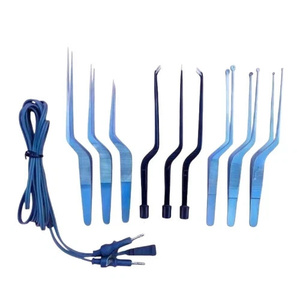
10 PCS Micro Bayonet Forceps Surgical Instrument Set
Ultra-fine tips designed for neurosurgical dissection and delicate tissue handling. Crafted from AISI 420 martensitic steel with spring-action ergonomic handles.
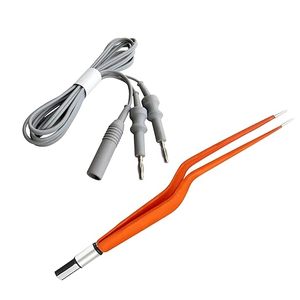
Professional Stainless Steel Bayonet Bipolar Forceps
Precision bipolar coagulation tips engineered for minimal tissue adhesion. High-grade insulation tested to withstand 500+ autoclave sterilization cycles.
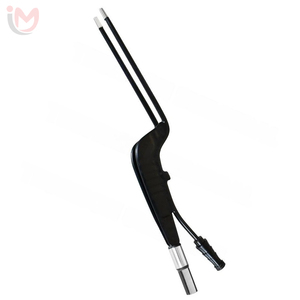
Insulated Reusable Silicon Cable Bipolar Forceps
Factory-direct OEM bipolar forcep assembly supplied with medical-grade silicone cabling. Compatible with major European and US electrosurgical generators.
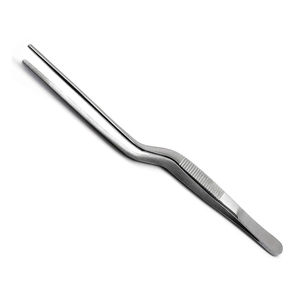
Adson Bayonet Forceps 16cm Serrated Tip Tweezer
Micro-serrated tip geometry ensures anti-slip grasping of delicate tissue membranes during ENT, orthopedic dressing, and general reconstructive procedures.
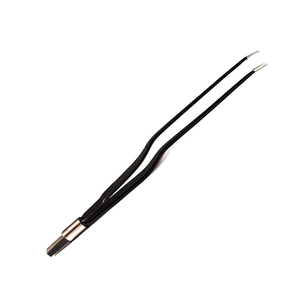
Non-Stick European Bipolar Curved Forceps 22cm
Features thermal-conducting alloy tips preventing charring during neurosurgical hemostasis. Includes EU connector and integrated guide-stop pin.
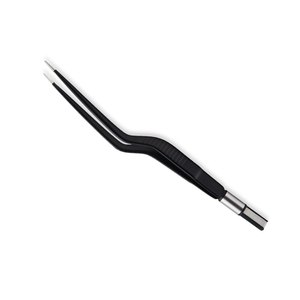
Black Color-Coated Bipolar Bayonet Forceps Set
Anti-glare black ceramic coating reduces optical reflection under surgical operating microscopes. Ideal for deep-cavity microsurgery and ENT procedures.
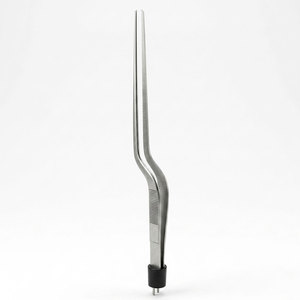
Bayonet Non-Insulated Bipolar Forceps 24cm
Extended working length for deep surgical access. Available in 0.5mm, 1.0mm, and 2.0mm calibrated tip configurations for specialized anatomical clamping.
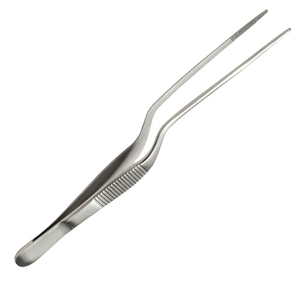
Custom Manual Bayonet Ear Dressing Forceps Set
Ergonomically offset shaft provides unimpeded line-of-sight during otological microsurgery. Passivated stainless steel construction ensures zero corrosion risk.
1. Executive Summary & Global Reduction Forceps Manufacturing Landscape
In modern orthopedic trauma surgery and reconstructive osteotomy, reduction forceps play an indispensable role in maintaining anatomical alignment of fractured bone fragments prior to internal fixation. Whether securing small fragment cortical bones or repositioning complex pelvic fractures, the structural integrity, jaw alignment precision, and leverage mechanism of reduction forceps directly impact surgical outcomes and operative efficiency.
As global procurement heads, medical device importers, and OEM brand owners evaluate supply chain partners, selecting a certified reduction forceps manufacturer and exporter requires assessing technical capabilities far beyond basic price per unit. The global surgical instrument manufacturing ecosystem is primarily anchored across three major regional hubs:
- Sialkot, Pakistan (The Global Instrument Capital): Accounts for over 70% of the world's reusable handcrafted surgical instruments. Known for high-grade alloy forgeability, skilled artisan hand-finishing, and unmatched cost-to-quality ratios under ISO 13485 environments.
- Tuttlingen, Germany: Famous for premium-tier surgical engineering, specializing in ultra-high-end specialty tooling and proprietary patented joint mechanisms.
- Medical Valley (USA & Japan): Focused heavily on automated CNC micro-machining and robotic-assisted surgical end-effectors.
Information Gain Key Insight for Procurement Officers
While European supply chains often source semi-finished forgings from Sialkot and pass them through localized finishing processes at a 400% price premium, direct sourcing from audited Sialkot OEMs like SalarSurgicals grants distributors direct access to German-grade AISI 420/420B stainless steel instruments, CE MDR technical files, and FDA compliance—at factory-direct economics.
Top 10 Global Reduction Forceps Manufacturers & Exporters Benchmark Matrix
The following data table synthesizes critical evaluation parameters utilized by institutional healthcare buyers to score top reduction forcep suppliers worldwide.
| Evaluation Criteria | Tier-1 Direct OEM (e.g., SalarSurgicals) | European Re-Branders | Low-Tier Trading Brokers |
|---|---|---|---|
| Forging & Alloy Grade | Martensitic AISI 420 / 420B / Ti-6Al-4V Mill Traceable | AISI 420 / 1.4021 Stainless Steel | Commercial Grade AISI 410 / Mixed Scrap |
| Box Lock Precision | CNC Milled Tolerance < 0.02mm | Precision Hand Fitted | Stamped Joint > 0.1mm play |
| Passivation Standard | ASTM F1081 / Nitric-Citric Ultrasonic | Passivated per EN ISO 17664 | Manual Acid Dip (High Rust Risk) |
| OEM Private Label MOQ | 50 Pieces / REF Low MOQ | 250–500 Pieces / REF | 1000+ Pieces / REF |
| Regulatory Technical File | ISO 13485:2016, CE MDR, FDA Registered | Full CE / FDA Technical File | Lacks Validated Technical Files |
| Autoclave Durability | 500+ Steam Cycles (134°C / 2.1 bar) | 500+ Steam Cycles | < 50 Cycles (Pitting & Staining) |
2. Enterprise Strengths & Manufacturing Engineering Protocols
Operating from Defence Road, Sialkot, SalarSurgicals has established itself over two decades as a trusted partner for medical device distributors, hospital supply networks, and OEM brand owners across 45+ countries. Unlike trading intermediaries who source unverified inventory from open markets, our vertically integrated workshop enforces rigorous control over every stage of reduction forcep manufacturing.
Precision Closed-Die Forging
Our reduction forceps begin with hot closed-die drop forging. This process aligns the internal grain structure of martensitic stainless steel along the stress axis of the forcep arms, ensuring maximum flexural tensile strength without structural failure during high-torque bone clamping.
Vacuum Heat Treatment & Hardness
Computer-controlled vacuum heat treatment quenches and tempers each batch to pattern-specific Rockwell hardness (typically 48 to 54 HRC). This precise balance prevents jaw deformation under load while avoiding brittle fracture at the ratchet or box-lock tension zone.
Ultrasonic Cleaning & Chemical Passivation
To guarantee absolute corrosion resistance, all instruments undergo multi-stage ultrasonic degreasing followed by nitric or citric acid passivation per ASTM F1081. This process strips free surface iron atoms and forms a thick, self-healing chromium oxide barrier.
Full OEM Private Label Capabilities
We offer fiber-laser marking of brand logos, custom catalogue numbers (REF), batch lot codes (LOT), and UDI barcodes. Low minimum order quantities starting at just 50 pieces empower importers to build custom instrument portfolios without excessive capital outlay.
3. Strategic Procurement & Technological Trends in Reduction Forceps (2026–2035)
The global orthopedic surgical instrument market is undergoing rapid evolution driven by minimally invasive surgical (MIS) techniques, stringent hospital sterilization protocols, and digital inventory management. Importers and hospital procurement directors must align their purchasing strategies with five key technological vectors shaping the next decade:
Trend 1: Titanium Alloy (Ti-6Al-4V) Adoption for Reduced Weight & MRI Compatibility
While stainless steel remains the workhorse of orthopedic reduction, trauma surgeons increasingly demand Titanium Grade 5 (Ti-6Al-4V) reduction forceps for prolonged spinal and pelvic procedures. Titanium instruments offer a 40% reduction in weight, reducing surgeon hand fatigue, while remaining completely non-magnetic and artifact-free under intraoperative MRI and CT fluoroscopy.
Trend 2: Advanced Non-Stick & Ceramic Coatings for Electrosurgical Coagulation
In dual-purpose reduction and hemostatic forceps (such as electrosurgical bipolar bayonet forceps), proprietary ceramic and silver-alloy tip coatings are replacing standard bare steel. These hydrophobic, non-stick coatings drastically reduce tissue eschar buildup, eliminating the need for intraoperative scraping and shortening surgical duration.
Trend 3: Laser Direct Part Marking (DPM) for UDI & RFID Asset Tracking
Regulatory mandates from the US FDA (Unique Device Identification) and EU MDR require complete traceability down to individual surgical instruments. Modern reduction forceps factories are integrating high-density 2D DataMatrix laser etching and micro-RFID tag insertion into instrument handles, enabling automated Central Sterile Supply Department (CSSD) scanning and lifecycle tracking.
Trend 4: Modular & Flushable Dismountable Box Lock Mechanisms
Traditional fixed box-lock joints present cleaning challenges in hospital washer-disinfectors, as bioburden can accumulate inside closed hinge crevices. Next-generation reduction forceps feature dismountable take-apart joints or integrated luer-lock flushing ports, allowing CSSD technicians to flush high-pressure enzymatic cleaners directly through the joint assembly.
Frequently Asked Questions in Forceps Procurement
Technical guidance and answers to critical sourcing questions for medical device importers and distributor procurement teams.
What is the standard minimum order quantity (MOQ) for custom OEM reduction forceps?
At SalarSurgicals, standard catalog references start at a low MOQ of 50 pieces per reference number. For fully customized patterns requiring new forging dies or custom CNC tooling, we recommend an initial production batch of 100 to 250 pieces so that setup costs remain commercially viable for your market distribution.
Which steel grades are utilized for orthopedic reduction vs microsurgical bayonet forceps?
For heavy-duty bone reduction forceps, we utilize German-standard martensitic stainless steels such as AISI 420 and AISI 420B, which achieve a post-heat-treatment hardness of 48–54 HRC for maximum clamp torque. Non-cutting component parts, trays, and retractors utilize austenitic AISI 304 / 316L, while delicate micro-forceps and bipolar models are available in Titanium Grade 5 (Ti-6Al-4V).
Are SalarSurgicals instruments fully compliant with EU MDR and US FDA export requirements?
Yes. Our Sialkot manufacturing facility operates under a certified ISO 13485:2016 Quality Management System. Our reusable instrument families carry CE marking under applicable EU Medical Device Regulations, and our manufacturing establishment is registered with the US FDA. Full technical documentation, Declarations of Conformity, and lot traceability certificates are provided with every export shipment.
What shipping terms and production lead times can importers expect?
Repeat catalog orders typically ship within 15 to 25 working days. Initial OEM production runs involving custom laser marking and private-label packaging take 30 to 45 working days following sample approval. We quote flexibly on FOB Karachi, CIF, and DDP terms, utilizing express air courier or ocean freight backed by full commercial customs documentation.
How do you ensure zero corrosion or pitting after repeated hospital autoclave cycles?
Every instrument undergoes ultrasonic cleaning to eradicate microscopic metal debris, followed by standardized nitric/citric acid chemical passivation per ASTM F1081. This process passivates free iron from the surface and builds an oxide layer capable of enduring over 500 validated steam autoclave cycles (134°C at 2.1 bar pressure).
Can importers request factory visits or third-party pre-shipment inspections?
We welcome customer audits at our Defence Road facility in Sialkot by appointment. Furthermore, we routinely host third-party pre-shipment inspection agencies (such as SGS, Bureau Veritas, or TÜV) to verify AQL sampling, dimensional tolerances, and packaging integrity prior to container dispatch.