Featured Dissecting & Bayonet Forceps Ranges
ISO 13485 certified micro-dissection and electrosurgical instruments engineered for delicate tissue manipulation, neurosurgery, ENT, and microsurgical procedures.
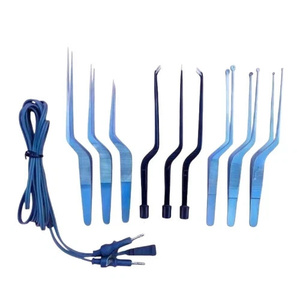
10 PCS Micro Bayonet Forceps Surgical Instrument Set Neurosurgery Tools for Delicate Tissue Handling and Microsurgery
Contact Us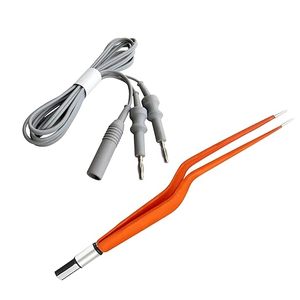
Bayonet Bipolar Forceps Professional Surgical Tool Stainless Steel Bipolar Coagulation Forceps With Fine Tips
Contact Us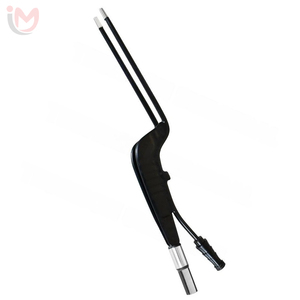
Wholesale Bayonet Bipolar Forceps Insulated Reusable Silicon Cable Surgical Instruments OEM Services
Contact Us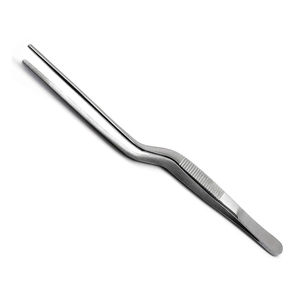
Adson Bayonet Forceps 16cm Serrated Tip Stainless Steel Surgical Dressing Tweezer
Contact Us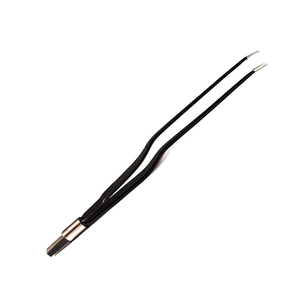
Neurosurgery Bayonet Non Stick European Bipolar Curved Forceps 22 cm W/Stop, Insulated Angled up 0.5mm, W/EU Connector CE ISO
Contact Us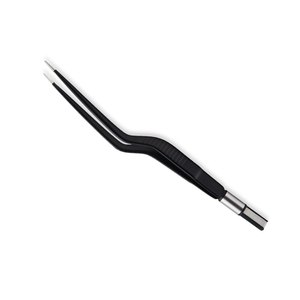
Premium Quality PENTAX SURGICAL Bipolar Bayonet Forceps Black Color Coated Stainless Steel Manual Tweezers Instrument Set
Contact Us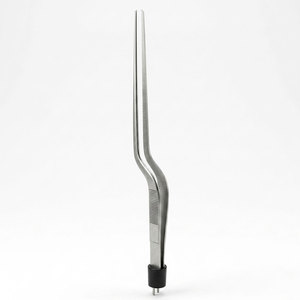
Wholesale Bayonet Non Insulated Bipolar Forceps 24cm 0.5mm 1.0mm 2.0mm Tip Microsurgery Surgical Instrument
Contact Us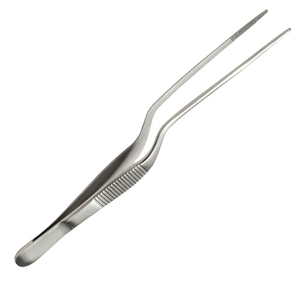
Stainless Steel Customized High-quality CE Certified Manual Bayonet Ear Dressing Forceps Instrument Set
Contact UsExecutive Summary: Sourcing Micro-Dissecting & Bayonet Forceps from Leading China Manufacturers
In modern surgical practice—spanning neurosurgery, ophthalmic microsurgery, otolaryngology (ENT), and vascular reconstruction—the dissecting forceps is far more than a basic grasping tool. It serves as a precision extension of the surgeon's hands, requiring meticulous tactile feedback, exact tip alignment under surgical microscopes, and high mechanical fatigue resistance. For medical device importers, hospital procurement officers, and distributor brand managers, selecting top China dissecting forceps manufacturers & exporters demands a rigorous evaluation of metallurgical integrity, manufacturing tolerances, insulation stability, and regulatory compliance under EU MDR 2017/745 and US FDA frameworks.
Key Procurement Insight: The transition from legacy manual crafting to 5-axis CNC micro-milling and vacuum heat treatment in China's leading manufacturing hubs has elevated standard tip concentricity tolerances to within ±0.02 mm, significantly outperforming traditional forging variance while reducing unit production costs by up to 35%.
This whitepaper provides a comprehensive evaluation framework for procuring anatomical, tissue, dressing, and electrosurgical bayonet forceps. We dissect material metallurgy, technical manufacturing workflows, non-stick surface innovations, and critical quality assurance protocols essential for high-yield B2B supply chains.
Comparative Technical Specifications: Dissecting & Bipolar Forceps Classification
To assist technical buyers in identifying exact SKU requirements for hospital tenders and custom OEM private-label portfolios, the table below delineates core engineering dimensions, material specifications, and clinical application fields for standard dissecting forceps categories.
| Instrument Category | Material Standard | Tip Geometry & Size | Insulation & Coating | Autoclave Resistance | Primary Clinical Application |
|---|---|---|---|---|---|
| Micro Bayonet Forceps Set | AISI 420 Martensitic / Titanium Gr 5 | 0.3 mm – 0.7 mm Micro-Fine Tips | Uninsulated / Matte Satin Finish | 134°C Steam / 500+ Cycles | Neurosurgery, Micro-Vascular, Tumor Dissection |
| Bipolar Bayonet Coagulation Forceps | German Stainless Steel 1.4021 / Titanium | 0.5 mm, 1.0 mm, 2.0 mm Curved/Straight | Thermoset Polyolefin Insulation | 132°C Steam / 200+ Cycles | Electrosurgical Hemostasis, Deep Cavity Surgery |
| Non-Stick European Bipolar Forceps | High Thermal Conductivity Silver/Titanium Alloy | 0.5 mm Angled-Up w/ Guide Stop | Polytetrafluoroethylene (PTFE) / Gold Plated | 134°C Steam / Validated Cycles | Skull-Base Neurosurgery, ENT, Delicate Hemostasis |
| Adson Bayonet Dressing Tweezers | AISI 304 / 420 Stainless Steel | 16 cm Micro-Serrated / 1x2 Teeth | Passivated Anti-Corrosion Polish | 134°C Steam / Unlimited | Plastic Surgery, Wound Dressing, General Tissue Prep |
| Ear Dressing & ENT Bayonet Forceps | Austenitic AISI 304 Stainless Steel | Serrated Working Ends (14cm - 24cm) | Mirror or Satin Anti-Glare Finish | Standard Steam Autoclaving | Otolaryngology, Foreign Body Removal, Packing |
Global Sourcing Trends & Innovations in Dissecting Forceps (2025–2030)
As minimally invasive surgical techniques continue to expand rapidly across global healthcare systems, surgical instrument procurement strategies are undergoing major shifts. Manufacturers and exporters in China are leveraging advanced manufacturing automation and surface chemistry to meet stringent global market expectations.
1. Material Science Evolution: Titanium Alloys & Non-Stick Technology
Traditional stainless steel forceps are increasingly being augmented by Titanium Grade 5 (Ti-6Al-4V) and silver-plated tip alloys. In bipolar bayonet coagulation, thermal conductivity prevents tissue charring and adherence, significantly lowering intraoperative surgical delays and tissue trauma.
2. Ergonomic Bayonet Shafts & Line-of-Sight Optimization
The classic bayonet architecture keeps the surgeon's hand off the direct line of sight under surgical microscopes and endoscopes. Emerging 2025 trends demand custom shaft angles (curved up 30°, angled 45°) with guide stops to eliminate tip overlap during micro-grasping.
3. Robust Insulation Integrity & Dielectric Safety
For insulated electrosurgical forceps, dielectric insulation breakdown poses severe safety risks. Leading OEM exporters now utilize seamless, high-grade thermoset polyolefin coatings tested under 1,000V RF high-voltage spark testing to prevent stray thermal injuries during coagulation.
Why Partner with Premium China Manufacturers: Production Excellence & Quality Control
Navigating direct OEM/ODM procurement requires partnering with manufacturers who combine long-standing craft heritage with modern quality management systems. Modern Chinese manufacturing plants have established vertically integrated workflows, ensuring total quality traceability from raw mill billet to final sterile pack.
Closed-Die Forging & CNC Milling
Instruments originate from hot closed-die forging in German-standard stainless steel (AISI 410, 420, 304). CNC 5-axis machining ensures box locks and forceps shanks possess uniform spring tension and exact jaw alignment.
Vacuum Heat Treatment & Passivation
Hardness is vacuum-treated to 48–54 HRC (Rockwell Scale) for cutting and gripping durability. Automated ultrasonic cleaning and nitric acid passivation (ASTM F1089 standard) build a dense chromium oxide layer for maximum rust protection.
Fiber Laser Traceability & Private Labeling
Every batch features fiber-laser etched brand logos, SKU numbers, lot codes, and UDI (Unique Device Identifier) compliance markings, fully passivated to withstand hundreds of washer-disinfector and autoclave cycles.
Vertically Integrated Manufacturing Process Workflow
To guarantee complete batch-to-batch repeatability for international medical brand owners, leading Chinese production facilities follow a strictly audited six-stage quality manufacturing loop:
- Raw Material Spectroscopy: X-ray fluorescence (XRF) spectral inspection of all steel heat lots to verify alloy chemical compositions (Chromium, Nickel, Carbon, Molybdenum ratios).
- Precision Shaping & Forging: High-energy die forging and 5-axis wire EDM (Electrical Discharge Machining) for exact tip micro-geometry.
- Master Hand-Fitting & Spring Balancing: Craftsmen calibrate ratchets, hand-feel spring resistance, and microscopic tip closure under 10x magnification.
- Electropolishing & Surface Passivation: Chemical removal of free iron particles to prevent corrosion pitting during repeated autoclave steam exposure.
- Dielectric Voltage Breakdown Testing: 100% electrical safety inspection of insulated bipolar forceps to verify coating integrity against high RF voltages.
- Final Optical Inspection & Cleanroom Packaging: Automated optical measurement system (AQL 1.0 standard) prior to vacuum pouch sealing and UDI barcode labeling.
Frequently Asked Questions (FAQ) for B2B Forceps Buyers
Addressing the core commercial and technical questions raised by hospital supply chain managers, medical device importers, and private-label distributors.
Accelerate Your Medical Device Supply Chain Today
Partner with an established China manufacturing pioneer. Request full product specifications, sample units, or factory-direct bulk quotations. Our engineering and export desk responds within 24 business hours.
Contact Us