Engineering Standards for Modern Surgical Amputation Saws
In complex orthopedic trauma, oncological bone resection, and peripheral vascular procedures, surgical amputation saws represent a fundamental class of critical resection tooling. Achieving smooth cortical cuts without triggering thermal osteonecrosis or soft-tissue shredding demands rigorous engineering, specialized metallurgy, and exact tooth geometry. As global hospital procurement committees enforce stringent MDR and FDA compliance, international buyers require manufacturing partners capable of delivering verified material lot traceability, consistent HRC hardness profiles, and scalable OEM private-label production.
Top-Tier Amputation Saws & Microsurgical Instruments
Explore our primary selection of orthopedic amputation instruments, bone resection saw blades, and specialized bayonet forcep suites manufactured at our ISO 13485 facility in Sialkot, Pakistan.
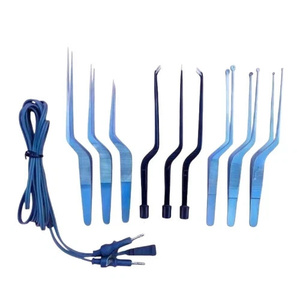
10 PCS Micro Bayonet Forceps Surgical Instrument Set
Precision tissue handling set engineered for neurosurgical and orthopedic nerve separation during amputation procedures.
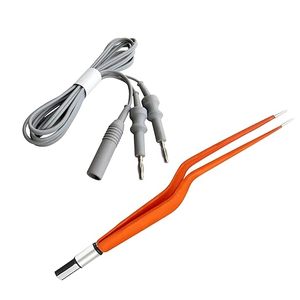
Bayonet Bipolar Forceps Stainless Steel Fine Tip
Professional bipolar coagulation tool designed for rapid hemostasis in deep resection cavities and muscle flap sculpting.
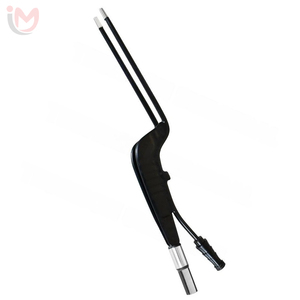
Insulated Bayonet Bipolar Forceps with Silicone Cable
Autoclavable 132°C silicone-coated forcep system engineered for high-frequency thermal isolation during bone debridement.
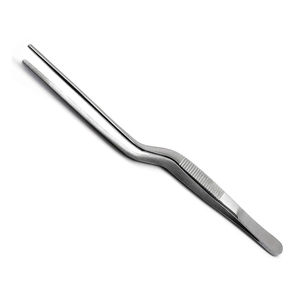
Adson Bayonet Forceps 16cm Serrated Stainless Steel
Serrated tip anatomical tweezers built from surgical-grade AISI 420 steel for secure periosteum holding and flap retraction.
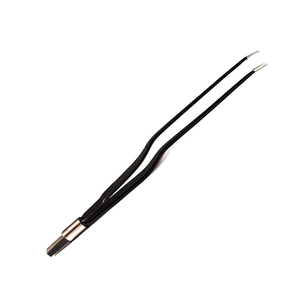
European Non-Stick Bayonet Bipolar Forceps 22cm
Angled up 0.5mm tip with guide stop pin and EU connector, featuring thermal-dissipating alloy technology to eliminate tissue adhesion.
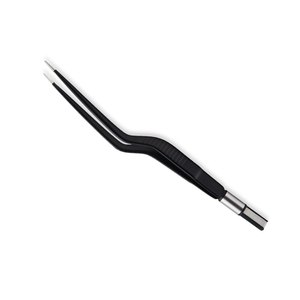
Black Coated Bipolar Bayonet Forceps Instrument Set
Matte black glare-reducing ceramic-coated stainless steel tweezers ideal for high-intensity operating theater lighting.
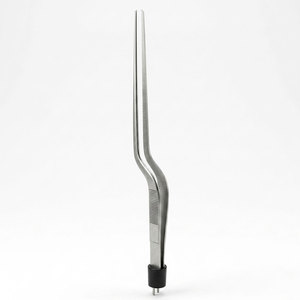
Non-Insulated Bayonet Bipolar Forceps 24cm
Extended reach 24cm forcep available in 0.5mm, 1.0mm, and 2.0mm tip geometries for deep traumatic bone resection procedures.
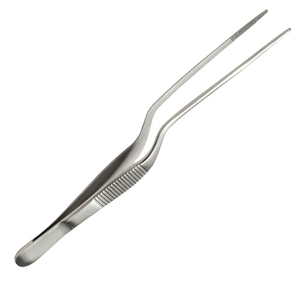
CE Certified Manual Bayonet Dressing Forceps Set
Ergonomic manual bayonet dressing forcep collection crafted for delicate tissue manipulation, otological work, and orthopedic flap dressing.
Metallurgical Engineering & Manufacturing Execution
A clinical amputation saw blade is subject to extreme mechanical shear stresses, micro-vibrational resonance, and corrosive biological fluids. At SalarSurgicals, our manufacturing protocols integrate traditional Sialkot forging mastery with modern CNC tooth grinding and automated passivation technology.
1. Steel Metallurgy & Alloy Selection
We utilize high-carbon German martensitic stainless steel (AISI 420 / DIN 1.4021) for saw blades and cutting teeth, providing exceptional edge retention and high tensile strength. Structural frames, bow handles, and non-cutting components employ austenitic AISI 304 / 316L steel to maximize ductility and strain-corrosion resistance.
2. Controlled Vacuum Heat Treatment
Blades undergo computer-controlled vacuum hardening and multi-stage tempering to achieve an optimal hardness range of 52–56 HRC. This precise thermal treatment eliminates brittle fracture risks while ensuring teeth maintain razor-sharp raking angles over repeated surgical procedures.
3. Chemical Passivation & ASTM A967 Compliance
To prevent pitting corrosion caused by saline flushes and autoclave steam sterilization cycles, all finished instruments undergo ultrasonic cleaning followed by citric/nitric acid passivation according to ASTM A967 standards, fully restoring the protective chromium oxide layer.
| Instrument Type | Blade / Tip Material | Hardness Spec | Primary Clinical Application | Sterilization Compatibility |
|---|---|---|---|---|
| Satterlee Amputation Saw | AISI 420 Martensitic Steel | 54 - 56 HRC | Femoral & Tibial Bone Resection | Autoclave Steam (134°C / 273°F) |
| Charrière Bone Saw | AISI 420 High-Carbon Steel | 52 - 55 HRC | General Orthopedic & Amputation Trays | Autoclave Steam / Ethylene Oxide (EtO) |
| Langenbeck Metacarpal Saw | AISI 420 German Alloy | 53 - 56 HRC | Small Bone & Metacarpal Resection | Autoclave Steam (134°C / 273°F) |
| Bipolar Bayonet Forceps | AISI 304 / Titanium Gr 5 | N/A (Insulated Shank) | Hemostasis in Deep Surgical Cavities | Validated Steam Autoclave Cycles |
Future Procurement Trends for Amputation Saws (2025–2030)
Global healthcare purchasing networks, medical device importers, and hospital tenders are changing how surgical cutting tools are requested. Sourcing directors must align their supply chains with four major structural shifts over the coming decade.
1. Shift Toward Modular & Quick-Release Blade Systems
Hospitals are transitioning away from fixed, non-replaceable saw frames toward ergonomic modular handle assemblies with quick-release tension locks. Procurement teams favor reusable stainless steel handles paired with standardizedCharrière or Satterlee replacement blades, reducing per-procedure reprocessing costs while guaranteeing sharp cutting edges for every case.
2. Strict EU MDR (2017/745) & Unique Device Identification (UDI)
Regulatory enforcement in the European Union and North America requires laser-etched UDI 2D DataMatrix barcodes on all surgical instruments, down to micro forceps and saw frames. Procurement teams now require manufacturers to supply pre-marked, fully compliant technical documentation packages to avoid customs delays and compliance audit failures.
3. Reduced Thermal Osteonecrosis via Tooth Geometry Innovation
Friction-induced bone heating exceeding 47°C during saw blade action leads to osteonecrosis and delayed bone healing. Modern procurement tenders explicitly evaluate blade kerf design, rake angle precision, and chip-clearance gullet depth. Saws with micro-serrated teeth and dual-direction cutting profiles are replacing legacy single-cut designs.
4. Supply Chain Resilience & Direct OEM Partnering
To bypass intermediary markup and supply disruption, major distributors are establishing direct OEM/ODM private-label relationships with integrated manufacturing hubs in Sialkot, Pakistan. Factories offering low minimum order quantities (MOQs), rapid prototyping, and audited ISO 13485 quality systems are gaining significant market share.
Technological Advancement in Surgical Cutting & Coagulation
The manufacturing of manual surgical amputation saws and complementary microsurgical bayonet tools is undergoing a technological revolution driven by automation and surface engineering.
5-Axis CNC Tooth Profile Grinding
Replacing manual blade filing, 5-axis CNC grinding centers cut each tooth profile with absolute geometric repeatability. This ensures uniform kerf width, reducing operator hand fatigue during limb amputation.
Non-Stick PVD & Ceramic Coating
Advanced Physical Vapor Deposition (PVD) coatings—such as Titanium Nitride (TiN) and ceramic insulation—are applied to electrosurgical bayonet forceps and saw handles to eliminate glare, reduce tissue adhesion, and withstand 500+ autoclave cycles.
Automated Laser Marking & Passivation
Fiber laser systems mark critical data (REF, LOT, CE mark, logo) without compromising structural integrity. Inline passivation immediately rebuilds the oxide layer to pass boiling water and copper sulfate corrosion tests.
Frequently Asked Questions for B2B Importers
Essential technical and commercial answers to help medical device distributors streamline vendor evaluation and contract manufacturing.
What is the minimum order quantity (MOQ) for OEM amputation saws?
For standard catalog references (Satterlee, Charrière, Langenbeck saws), our baseline MOQ starts at 50 pieces per item. For custom-designed frames requiring custom forging dies or unique blade slotting, we recommend 100–250 pieces to keep tooling costs commercially viable.
Which steel grades are specified for saw frames vs. replacement blades?
Saw blades are manufactured from hardened martensitic stainless steel (AISI 420 / 420B) for maximum sharpness and wear resistance. Frames and bow handles use corrosion-resistant austenitic steel (AISI 304 / 316L), providing structural stability and ergonomic weight distribution.
Are SalarSurgicals instruments CE marked and registered with the US FDA?
Yes. SalarSurgicals operates an audited ISO 13485:2016 quality management system. Our reusable surgical instrument families hold full CE mark declarations under EU MDR guidelines and maintain active US FDA establishment registration.
Can you laser mark our brand logo, custom catalog numbers, and UDI codes?
Absolutely. Fiber laser branding, catalog reference numbers, lot tracking codes, and UDI 2D DataMatrix codes are fully integrated into our production line, followed by automated passivation to ensure markings endure repetitive autoclaving.
What lead times should importers plan for export shipments?
Repeat catalog orders typically ship within 15–25 working days. First-time private-label production runs—including custom laser marking and branded packaging—take 30–45 working days following sample sign-off. Air express, air freight, and sea freight options are available (FOB, CIF, DDP).
How do you verify blade alignment and hardness before shipment?
Every production lot undergoes rigorous inspection according to ISO sampling plans. Rockwell hardness testing (HRC), optical micro-alignment checks, boiling corrosion tests, and dimensional verification are fully documented in the Lot Release Certificate shipped with your consignment.
SalarSurgicals Factory & Export Advantage
Based in Defence Road, Sialkot, Pakistan—the global heartland of surgical instrument manufacturing—SalarSurgicals combines over two decades of metallurgical experience with modern medical device compliance.
In-House Forging & Machining
We operate closed-die forging presses and modern CNC machining equipment under one roof, ensuring complete process control from raw steel bar stock to finished instrument.
Full Traceability & QC Documentation
Every shipment is accompanied by raw material heat certificates, hardness reports, and declarations of conformity under NDA to support your market registration requirements.
Global Export Footprint
With satisfied distributor partners in more than 45 countries across Europe, North America, the Middle East, and Asia-Pacific, we handle international logistics seamlessly.
Request Your Custom Quotation & Technical File Today
Partner with a reliable manufacturer of surgical amputation saws, bone cutting instruments, and specialized bayonet microsurgical suites. Contact our export engineering desk for instant pricing, sample delivery, and OEM consultation.