Featured Sterilization & Precision Surgical Solutions
Explore our ISO 13485 certified micro-instruments, bayonet bipolar forceps, and specialized sterilization-ready surgical tools designed for intense operating theater workflows.
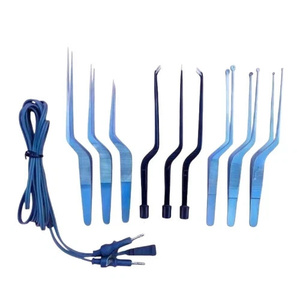
10 PCS Micro Bayonet Forceps Surgical Instrument Set
Engineered for neurosurgery and delicate tissue handling. Crafted from German-standard martensitic stainless steel, optimized for containerized steam sterilization.
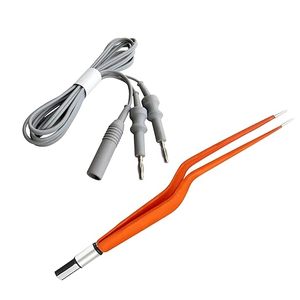
Bayonet Bipolar Forceps Professional Surgical Tool
Precision stainless steel bipolar coagulation forceps featuring ultra-fine tips for targeted hemostasis during complex cranial and vascular procedures.
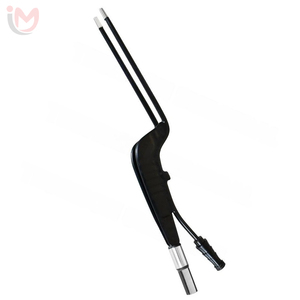
Insulated Bayonet Bipolar Forceps & Silicone Cable Set
Thermally insulated reusable electrosurgical forceps accompanied by autoclavable medical-grade silicone cabling. Fully customizable for OEM procurement.
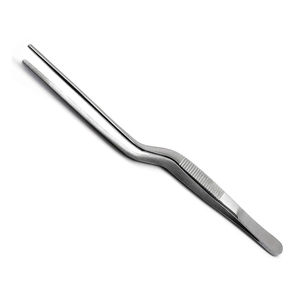
Adson Bayonet Forceps 16cm Serrated Stainless Steel
Ergonomic bayonet dressing tweezer with micro-serrated jaws for non-slip anatomical handling. Corrosion-resistant passivation finish.
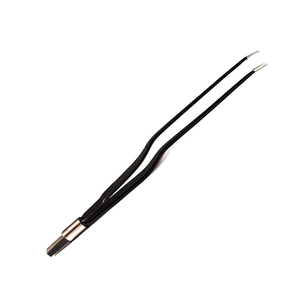
Neurosurgery Non-Stick European Bipolar Curved Forceps
22 cm angled-up 0.5mm tip forceps with integrated guide stop and EU plug connector. Titanium silver-alloy thermal technology prevents eschar tissue adhesion.
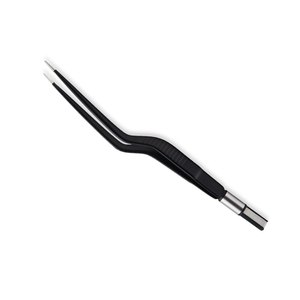
Black Color Coated Bipolar Bayonet Forceps Set
Non-reflective ceramic black coating designed to reduce visual glare under surgical microscopes. Extreme durability through 134°C steam autoclave cycles.
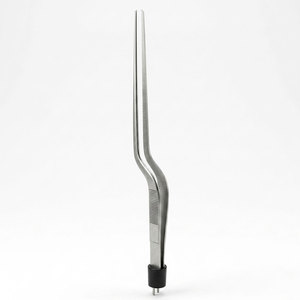
Non-Insulated Bayonet Bipolar Forceps (0.5mm–2.0mm Tip)
Extended reach 24cm microsurgical forceps engineered for deep cavity access. Available in customized tip width configurations for distributor catalogs.
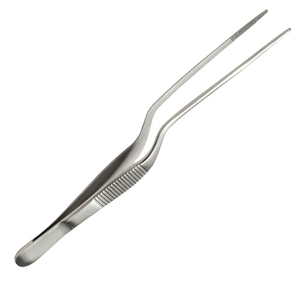
Manual Bayonet Ear Dressing Forceps Instrument Set
CE-marked otology instrument set manufactured from surgical grade AISI 304/420 steel. Supplied in custom sterilization-compatible organized tray modules.
Executive Summary: The Evolution of Rigid Sterilization Container Systems in Modern CSSD Logistics
In contemporary hospital management and Central Sterile Supply Departments (CSSD), the integrity of surgical instrument processing is non-negotiable. As surgical interventions become increasingly complex—spanning neurosurgical micro-dissections, minimally invasive laparo-endoscopic procedures, and joint replacement orthopedics—the requirements for maintaining sterility from the autoclave chamber to the operating theater (OT) sterile field have undergone a paradigm shift.
Historically, healthcare facilities relied heavily on single-use blue wrap solutions (blue polypropylene sterilization wraps). However, procurement analyses across European and North American hospital networks consistently demonstrate that single-use wraps suffer from micro-punctures, tearing, moisture retention, and catastrophic waste generation. As a result, leading medical device distributors and hospital purchasing committees are rapidly transitioning to Reusable Rigid Sterilization Container Systems (RBS).
As a premier OEM manufacturer and exporter based in Sialkot, Pakistan, SalarSurgicals operates at the intersection of traditional metallurgy and automated precision engineering. Adhering strictly to DIN EN ISO 11607-1/2, EN 868-8, and DIN 58953 standards, our rigid aluminum containers, perforated stainless steel baskets, and precision instrument holding modules provide an impenetrable barrier against microbial ingress while dramatically lowering the Total Cost of Ownership (TCO) for healthcare providers worldwide.
Microbial Barrier Integrity
Utilizing high-grade PTFE hydrophobic retention filters and precision-molded silicone seals that maintain biological integrity across 2,000+ steam sterilization cycles at 134°C.
Metallurgical Superiority
Constructed using anodized aluminum alloy (5000/6000 series) and electropolished AISI 304/316L stainless steel for maximum thermal transfer and corrosion resistance.
UDI & Asset Traceability
Seamlessly integrated with laser-etched 2D DataMatrix codes, color-coded anodized aluminum tags, and RFID slot compatibility for automated CSSD tracking.
Engineering & Metallurgical Benchmarks of Modern Sterilization Containers
A rigid sterilization container is far more than a simple metal box; it is a dynamic pressure-balanced device designed to withstand aggressive vacuum evacuation, superheated steam injection, and rapid cooling phases inside saturated steam autoclaves.
1. Anodization Science & Surface Passivation
Aluminum containers produced in our Sialkot facility undergo Type III Hardcoat Anodizing. This electrochemical process transforms the outer aluminum surface into an aluminum oxide layer exceeding 25–30 microns in thickness. The resulting surface provides:
- Extreme Scratch Resistance: Prevents metal flaking and structural deformation when containers are stacked inside heavy CSSD transport carts.
- Chemical Resistance: Impervious to high-pH alkaline detergents (pH 10–11) commonly used in automated washer-disinfectors.
- Thermal Efficiency: Rapid, uniform heat distribution that eliminates wet-pack phenomena by accelerating condensate evaporation during the autoclave drying phase.
2. Biological Gasket & Latch Architecture
The perimeter of the container lid features a continuous, seamless Liquid Silicone Rubber (LSR) gasket. Designed with high compression-set resistance, the gasket maintains constant elastomeric tension against the container rim. Our dual-step lever locking latches apply uniform downforce, guaranteeing that under vacuum pulses up to -0.9 bar, no ambient air bypasses the filter assemblies.
3. Advanced Filtration Technologies: PTFE vs. Valve Systems
SalarSurgicals supplies global procurement partners with three distinct filtration architectures:
- Reusable PTFE Hydrophobic Filters: Made from expanded polytetrafluoroethylene (ePTFE), these permanent retention filters feature a 0.2-micron pore rating, capturing airborne particulates and bacterial spores (e.g., Geobacillus stearothermophilus) while allowing free steam penetration. Validated for up to 2,000 autoclave cycles without replacement.
- Pressure-Activated Mechanical Valve Systems: Utilizing stainless steel spring-loaded gravity disks that open during pressure differentials and seal hermetically under ambient room pressure.
- Single-Use Single-Layer Paper/Non-Woven Filters: Retained via quick-release stainless steel filter retention plates for facilities operating on traditional disposable media protocols.
Global Procurement Trends & Future Market Outlook (2025–2035)
As hospital procurement teams navigate rising supply chain volatility and stringent environmental standards, the market for sterilization containers and associated surgical instrument sets is evolving rapidly. Key trends influencing global buying decisions over the next decade include:
A. ESG Alignment and Waste Reduction Directives
Healthcare systems across the European Union, UK (NHS Net Zero Initiative), and the United States are legally bound to reduce single-use plastic waste. A single 500-bed hospital typically generates over 4,500 kilograms of disposable blue wrap waste annually. Replacing wraps with reusable aluminum container systems reduces sterile packaging waste by up to 95%, offering a measurable metric for corporate ESG reporting.
B. Integration of Smart Inventory & RFID Tracking
Modern operating rooms demand 100% instrument accountability to prevent retained surgical items (RSI) and minimize set turnover times. Next-generation container procurement strategies demand factory-installed RFID chips (UHF/NFC) and direct part marking (DPM). SalarSurgicals incorporates high-precision fiber laser marking for GS1-compliant Unique Device Identification (UDI) directly onto both the container lid and the underlying instrument baskets.
C. Demand for Modular, Weight-Optimized Micro-Instrument Sets
With the proliferation of specialized microsurgery, neuro-navigation, and robot-assisted surgical suites, heavy universal instrument trays are being replaced by modular, procedure-specific micro-baskets. Silicone positioning mats, bracket post systems, and customized clamp modules prevent delicate tip damage—such as on fine 0.5mm bayonet bipolar forceps—during ultrasonic washing and transport.
SalarSurgicals Enterprise Advantage & Verification Matrix
When evaluating sterilization container manufacturers and surgical supplier partnerships, institutional buyers require transparent verification of manufacturing capabilities, material quality, and compliance standards. Below is a comparative overview highlighting the technical advantages offered by SalarSurgicals:
| Evaluation Parameter | Standard Market Suppliers | SalarSurgicals Enterprise Standard |
|---|---|---|
| Raw Material Specification | Commercial Grade Stainless / Standard Aluminum | German AISI 304, 316L, 420 Martensitic Steel & 5000/6000 Series Hard Anodized Aluminum |
| Quality System Certification | Basic ISO 9001 | ISO 13485:2016 Certified, EU MDR Compliant, US FDA Registered Establishment |
| Passivation Process | Basic Manual Acid Dip | Automated Ultrasonic Cleaning & Nitric/Citric Acid Electrochemical Passivation (ASTM A967) |
| OEM & Custom Die Capabilities | High MOQ (>500 pcs), 90-Day Lead Time | Low MOQ (50 pcs), Rapid Prototyping & Custom Tooling in 15–25 Working Days |
| Sterilization Cycle Validation | Unvalidated or 200-cycle limit | Validated up to 2,000 Steam Sterilization Cycles at 134°C (DIN EN ISO 17665) |
| Traceability & Marking | Standard Ink Stamp or Basic Etch | Permanent Passivated Fiber Laser Etching (GS1 UDI 2D DataMatrix, REF, LOT) |
Step-by-Step Quality Control & Manufacturing Workflow
Operating out of our integrated manufacturing facility in Sialkot, Pakistan, SalarSurgicals executes complete end-to-end production under one roof. Our quality assurance architecture eliminates sub-contractor variability:
- Closed-Die Forging & Deep Drawing: Container lids and bodies are formed using hydraulic deep-drawing presses up to 400 tons, ensuring uniform wall thickness and zero structural stress fractures.
- Precision CNC Machining: Box locks, hinge pivots, and latch mechanisms for instruments like bayonet forceps and surgical scissors are milled on multi-axis CNC machines to tolerances within ±0.02mm.
- Vacuum Heat Treatment & Hardness Verification: Cutting edges and forceps tips are vacuum heat-treated to 48–54 HRC (Rockwell Hardness C scale) to preserve tip alignment and cutting performance through thousands of uses.
- Electrochemical Passivation: Removes free iron particles from the outer surface, forming a thick chromium oxide protective film that prevents pitting corrosion.
- Bacterial Challenge & Hydrostatic Testing: Random sampling from every production lot undergoes aerosol microbial challenge testing and water immersion seal verification.
Frequently Asked Sourcing & Technical Questions
Clear, direct answers for medical device distributors, hospital purchasing managers, and OEM private-label importers.
What is the minimum order quantity (MOQ) for custom OEM sterilization container sizes?
For standard catalogue references, our minimum order quantity starts at just 50 pieces per item. For bespoke container dimensions, custom filter housings, or customized internal basket die-casting requiring new tooling, we recommend a minimum volume of 100 to 250 pieces to absorb tooling costs efficiently.
Which stainless steel grades are utilized for your surgical instruments and container baskets?
We strictly utilize German-standard martensitic stainless steel grades such as AISI 410, 420, and 420B for cutting, gripping, and clamping instruments (e.g., micro bayonet forceps and surgical tweezers). For wire mesh baskets, container frames, and non-cutting components, we use austenitic AISI 304 and 316L stainless steel for maximum ductility and corrosion resistance. Titanium Grade 5 is also available for ultra-light micro-instruments.
Are SalarSurgicals sterilization containers CE marked and FDA registered?
Yes. Our manufacturing plant operates under an audited ISO 13485:2016 Quality Management System. Reusable surgical instruments and sterilization container families carry CE markings under applicable European Medical Device Regulations (EU MDR 2017/745), and our establishment is registered with the United States FDA. Full technical documentation, Declarations of Conformity, and material test reports (EN 10204 3.1) are supplied with orders.
How do rigid container systems perform in comparison to disposable wrap packaging regarding TCO?
While rigid containers require a higher initial capital investment, they typically pay for themselves within 12 to 18 months of hospital operation. By eliminating continuous recurring purchases of single-use polypropylene wraps, reducing set assembly labor, and virtually eliminating instrument damage caused by torn wraps, container systems lower long-term sterile processing expenses by 40% to 60%.
What laser marking and private labeling customization options are available?
We provide full fiber laser branding directly on container bodies, lids, filter caps, and instrument shanks. Standard OEM marking includes your company logo, proprietary catalogue reference numbers, lot tracking codes, material grade stamps, GS1 2D DataMatrix codes, and CE marks. All laser etching is completed prior to final electrochemical passivation to prevent corrosion around marked areas.
What are your standard export lead times and shipping terms?
Standard catalogue items typically ship within 15 to 25 business days following order confirmation. Initial OEM production runs involving custom laser etching and customized packaging require 30 to 45 business days. We offer flexible shipping arrangements, including EXW, FOB Karachi, CIF air freight, and DDP direct to destination warehouses worldwide.
Partner with a Leading Sterilization Container Manufacturer
Streamline your medical device supply chain today. Connect directly with our engineering and export team to request technical datasheets, material certifications, or factory-direct price quotations.