High-Precision Forceps & Electrosurgical Instruments
Engineered for exacting clinical performance in German surgical centers, trauma hubs, and neurosurgical suites.
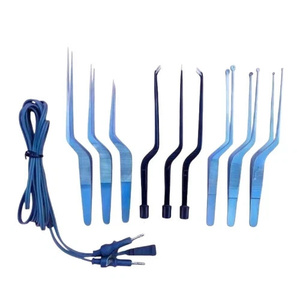
10 PCS Micro Bayonet Forceps Surgical Instrument Set Neurosurgery Tools for Delicate Tissue Handling and Microsurgery
Send an Inquiry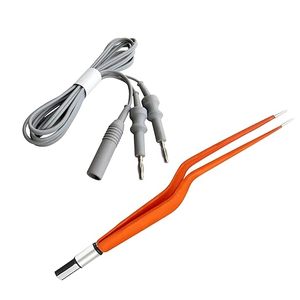
Bayonet Bipolar Forceps Professional Surgical Tool Stainless Steel Bipolar Coagulation Forceps With Fine Tips
Send an Inquiry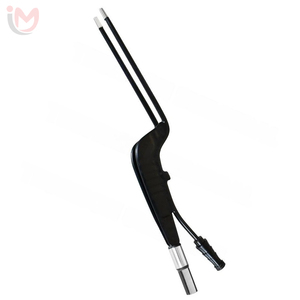
Wholesale Bayonet Bipolar Forceps Insulated Reusable Silicon Cable Surgical Instruments OEM Services
Send an Inquiry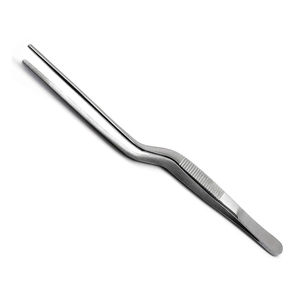
Adson Bayonet Forceps 16cm Serrated Tip Stainless Steel Surgical Dressing Tweezer
Send an Inquiry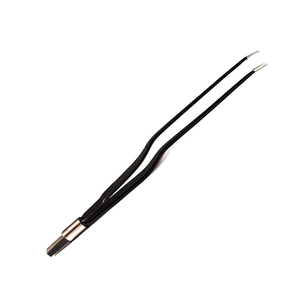
Neurosurgery Bayonet Non Stick European Bipolar Curved Forceps 22 cm W/Stop, Insulated Angled up 0.5mm, W/EU Connector CE ISO
Send an Inquiry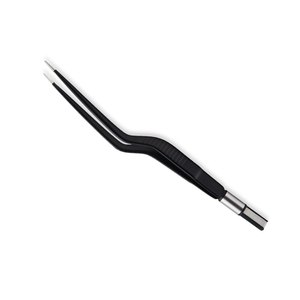
Premium Quality PENTAX SURGICAL Bipolar Bayonet Forceps Black Color Coated Stainless Steel Manual Tweezers Instrument Set
Send an Inquiry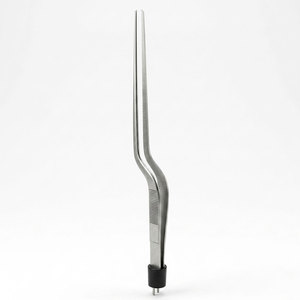
Wholesale Bayonet Non Insulated Bipolar Forceps 24cm 0.5mm 1.0mm 2.0mm Tip Microsurgery Surgical Instrument
Send an Inquiry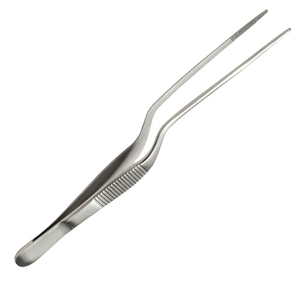
Stainless Steel Customized High-quality CE Certified Manual Bayonet Ear Dressing Forceps Instrument Set
Send an InquiryExecutive Summary & Regulatory Framework for the German Surgical Supply Chain
In the highly regulated European medical device landscape, Germany stands as the largest single market for premium surgical instrumentation. Operating within the strict parameters set by the European Medical Device Regulation (MDR EU 2017/745) and national bodies such as the Federal Institute for Drugs and Medical Devices (BfArM), German hospitals (Universitätskliniken, BG Kliniken, municipal hospital networks, and private operator groups like Helios, Asklepios, and Sana) enforce uncompromising standards regarding metallurgical integrity, mechanical tolerance, visual clarity, and autoclave lifecycle endurance.
As an ISO 13485:2016 certified original equipment manufacturer (OEM) based in Sialkot with dedicated export logistics serving the German market, SalarSurgicals bridges the gap between traditional metallurgical hand-craftsmanship and state-of-the-art computer-controlled manufacturing. Our production lines yield Class I and Class IIa reusable surgical instruments—including bone holding reduction forceps, pelvic reconstruction tools, fine neurosurgical bayonet bipolar forceps, and microsurgical dressing tweezers—that conform fully to DIN EN ISO 13485, DIN EN ISO 17664 (sterilization processing), and ASTM F899 surgical stainless steel specifications.
“Information Gain Advantage: Unlike traditional contract manufacturers, our direct-to-factory pipeline provides German medical distributors and OEM brands with complete material heat-lot traceability certificates (EN 10204 3.1), passivation validation under ISO 16061, and direct UDI laser-marking compliance for immediate EU MDR market clearance.”
For German medical device importers, hospital purchasing consortia (Einkaufsgenossenschaften like EKK, EK-UNICO, and AGKAMED), and private-label distributors, selecting a manufacturing partner requires balancing unit economy with zero-tolerance risk management. Every reduction forceps and micro-bayonet instrument leaving our production floor is manufactured to withstand up to 3,000 thermal washer-disinfector and steam autoclave cycles (134°C at 2.1 bar) without experiencing joint stiffness, passivation layer breakdown, jaw misalignment, or micro-pitting.
Technical Specification & Material Science Standards
The physics of anatomical fracture reduction and delicate neurosurgical coagulation demand precise alloy selection and thermal treatment.
German-Grade Stainless Steel Alloys
We utilize certified German martensitic stainless steels (AISI 420A / 420B / X20Cr13) for high-torque cutting and holding instruments, and surgical-grade austenitic steel (AISI 316L / X2CrNiMo17-12-2) for non-cutting shanks, structural retractor frames, and sterilization components. Micro tip bipolar variants feature pure Titanium Grade 5 (Ti-6Al-4V) options for non-stick thermal dissipation.
Vacuum Heat Treatment & Hardness Control
Through computer-monitored vacuum heat treatment and multi-stage tempering cycles, our reduction forceps achieve optimized Rockwell hardness ratings (48–54 HRC for load-bearing jaws; 42–46 HRC for flexile handles). This prevents permanent deformation or sudden brittle fracture under high mechanical leverage during intraoperative bone reduction.
Chemical Passivation & Surface Finishing
All instruments undergo automated multi-chamber ultrasonic cleaning followed by citric or nitric acid passivation compliant with ASTM A967 and ISO 16061. This process enriches the surface chromium oxide (Cr2O3) passive layer, guaranteeing immunity to pitting, crevice corrosion, and intergranular rust when subjected to standard hospital processing fluids.
Localized Clinical Application Scenarios in German Surgical Operations
The operational demands within German healthcare centers (*BG Unfallkliniken*, university surgical departments, and specialized orthopedic practices) require instruments fine-tuned for specific anatomical interventions. Our reduction forceps and micro-bayonet lines are engineered around five major clinical disciplines widely practiced across Germany:
1. Orthopedic Trauma & Pelvic Reconstruction (Unfallchirurgie)
In complex pelvic girdle repair and acetabular fracture reduction—frequently performed across German regional trauma networks (*Traumanetzwerk DGU*®)—surgeons require reduction forceps capable of applying stable, non-slip compression across osteotomy sites. Our bone holding reduction forceps (including Verbrugge, Farabeuf, Jungbluth, and point-to-point reduction patterns) incorporate speed-lock thread mechanisms and serrated jaw profiles. These features allow precise manipulation of cortical bone fragments without causing periosteal crushing or micro-fracturing during internal plate fixation.
2. Neurosurgical & Spine Microsurgery (Neurochirurgie & Wirbelsäulenchirurgie)
German neurosurgical centers are world-renowned for minimal-access cranial base and spinal microsurgery. In these confined operative corridors, sightline visibility is paramount. Our Micro Bayonet Forceps Sets and European Standard Bipolar Bayonet Forceps (ranging from 16 cm to 24 cm working lengths) offset the surgeon's hand out of the line of vision. Featuring ultra-fine tip sizes (0.3 mm, 0.5 mm, 1.0 mm, and 2.0 mm), integrated guide-stops, and high-dielectric nylon-coated insulation, these tools enable pinpoint thermal coagulation without charring surrounding nervous tissue or dura mater.
3. Reconstructive Plastic & Hand Surgery (Hand- und Plastische Chirurgie)
Delicate bone repositioning in hand surgery (metacarpal and phalangeal fracture reduction) demands micro reduction forceps with minimal jaw mass and light tactile spring tension. Our specialized micro reduction forceps allow German hand surgeons to maintain anatomical alignment while applying temporary K-wire fixation or mini-fragment plating.
4. ENT & Otolaryngology Interventions (HNO-Heilkunde)
The specialized Bayonet Ear Dressing Forceps Sets featured in our product range are optimized for auditory canal exploration, tympanoplasty, and nasal packing placement. Manufactured with anti-glare satin finishes, these instruments prevent optical reflection under intense operating theater LEDs and microscopic visualization systems.
5. Electrosurgical Hemostasis & Minimal Invasive Surgery
Our electrosurgical forceps line includes full compatibility with standard European electrosurgical generators (Erbe, Martin, Valleylab, and Integra). Utilizing bio-compatible high-temperature polymer coatings that resist thermal degradation up to 138°C, these forceps safeguard patient safety by containing RF energy strictly at the tip interface.
German Healthcare Procurement Trends & Market Dynamics
Strategic perspectives for importers navigating the structural shifts in Germany's hospital landscape.
1. Impact of the German Hospital Reform (Krankenhausreform)
The ongoing structural consolidation of German hospitals driven by federal health policy shifts budget allocation toward centralized purchasing consortia (*Einkaufsverbände*). High-volume hospital groups increasingly demand high-durability reusable surgical instruments to optimize total cost of ownership (TCO). By partnering directly with a high-capacity OEM factory like SalarSurgicals, German distributors can supply hospital clients with top-tier instruments at unit costs 35% to 50% below traditional European catalog brand prices, without compromising metallurgical or regulatory compliance.
2. Green Logistics & Circular Economy (Nachhaltigkeit im OP)
Sustainability mandates in German public healthcare procurement (*Grüne Beschaffung*) actively favor reusable stainless steel instruments over single-use plastic alternatives to reduce bio-hazardous waste. Our reduction forceps and bipolar lines are designed for long service life, fully compatible with automated CSSD (Central Sterile Services Department / *AEMP*) processing, ultrasonic baths, and multi-cycle autoclave validation under DIN EN ISO 17664.
3. Mandatory UDI & Technical Documentation (EU MDR)
Under EU MDR regulations, all reusable Class I and Class IIa medical devices must bear permanent GS1-compliant Unique Device Identification (UDI-DI / UDI-PI) via fiber-laser marking. Our factory is fully equipped with high-precision fiber laser systems capable of engraving 2D DataMatrix codes, catalog reference numbers, lot tracking codes, and custom distributor branding directly into the passivated steel matrix.
4. Supply Chain Resilience & Near-Factory Direct OEM
Recent supply disruptions have pushed German medical device vendors away from multi-tier trading brokers toward transparent, direct-from-manufacturer relationships. SalarSurgicals provides direct engineering communication, rapid CAD prototyping for bespoke OEM designs (within 10 to 15 working days), and flexible shipment terms (FOB Karachi, CIF Frankfurt/Hamburg, DDP directly to your warehouse in Germany).
SalarSurgicals Factory Infrastructure & OEM Contract Capabilities
Located in the heart of Sialkot’s world-renowned surgical instrument manufacturing hub, SalarSurgicals operates an integrated, audit-ready manufacturing facility. We manage every step of the production process under an audited ISO 13485:2016 quality management system:
- Die Forging & Drop Hammer Pressing: We maintain a massive inventory of custom forging dies for standard orthopedic reduction forceps (Weber, Bone Holding, Lewin, Verbrugge, Speed-Lock) and micro-bayonet configurations. High-tonnage drop forging ensures dense grain structure alignment and superior fatigue resistance.
- CNC Milling & Multi-Axis Machining: Box locks, joint ratchets, and tip geometry are precision-milled using multi-axis CNC machinery, guaranteeing tip alignment tolerances within 0.03 mm.
- Master Hand-Fitting & Surface Polishing: While CNC machining establishes dimensional accuracy, the final tactile action, spring tension, and ratchet teeth engagement of our reduction forceps are meticulously set by master artisans with decades of specialized experience.
- Electrical Insulation & High-Voltage Testing: For electrosurgical bayonet forceps, our automated dipping and curing processes apply durable polyamide, insulation coatings. Every insulated instrument is subjected to a 100% 5,000V high-voltage spark breakdown test prior to packaging.
- Cleanroom Packing & Private Label Packaging: We supply customized retail packaging—including heat-sealed Tyvek pouches, molded blisters, boxed sets with custom EAN/GS1 barcodes, and multilingual Instructions for Use (IFU in German, English, French, and Spanish).
“Low OEM Minimum Order Quantities (MOQs): We support growing German medical brands by offering low initial order quantities starting at just 50 pieces per catalog reference for standard items, and 100–250 pieces for fully custom forged patterns.”
Frequently Asked Questions by German Medical Procurement Officers
Clear, direct answers regarding technical compliance, ordering terms, and quality control.
Our quality management system is fully certified under ISO 13485:2016. For all reusable surgical instruments, we maintain complete Technical Documentation (TD) files including Risk Management Plans (EN ISO 14971), Biological Evaluation Reports (ISO 10993), Validation of Cleaning/Sterilization Instructions (DIN EN ISO 17664), and Clinical Evaluation Reports (CER). Reusable instrument families carry CE marking, and complete Declaration of Conformity (DoC) paperwork is included with every export consignment.
We manufacture holding and load-bearing reduction forceps primarily from German-standard martensitic stainless steel AISI 420B / X20Cr13 (DIN 1.4021) and AISI 410, providing an optimal balance of high tensile strength, surface hardness, and corrosion resistance. Non-cutting components and structural handles utilize austenitic AISI 304 / 316L stainless steel. Material mill test certificates (EN 10204 3.1) confirming chemical composition and mechanical properties are supplied with every heat lot.
Yes. Our bipolar bayonet forceps feature standard 2-pin European connectors, flat plugs, and universal cable attachments fully compatible with major European generator brands including Erbe (VIO/ICC), KLS Martin, Berchtold, Valleylab, and Integra. We offer both standard stainless steel tips and non-stick silver-alloy/titanium tips for reduced tissue adhesion.
Absolutely. Custom fiber laser marking is a core component of our OEM service. We can engrave your company logo, custom catalog reference numbers, CE mark, lot/batch numbers, and 2D GS1 DataMatrix UDI codes. All laser marking is performed prior to final chemical passivation to ensure the engraved area remains entirely immune to corrosion during sterilization cycles.
Standard catalog repeat orders ship within 15 to 25 working days. First-time OEM orders requiring custom laser artwork, specialized die forging, or private packaging typically require 30 to 45 working days following sample approval. We offer flexible shipping Incoterms including FOB Karachi, CIF Frankfurt Airport/Hamburg Port, and express DDP (Delivered Duty Paid) door-to-door courier service via DHL Express / FedEx directly to your facility in Germany.
We welcome third-party inspections (SGS, TÜV Rheinland, Bureau Veritas) as well as direct client audits at our manufacturing facility on Defence Road, Sialkot. Prior to shipment, we perform Acceptable Quality Limit (AQL 1.5/2.5) sampling, visual dimensional verification, corrosion testing (boil test ASTM F1089), and functional tip alignment checks.