Precision Micro-Surgical Sets & Bipolar Instrumentation
Engineered to comply with stringent European Union MDR 2017/745 standards, optimized for integration into reusable aluminum and stainless steel rigid sterilization containers.
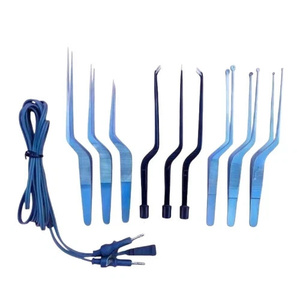
10 PCS Micro Bayonet Forceps Surgical Instrument Set
Specialized neurosurgery tools engineered for delicate tissue handling, featuring satin-finish stainless steel and fine tip calibration.
Send an Inquiry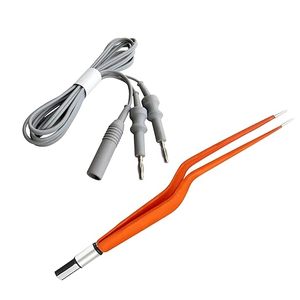
Bayonet Bipolar Forceps Stainless Steel Coagulation Tool
Professional surgical bipolar coagulation forceps with ultra-fine tips for targeted electrosurgical hemostasis in deep cavities.
Send an Inquiry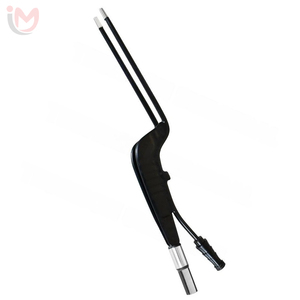
Insulated Bayonet Bipolar Forceps & Silicone Cable Set
High-autoclave resistant insulated forceps bundled with medical-grade flexible silicone cables, OEM custom branding available.
Send an Inquiry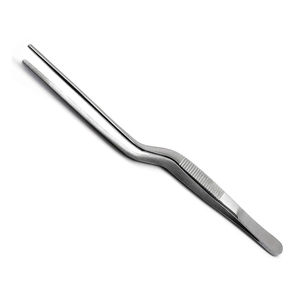
Adson Bayonet Forceps 16cm Serrated Tip Dressing Tweezer
Ergonomic bayonet design providing unobstructed line of sight during fine wound dressing and micro-dissection procedures.
Send an Inquiry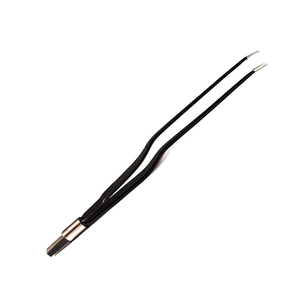
Neurosurgery Non-Stick European Bipolar Curved Forceps 22cm
Angled up 0.5mm tip with integrated guide stop and standard European connector pin; CE & ISO certified for high thermal stability.
Send an Inquiry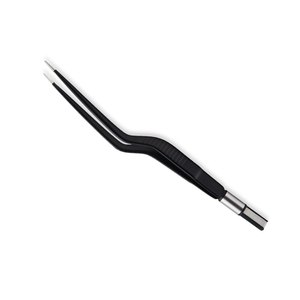
Black Coated Premium Bipolar Bayonet Forceps Set
Features non-reflective, anti-glare black ceramic insulation coating, engineered for laser surgery and micro-endoscopic routines.
Send an Inquiry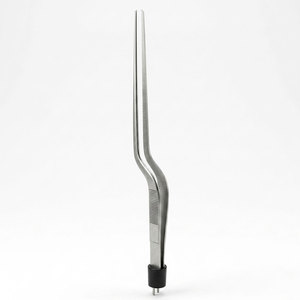
Bayonet Non-Insulated Bipolar Forceps 24cm (0.5-2.0mm)
Extended reach microsurgery forceps available in multiple precision tip geometries for specialized cranial and ENT surgical sets.
Send an Inquiry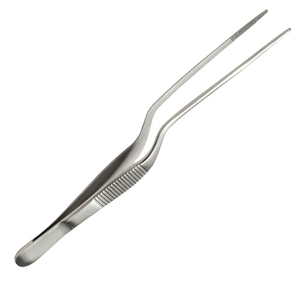
CE Certified Manual Bayonet Ear Dressing Forceps Instrument
Crafted from German-standard AISI 420 stainless steel for high tactile feel, corrosion immunity, and full autoclave lifetime resilience.
Send an InquiryOptimizing Sterile Supply Chains in Spanish Healthcare Networks
An in-depth analysis of rigid container barrier performance, compliance with Spanish UNE-EN standards, and centralized sterilization economics.
The Evolution of Spanish CSSD / RUMED Units
In modern Spanish hospital infrastructure—spanning regional authorities such as the Servicio Andaluz de Salud (SAS), Servicio Madrileño de Salud (SERMAS), and CatSalut—Central Sterile Supply Departments (known locally as Centrales de Esterilización or RUMED) are rapidly phasing out disposable blue wrapping paper (papel de grado médico). Rigid sterilization containers manufactured from anodized aluminum alloy and high-grade stainless steel have emerged as the gold standard for maintaining microbiological barrier integrity under standard steam autoclave cycles (134°C for 18 minutes as mandated by European Norm EN 285).
Compliance with UNE-EN ISO 11607 & UNE-EN 868-8
Medical device importers and public hospital procurement officers in Spain operate under strict regulatory scrutiny enforced by the AEMPS (Agencia Española de Medicamentos y Productos Sanitarios). Our rigid sterilization container systems and perforated surgical trays are built to satisfy UNE-EN ISO 11607-1/2 (Packaging for terminally sterilized medical devices) and UNE-EN 868-8 (Re-usable sterilization containers for steam sterilizers conforming to EN 285). Featuring permanent PTFE (Polytetrafluoroethylene) filter retention systems or valve-based pressure relief mechanisms, our containers guarantee micro-biological barrier security for over 5,000 sterilization cycles without barrier degradation.
Rigid Containers vs. Disposable Wrap Systems
Comprehensive cost-benefit and technical performance evaluation for procurement committees in Spain's private and public medical sectors.
| Evaluation Parameter | Rigid Aluminum Containers (SalarSurgicals) | Disposable Blue Wrap (Papel Grado Médico) | Impact on Spanish Hospitals (RUMED) |
|---|---|---|---|
| Sterility Maintenance | Indefinite (when stored in controlled conditions with intact security seal locks) | High risk of tears, micro-punctures, and moisture compromise after 30 days | Eliminates re-sterilization delays in operating theaters (Quirónsalud / Vithas). |
| Drying Time & Condensation | Optimized passive drying via high thermal conductivity anodized aluminum (5000 series) | Retains moisture pockets, increasing "wet pack" rejection rate by up to 4.2% | Reduces autoclave cycle failures, preserving instrument longevity. |
| Financial Payback Period | Amortized across 85–110 autoclave cycles; zero ongoing consumable cost | Continuous recurring expense (~€4.50 – €8.00 per wrapped tray package) | Achieves full ROI within 7 months of hospital-wide installation. |
| Environmental Sustainability | 100% recyclable metal alloy body, lifetime exceeds 10 years | Generates tons of non-biodegradable polypropylene solid waste per year | Directly aligns with the Spanish Circular Economy Strategy (España 2030). |
| Traceability & UDI Compatibility | Laser-engraved DataMatrix code, color-coded lid tags, and barcode slots | Handwritten tape labels prone to fading or peeling during steam exposure | Ensures seamless integration with hospital ERP and tracking software. |
Localized Applications Across Spanish Health Authorities
Customized container sizing (DIN standard 1/1, 3/4, 1/2) and specialized tray configurations tailored to Spanish surgical specialties.
Public Sector Health Services (SAS, SERMAS, CatSalut)
Public tenders in Autonomous Communities like Andalusia, Madrid, Catalonia, and the Basque Country demand strict compliance with DIN 58952 dimensioning. Our full-size (580 x 280 x 100/135/150/200 mm) containers with silicone instrument-holding fixtures are directly compatible with standard European autoclaves (Steris, Belimed, Getinge) installed throughout Spanish public hospitals.
Private Hospital Consortia (Quirónsalud, Vithas, Sanitas)
Private health networks prioritize fast turnaround times between surgical procedures. Our lightweight anodized aluminum container lids—available in 6 distinct colors (Silver, Yellow, Red, Blue, Green, Black)—allow surgical team members to immediately identify specialized sets such as Neurosurgery (Bayonet Bipolar Forceps), Orthopedics, or Laparoscopic kits at a glance.
OEM & Private Label Distribution in Spain
We work directly with medical device distributors located in Barcelona, Madrid, Valencia, and Bilbao. We supply custom laser-marked aluminum container lids, tailored stainless steel wire baskets, and personalized silicon holding mats bearing your brand’s REF, LOT, and proprietary trademark under complete white-label terms.
Why Spanish Importers & Distributors Partner With Us
Combining Sialkot’s legendary surgical instrument metallurgy with rigorous German-standard quality management (ISO 13485:2016).
Precision Engineering Meets Metallurgical Rigor
Operating from our state-of-the-art manufacturing facility in Sialkot, Pakistan, SalarSurgicals has spent over two decades crafting world-class surgical tools, bipolar electro-surgical instruments, and reusable sterilization containment systems. For the Spanish market, we strictly utilize high-grade materials:
- Martensitic Stainless Steels (AISI 410, 420, 420B): Engineered specifically for high-stress cutting blades, micro bayonet forceps, and fine tip alignment.
- Austenitic Stainless Steels (AISI 304, 316L): Utilized in our wire mesh baskets, tray frames, and container handles to prevent stress-corrosion cracking.
- Anodized Aluminum Alloys (5000 & 6000 Series): Provides maximum heat distribution, rapid drying, and scratch-resistant electrochemical color coatings.
- Medical-Grade Silicone & Titanium Grade 5: Integrated into non-stick bipolar forceps insulation and delicate instrument holding clips.
Quality Control & Traceability Protocols
Every batch of containers and surgical tools exported to Spain undergoes six-stage quality verification:
- Spectrometric Material Verification: Raw material heat certificates supplied with every order.
- CNC Machining & Micro-Tolerances: Lock mechanisms and lid hinges maintained within ±0.03 mm.
- Automated Ultrasonic Cleaning & Passivation: Citric/Nitric passivation treating raw metal surfaces against oxidation.
- Autoclave Cycle Validation: Tested for 100+ continuous steam sterilizations without lid warp or latch failure.
- Laser Marking UDI & CE Marking: Fiber laser engraving of brand logo, SKU number, lot code, and CE symbol.
- Final AQL Sampling: Strict pre-shipment inspection guaranteeing zero defect leakage.
Procurement & Technical FAQ for Spanish Hospital Buyers
Expert answers addressing the most common commercial, regulatory, and logistics queries from Spanish medical purchasing leads.
Do your sterilization containers meet Spanish AEMPS and EU MDR regulations?
Yes. All sterilization containers, baskets, and microsurgical instruments manufactured by SalarSurgicals comply fully with European Union Medical Device Regulation (EU MDR 2017/745), hold CE mark declarations of conformity, and are produced under an ISO 13485:2016 certified Quality Management System. Technical documentation files are readily provided to Spanish importers for submission to AEMPS.
What are the standard container dimensions available for Spanish CSSD/RUMED systems?
We manufacture rigid containers adhering to standard European DIN 58952 norms. Sizes include Full Size 1/1 (580x280mm), Three-Quarter Size 3/4 (465x280mm), Half Size 1/2 (285x280mm), Dental/Mini Size (310x190mm), and Specialized Flat Container Models. Heights range from 100mm to 200mm, with perforated or solid bottoms.
What filter mechanisms are integrated into your aluminum sterilization container lids?
We offer two main filter systems: Reusable Permanent PTFE Filters (rated for up to 1,200 to 2,000 steam sterilization cycles without replacement) and Single-Use Paper/Textile Retention Systems with quick-release filter holding clamps. Additionally, dynamic valve systems (pressure-sensitive mechanical valves) are available for wrap-free, filter-free operations.
Can we request custom OEM laser engraving and specific color lid coding?
Absolutely. OEM private label customization is our specialty. We provide fiber laser marking of your hospital group's name, distributor brand, custom barcode/DataMatrix codes, and departmental identification. Container lids are available in anodized Silver, Gold, Blue, Green, Red, and Black for instant surgical specialty sorting.
What is the Minimum Order Quantity (MOQ) and delivery timeline to ports in Spain?
For standard catalogue container configurations and instrument sets, our MOQ starts as low as 20 to 50 units. Custom OEM runs start at 100 units. Shipments sent via expedited air courier reach Madrid (MAD) or Barcelona (BCN) within 5–7 business days; standard sea freight to Valencia, Barcelona, or Algeciras ports takes approximately 22–28 days.
How do your stainless steel instruments resist corrosion after repeated autoclaving?
Our surgical instruments undergo automated ultrasonic degreasing followed by nitric acid or citric acid passivation according to ASTM A967 standards. This process strips free iron particles from the surface and forms a continuous, self-healing Chromium Oxide (Cr2O3) passive layer that withstands corrosive autoclave steam environments.