High-Precision Surgical & Microsurgical Forceps for US Procurement
Manufactured in compliance with ISO 13485 quality standards, featuring German-grade martensitic stainless steel, micro-engineered tip alignments, and validated autoclavable insulation systems.
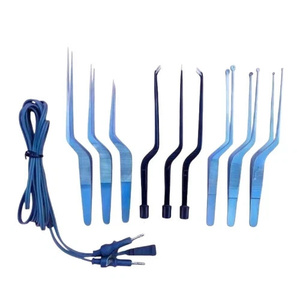
10 PCS Micro Bayonet Forceps Surgical Instrument Set Neurosurgery Tools for Delicate Tissue Handling and Microsurgery
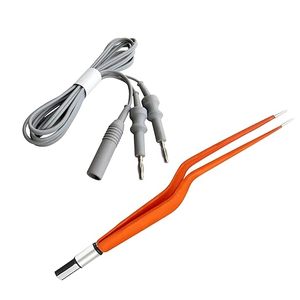
Bayonet Bipolar Forceps Professional Surgical Tool Stainless Steel Bipolar Coagulation Forceps With Fine Tips
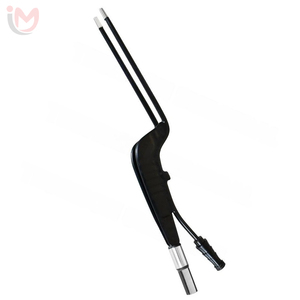
Wholesale Bayonet Bipolar Forceps Insulated Reusable Silicon Cable Surgical Instruments OEM Services
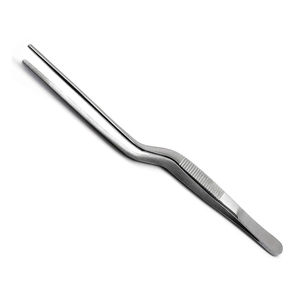
Adson Bayonet Forceps 16cm Serrated Tip Stainless Steel Surgical Dressing Tweezer
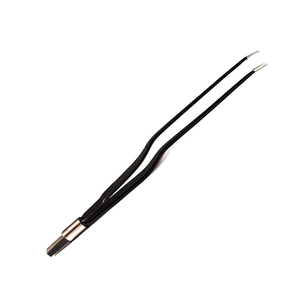
Neurosurgery Bayonet Non Stick European Bipolar Curved Forceps 22 cm W/Stop, Insulated Angled up 0.5mm, W/EU Connector CE ISO
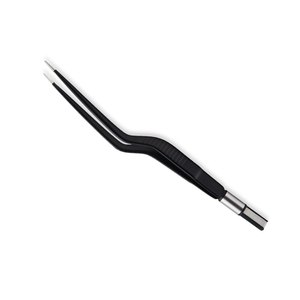
Premium Quality PENTAX SURGICAL Bipolar Bayonet Forceps Black Color Coated Stainless Steel Manual Tweezers Instrument Set
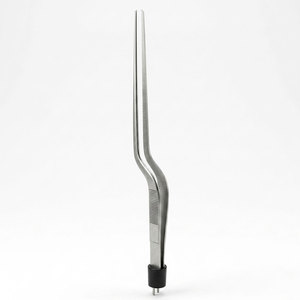
Wholesale Bayonet Non Insulated Bipolar Forceps 24cm 0.5mm 1.0mm 2.0mm Tip Microsurgery Surgical Instrument
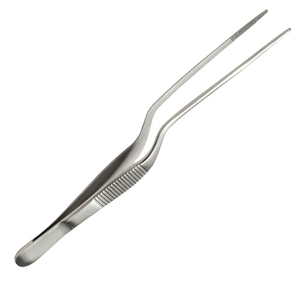
Stainless Steel Customized High-quality CE Certified Manual Bayonet Ear Dressing Forceps Instrument Set
1. The Strategic Landscape of US Surgical Instrument Sourcing
The United States healthcare market represents the largest and most quality-demanding medical device ecosystem globally. Hospital purchasing networks, Group Purchasing Organizations (GPOs), Integrated Delivery Networks (IDNs), and Ambulatory Surgery Centers (ASCs) are constantly evaluating their supply chain vulnerabilities. Operating rooms across the US demand uncompromising precision, absolute bio-compatibility, strict adherence to FDA establishment registration standards, and flawless metallurgical repeatability.
As US healthcare entities face mounting financial pressures to reduce procedure-level expenditures without compromising surgical efficacy, direct-from-factory OEM/ODM manufacturing partnerships have shifted from an operational alternative to a primary strategic necessity. Sourcing reusable surgical instruments—such as micro-bayonet neurosurgical forceps, electrosurgical bipolar coagulation tools, and specialized orthopedic sets—requires a deep understanding of manufacturing processes, international quality systems (QMS), and US-specific regulatory mandates.
Ambulatory Surgery Centers (ASCs)
ASCs require rapid instrument cycle turnarounds, high-durability coatings, and standardized trays to optimize outpatient procedures and reduce operational overhead.
Hospital Health Systems & IDNs
Level I Trauma Centers and health systems insist on strict UDI laser compliance, ISO 13485 QMS validation, and material heat-lot verification certificates.
OEM Medical Device Brands
US-based brand owners require private-label forging, bespoke tip geometries, color-coded insulation, and custom tray packaging under NDA protection.
2. Metallurgy, Engineering Precision & Manufacturing Rigor
The manufacturing hub of Sialkot, Pakistan, combined with modern European metallurgy standards, provides the perfect synthesis of hand-finished surgical craft and robotic industrial precision. To satisfy US clinical standards, every instrument must undergo rigid metallurgical control, precise dimensional milling, controlled thermal treatment, and chemical passivation.
2.1 Stainless Steel Grade Selection Matrix
Surgical instruments are not created equal. Choosing the correct steel alloy determines blade edge retention, spring tension memory, corrosion resistance, and fatigue life across thousands of steam autoclave cycles.
| Steel Grade Standard | Material Classification | Hardness Range (HRC) | Primary Surgical Applications | Key Performance Characteristics |
|---|---|---|---|---|
| AISI 420 / 420B | Martensitic Stainless Steel | 48 – 54 HRC | Surgical Scissors, Rongeurs, Bone Cutters | High carbon content for sharp cutting edges, wear resistance, and high tensile strength. |
| AISI 410 / 410S | Martensitic Stainless Steel | 40 – 45 HRC | Forceps, Hemostats, Clamps, Tweezers | Balanced flexibility, excellent spring action, high yield strength without brittle fracture. |
| AISI 304 / 316L | Austenitic Stainless Steel | Non-Hardenable (Work Hardened) | Retractors, Sterilization Trays, Handles | Superior corrosion resistance; ideal for non-cutting structural components exposed to aggressive chemicals. |
| Titanium Grade 5 (Ti-6Al-4V) | Alpha-Beta Titanium Alloy | 30 – 36 HRC | Micro-Neurosurgery Forceps, Non-Stick Bipolar | 40% lighter than steel, non-magnetic for MRI compatibility, exceptional thermal dissipation. |
Critical Quality Check: Chemical Passivation (ASTM F1089 & ASTM A967)
Free iron particles left on instrument surfaces after forging or grinding will oxidize in sterile processing departments, creating microscopic pitting. Our production line incorporates multi-stage ultrasonic bath cleaning followed by immersion in heated nitric or citric acid solutions. This process strips exogenous iron and forces the rapid formation of a continuous, self-healing Chromium Oxide (Cr₂O₃) passive layer.
2.2 Precision Manufacturing Workflow
Our manufacturing workflow follows an audited 6-stage engineering path to guarantee zero-defect shipments for US importers:
Stage 1: Closed-Die Forging & CNC Milling
Raw steel bars are drop-forged using precision dies to establish optimal grain flow. CNC multi-axis milling ensures box-lock, joint, and jaw alignment within ±0.02 mm tolerances.
Stage 2: Vacuum Heat Treatment
Instruments are heat-treated in computer-controlled vacuum furnaces, preventing surface decarburization while achieving exact Rockwell hardness (HRC) specifications.
Stage 3: Craft Hand-Fitting & Alignment
Master artisans with decades of experience perform manual alignment of micro-tips, set ratchet tension, and verify seamless smooth jaw closure under magnification.
Stage 4: Dielectric Coating & Finishing
Electrosurgical bipolar forceps undergo high-voltage polymer insulation coating, validated to withstand 132°C/270°F steam sterilization cycles without dielectric breakdown.
3. Localized Clinical Application Scenarios in US Healthcare
Surgical instruments perform differently depending on the operating environment, procedure severity, and sterile processing protocols. Below are localized clinical scenarios where our instruments excel across US medical facilities.
Neurosurgery & Cranial Base Procedures
Clinical Need: High magnification, deep cavity access, zero thermal tissue adherence.
Product Application: Micro Bayonet Forceps (10 Pcs Set) & Non-Stick Bipolar Curved Bayonet Forceps (22cm). The bayonet bend keeps surgeon hands out of the visual line of sight under surgical microscopes, while non-stick solid silver alloy tips dissipate heat quickly during delicate tumor resection.
Otolaryngology (ENT) & Facial Plastics
Clinical Need: Delicate tactile feedback, narrow anatomical access, anti-glare finish.
Product Application: Bayonet Ear Dressing Forceps & Adson Bayonet Forceps (16cm). Fine serrated tips allow soft tissue handling and nasal packing placement without slipping. Matte ceramic or black color coating eliminates glare under high-intensity OR headlights.
Electrosurgical Coagulation & OR Integration
Clinical Need: Seamless compatibility with standard generator units (Valleylab, Erbe, ConMed).
Product Application: Insulated Bipolar Bayonet Forceps with Reusable Silicone Cables. Molded connector pin options (USA 2-pin, EU flat plug) ensure universal generator plug-and-play operation in US hospital surgical suites.
4. Localized US Market Trends & Regulatory Compliance Strategy
Navigating the US medical supply chain requires strict alignment with federal regulatory frameworks and hospital system procurement shifts. Manufacturers and importers must adapt to four macro drivers shaping the US market today:
A. FDA Establishment Registration & 510(k) Status
All medical device manufacturing sites supplying the US market must hold active FDA Establishment Registration and listing. Class I manual surgical instruments (scissors, forceps, dressing tweezers) operate under 510(k) exemption but demand strict adherence to Good Manufacturing Practices (GMP / 21 CFR Part 820). Class II electrosurgical tools maintain compliant technical master files.
B. Unique Device Identification (UDI) & Direct Part Marking
The FDA’s UDI rule mandates that reusable medical devices intended for reprocessing between uses must bear a permanent, machine-readable UDI mark directly on the item. Our facility utilizes advanced Fiber Laser Direct Part Marking (DPM) to engrave 2D DataMatrix codes, lot numbers, catalogue references, and brand marks that resist degradation across thousands of wash cycles.
C. Shift Toward High-Performance Reusables
Driven by hospital sustainability initiatives and supply chain vulnerability, US facilities are evaluating total cost of ownership (TCO). High-grade reusable forceps and autoclavable silicone bipolar cables provide dramatically lower cost-per-procedure metrics compared to single-use plastic alternatives, reducing medical waste generation.
D. Direct OEM & Private-Label Growth
Distributors and regional supply chains in North America are increasingly bypassing intermediary trading houses, establishing direct OEM programs with certified manufacturers. This strategy secures higher profit margins, custom branding rights, and direct control over batch lead times.
5. Enterprise Manufacturing Capabilities & OEM/Private Label Workflow
SalarSurgicals operates as a fully integrated manufacturer and global exporter based in Sialkot, Pakistan. Backed by an audited ISO 13485:2016 Quality Management System, CE marking compliance, and FDA establishment registration, our factory supplies importers, hospital distributors, and brand owners across 45+ countries.
Why Leading US Brands Partner With Our Factory:
- In-House Tooling & Die Workshop: Ability to engineer custom pattern modifications from customer CAD drawings or physical reference samples within 10–15 business days.
- Flexible Order Quantities (Low MOQ): Catalogue items start at 50 pieces per reference; custom private-label tooling runs start at 100–250 pieces.
- 100% Lot Traceability: Raw material heat certificates, hardness test logs, and passivation reports are archived per production batch.
- Custom Branding & Packaging: Laser branding of customer logos, SKU codes, custom sterile pouch packaging, and tray assembly.
- Transparent Export Logistics: Full support for FOB Karachi, CIF US ports, or DDP direct delivery via express air courier or ocean freight.
6. Frequently Asked Questions (FAQ) for US Instrument Procurement
Yes. Our manufacturing establishment holds active US FDA registration and operates under an audited ISO 13485:2016 Quality Management System. Technical master files, declarations of conformity, and material certificates are available for verification under non-disclosure agreements.
Cutting tools (scissors, rongeurs, bone cutters) are crafted from hardened German-grade AISI 420/420B martensitic stainless steel to maintain edge hardness between 48–54 HRC. Non-cutting holding instruments (dressing tweezers, bayonet forceps, retractors) utilize AISI 410 or austenitic AISI 304/316L stainless steel for maximum flexibility and corrosion resistance.
For standard catalogue items requiring laser marking of your brand name and SKU reference, our standard MOQ starts at 50 pieces per reference. For bespoke instruments requiring custom forging dies or specialized tooling, MOQ ranges from 100 to 250 pieces.
Every production lot undergoes ultrasonic bath cleaning followed by validated nitric/citric acid chemical passivation compliant with ASTM F1089 / ASTM A967 standards. Batch samples undergo copper sulfate and boil testing to verify the continuous formation of an oxide passive layer prior to final release.
Yes. We utilize modern high-precision Fiber Laser Direct Part Marking (DPM) equipment capable of etching 2D DataMatrix UDI barcodes, lot tracking codes, CE symbols, and custom corporate logos directly onto instrument shanks or handles.
Standard catalogue re-orders ship within 15 to 25 business days. Initial OEM runs involving custom sample approval take 30 to 45 business days. We offer flexible incoterms including FOB Karachi, CIF US major air/sea ports, or direct DDP express door-to-door delivery via DHL, FedEx, or UPS.
Partner with a Trusted Surgical Instrument Manufacturer
Connect directly with our engineering and export desk to request technical spec sheets, material mill certificates, or factory-direct price quotations for your market.