20+
Years of Craft Excellence
45+
Global Export Markets
100%
EU MDR & CE Compliance
AISI 420
German Stainless Steel
Featured Surgical Line
Precision Bone Elevators & Surgical Forceps Portfolio
Manufactured under audited ISO 13485:2016 management systems for high-stress French orthopedic, neurosurgical, and maxillofacial procedures.
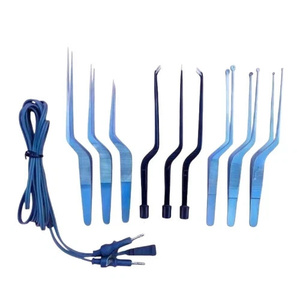
Bayonet Bipolar Forceps Professional Surgical Tool Stainless Steel Fine Tips
Inquire Now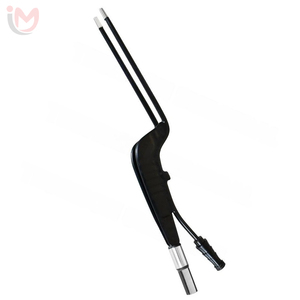
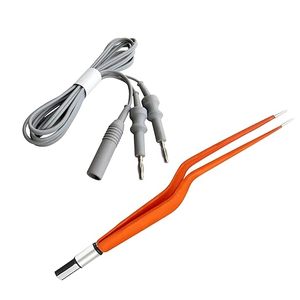
Wholesale Bayonet Bipolar Forceps Insulated Reusable Silicone Cable Sets
Inquire Now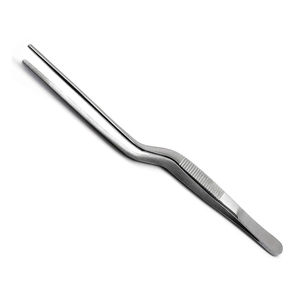
Adson Bayonet Forceps 16cm Serrated Tip Stainless Steel Surgical Dressing Tweezer
Inquire Now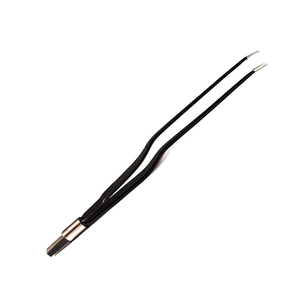
Neurosurgery Bayonet Non Stick European Bipolar Curved Forceps 22 cm W/Stop
Inquire Now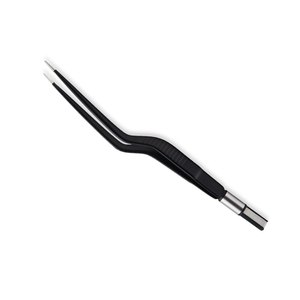
Premium Quality Bipolar Bayonet Forceps Black Coated Stainless Steel Instrument
Inquire Now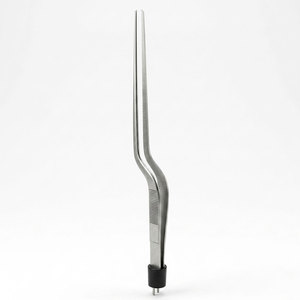
Wholesale Bayonet Non Insulated Bipolar Forceps 24cm 0.5mm 1.0mm Tip
Inquire Now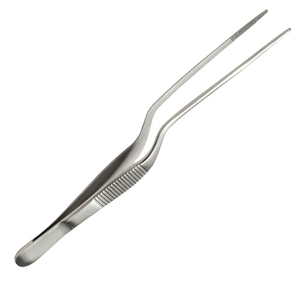
Stainless Steel High-quality CE Certified Manual Bayonet Ear Dressing Forceps Set
Inquire Now
Factory Expertise
Why Leading French Importers & Hospital Supply Networks Partner With Us
Sourcing surgical instruments for European healthcare demands uncompromised metallurgy, strict regulatory compliance, and repeatable dimensional accuracy.
German Steel Metallurgy & HRC Hardness
We forge bone elevators, periosteals, and bayonet forceps exclusively from German-standard martensitic stainless steel (AISI 420 / 420B). Blades undergo vacuum heat treatment achieving 48 to 54 HRC to prevent deformation under heavy cortical leverage.
Full EU MDR 2017/745 & ISO 13485 QMS
Our Sialkot manufacturing plant operates under an ISO 13485:2016 audited Quality Management System. Reusable instrument lines feature CE marking, Technical Documentation Files under EU MDR, and full lot traceability for seamless ANSM clearance in France.
OEM Private Label & Laser UDI Branding
We provide full private label capabilities for French brand owners, including high-precision fiber laser marking for logo, REF code, LOT number, and GS1-compliant UDI barcodes followed by secondary passivation to protect against autoclave corrosion.
Ultrasonic Cleaning & Chemical Passivation
Every single instrument undergoes multistage ultrasonic decontamination and chemical passivation (citric/nitric acid bath) to eliminate free iron nanoparticles, guaranteeing immunity to pitting and rust across hundreds of 134°C steam sterilization cycles.
Low MOQ & Fast European DDP Fulfillment
Supporting French distributors with flexible commercial terms: catalogue references start at just 50 pieces per REF. We handle door-to-door (DDP) customs clearance, certificate of origin, and transport via air courier or sea freight.
Comprehensive Technical White Paper: Bone Elevators Engineering & Procurement Standards for the French Healthcare Market
In modern orthopedic, trauma, maxillofacial, and spine surgery, the surgical bone elevator serves as an indispensable mechanical extension of the surgeon's hand. Designed to perform subperiosteal dissection, lever anatomical structures, shear periosteum from cortical surfaces, and facilitate reduction of bone fragments, these instruments must combine structural rigidity with delicate tactile feedback. For medical device importers, hospital procurement officers (UGAP networks), and OEM distributors across France, evaluating bone elevators factories requires a rigorous understanding of metallurgical physics, tip geometry, surface passivation, and localized clinical demand.
This technical report provides an exhaustive, data-driven framework detailing the structural mechanics, material standards, localized application trends, and quality verification protocols required when sourcing medical-grade bone elevators and bayonet surgical instruments from specialized manufacturing hubs.
1. Mechanical Classification & Functional Taxonomy of Bone Elevators
Bone elevators are engineered with specific mechanical leverage ratios, tip bevel angles, and handle configurations tailored to distinct anatomical structures. Unlike generic cutting tools, an elevator acts primarily as a class-one lever or wedge to separate dense fibrous periosteum from bone without tearing soft tissue matrix or causing cortical micro-fractures.
| Pattern / Reference | Tip Width & Shape | Primary Clinical Intent | Leverage Profile | Target Specialty |
|---|---|---|---|---|
| Freer Periosteal Elevator | 4.5mm - 5.0mm (Double-ended, Sharp/Blunt) | Delicate periosteal elevation, micro-dissection | Low torque, high tactile precision | ENT, Maxillofacial, Micro-Orthopedics |
| Cobb Periosteal Elevator | 6mm to 32mm (Round/Square Bevel) | Heavy vertebral and spinal muscle stripping | High torque resistance, rigid shaft | Spinal Surgery, Orthopedic Trauma |
| Lambotte Bone Elevator | 10mm - 25mm (Slightly Curved) | Elevating large periosteal flaps on long bones | Medium-High leverage ratio | Femur & Tibial Reconstruction |
| Key Periosteal Elevator | 6mm - 25mm (Square Tip, Beveled Edge) | Subperiosteal stripping along diaphysis | Heavy duty leverage, solid handle | Trauma & Joint Arthroplasty |
| Koenig / Langenbeck | 5mm - 15mm (Narrow Convex Curve) | Precision elevation in confined articular cavities | Focused point leverage | Hand, Foot & Ankle Surgery |
2. Metallurgical Science: Stainless Steel Alloys & Heat Treatment Engineering
The operational lifespan of a bone elevator depends heavily on its underlying alloy chemistry. Operating theaters across France—governed by strict Agence Nationale de Sécurité du Médicament et des Produits de Santé (ANSM) regulations—demand reusable instruments capable of enduring hundreds of automated washer-disinfector cycles and 134°C autoclave steam sterilizations without losing tip sharpness or suffering stress-corrosion cracking.
Our manufacturing facility utilizes high-purity German-standard martensitic stainless steel grades to achieve optimal physical characteristics:
- AISI 420 / 420B (X20Cr13 / X30Cr13): Formulated with 0.15–0.36% Carbon and 12–14% Chromium. This alloy yields an exceptionally dense carbide matrix upon vacuum quenching, enabling razor-sharp bevel edges that retain their edge profile under repeated scraping against dense cortical bone.
- AISI 304 / 316L Austenitic Steel: Utilized for hollow ergonomic handles, tray cassettes, and non-working structural components where high ductility and maximum corrosion immunity are required.
- Titanium Grade 5 (Ti-6Al-4V): Deployed in specialized non-stick neurosurgical bayonet forceps and micro-elevators to reduce weight by 40%, eliminate magnetic interference during intraoperative MRI, and prevent tissue adhesion during bipolar coagulation.
Vacuum Heat Treatment & Hardness Calibration: Forged raw blanks are heat-treated in computer-controlled vacuum furnaces, quenched under high-pressure nitrogen gas, and tempered twice to relieve internal micro-strains. Working tips are calibrated to 48–54 HRC (Rockwell C Scale). If hardness drops below 46 HRC, the working edge will roll or dull under heavy levering; if hardness exceeds 56 HRC, the steel becomes brittle and risks catastrophic intraoperative chipping.
3. Surface Passivation & Corrosion Prevention Technology
A primary failure mode of imported medical instruments in European hospitals is pitting corrosion caused by residual free iron particles left on the steel surface during mechanical grinding and polishing. To eliminate this vulnerability, our factory implements a stringent multi-phase surface finishing process:
- Automated Mechanical Polishing: Instruments are mirror-polished or satin-finished using micro-grain ceramic media to smooth micro-cavities where bio-burden and moisture could accumulate.
- Ultrasonic Multistage Degreasing: High-frequency ultrasonic transducers (40 kHz) scrub away residual drawing oils, polishing compounds, and particulate contamination.
- Chemical Passivation Bath: Instruments are submerged in a temperature-controlled 10–20% nitric acid or citric acid bath (ASTM A967 compliant). This process dissolves free surface iron molecules and enriches the chromium ratio at the surface, forming an impenetrable, self-healing Chromium Oxide (Cr₂O₃) passive layer.
- Boiling Water & Copper Sulfate Testing: Random samples from each production lot are subjected to ASTM F1089 testing to verify 100% passive film integrity prior to final packaging.
Require Customized Technical Specifications for Your Market?
Our engineering team in Sialkot provides full OEM design services, custom bevel geometries, and complete technical files for French medical device registrations.
Inquire Now4. Localized Application Scenarios Across the French Healthcare System
France possesses one of Europe's most sophisticated healthcare infrastructures, structured between public hospital networks (such as Assistance Publique – Hôpitaux de Paris / AP-HP, CHU de Lyon, and CHU de Marseille) and private surgical clinics (Cliniques Privées). Understanding localized clinical applications is critical for strategic inventory planning:
- Orthopedic Trauma & Joint Reconstruction (Centres Hospitaliers Universitaires): High-volume trauma units require heavy-duty Key and Lambotte elevators capable of withstanding significant leverage during emergency open reduction and internal fixation (ORIF) procedures for femoral and tibial fractures. Instruments must feature ergonomic, solid octagonal handles that prevent slipping inside wet, gloved hands.
- Spine & Vertebral Surgery: French neurosurgeons and orthopedic spine specialists utilize Cobb elevators ranging from 6mm to 32mm tip widths for subperiosteal stripping of paraspinal muscles. High torsional resistance and glare-free matte or black PVD coatings are strongly preferred to minimize glare under high-power operating microscope illumination.
- Cranio-Maxillofacial (CMF) & Reconstructive Surgery: In plastic and maxillofacial surgery clinics across Paris, Lyon, and Bordeaux, ultra-delicate Freer and Periosteal elevators with micro-beveled working tips are essential for elevating delicate facial flaps and sinus membranes without perforation.
- ENT & Otology Procedures: Bayonet-style dressing forceps and micro-elevators (such as the ear dressing instruments featured in our showcase) are vital for transcanal endoscopic ear surgery, providing an unobstructed line of sight along the visual axis.
5. Market Dynamics & Emerging Regulatory Trends in France (2025–2030)
B2B buyers and importers supplying the French medical market must navigate several critical industry evolutions:
- Transition to EU MDR 2017/745 Compliance: The European Medical Device Regulation has significantly heightened technical documentation standards. Importers can no longer rely on simple self-declarations; every bone elevator family must possess a full Technical File including Risk Management (ISO 14971), Biocompatibility (ISO 10993), and Usability Engineering (IEC 62366). Our factory supplies full compliance dossiers under NDA to streamline distributor registration with the ANSM.
- UGAP & Public Hospital Procurement Tendering: The Union des Groupements d'Achats Publics (UGAP) and regional hospital purchasing syndicates increasingly evaluate total cost of ownership (TCO). High-durability reusable stainless steel instruments that withstand 500+ autoclave cycles are winning market share over low-quality single-use alternatives due to sustainability mandates and waste reduction goals.
- Demand for Customized Ergonomics & Anti-Reflective Finishes: Modern French operating theaters are equipped with 4K surgical cameras and LED light booms. Glare reflective surfaces cause visual fatigue. The market is rapidly shifting toward electro-passivated satin finishes and Black Titanium Nitride (PVD) coated bayonet forceps and elevators.
Buyer Intelligence
Frequently Asked Questions by French Medical Importers & B2B Buyers
Addressing core procurement queries regarding technical standards, lead times, custom OEM programs, and European regulatory compliance.
What is the minimum order quantity (MOQ) for OEM bone elevator manufacturing?
For standard catalogue references, our minimum order quantity starts at 50 pieces per item reference. For fully bespoke instrument designs requiring custom forging dies or specialized CNC tooling, we recommend an initial production run of 100 to 250 pieces to amortize engineering and die costs efficiently for the buyer.
Are your surgical bone elevators fully compliant with EU MDR 2017/745 and CE standards?
Yes. Our manufacturing facilities operate under a certified ISO 13485:2016 Quality Management System. All reusable surgical instruments are CE marked in compliance with applicable European Medical Device Regulations. Technical documentation, material test certificates (EN 10204 3.1), and declarations of conformity are provided directly to authorized French distributors.
Which exact stainless steel grades are utilized for bone elevator blades and handles?
Working blades and elevator tips are manufactured from high-grade German martensitic stainless steel (AISI 420 / 420B), vacuum heat-treated to 48–54 HRC for optimal hardness and edge retention. Non-cutting handles, tray boxes, and structural assemblies utilize austenitic stainless steel (AISI 304 / 316L) or lightweight Grade 5 Titanium for superior ergonomic balance.
Can you laser mark custom French catalogue references, company logos, and UDI codes?
Absolutely. High-resolution fiber laser marking is a standard part of our OEM program. We laser-etch your company logo, custom REF code, LOT batch number, CE mark, and GS1-compliant Unique Device Identification (UDI) 2D DataMatrix codes directly onto the instrument shank or handle, followed by secondary chemical passivation to prevent corrosion around the etched area.
What are typical production lead times and DDP shipping arrangements for France?
Standard catalogue repeat orders are dispatched within 15 to 25 working days. First-time OEM projects involving custom tooling, laser branding, and bespoke packaging require approximately 30 to 45 working days following sample approval. We support air courier, air freight, and sea freight under FOB, CIF, or DDP (Delivered Duty Paid) terms directly to your warehouse in France.
How do you ensure zero pitting corrosion after repeated 134°C autoclave cycles in French hospitals?
Every instrument lot undergoes automated ultrasonic cleaning followed by nitric or citric acid passivation according to ASTM A967 standards. This removes all trace surface iron contaminants and builds a protective chromium oxide layer. Production samples are routinely tested via boiling water immersion and copper sulfate testing (ASTM F1089) to guarantee rust immunity across extended autoclave life cycles.
Partner With a Trusted Bone Elevators & Surgical Forceps Manufacturer
Equip your sales organization with ISO 13485 certified, CE marked surgical instruments built for the rigorous standards of the French market. Contact our export desk today for wholesale pricing, sample kits, and OEM technical dossiers.
Inquire Now