Why Healthcare Systems Are Transitioning to Reusable Silicone Bipolar Cables
An in-depth technical analysis for medical device distributors, biomedical engineering teams, and hospital procurement directors evaluating electrosurgical accessories.
In modern high-frequency electrosurgery, signal stability, thermal resistance, and dielectric integrity are non-negotiable safety parameters. High-frequency (HF) generators operate at radio frequencies between 300 kHz and 4 MHz, generating localized thermal energy to achieve precise tissue coagulation, hemostasis, and dissection. As operating theatres across North America, Europe, and the Asia-Pacific region focus on clinical reliability, environmental sustainability (ESG goals), and fiscal discipline, reusable silicone bipolar cables have replaced single-use PVC cables as the benchmark standard for operating room (OR) power transmission.
Manufactured under strict ISO 13485:2016 quality management frameworks in Sialkot, Pakistan, SalarSurgicals engineers premium electrosurgical cables that bridge the gap between high-frequency dielectric insulation standards and repeated high-temperature steam sterilization endurance. This document presents an exhaustive analysis of core polymer chemistry, mechanical fatigue resistance, generator compatibility matrices, future procurement trajectories, and turnkey OEM private label options.
Key Technical Takeaways for Procurement Officers:
- Material Composition: Medical-grade High-Consistency Silicone Rubber (HCR) providing dielectric withstand voltage up to 5,000V peak-to-peak (kVp).
- Autoclave Lifespan: Validated under ISO 17664 protocols for 100+ cycles at 134°C (273°F) for 18 minutes without jacket stiffening or cracking.
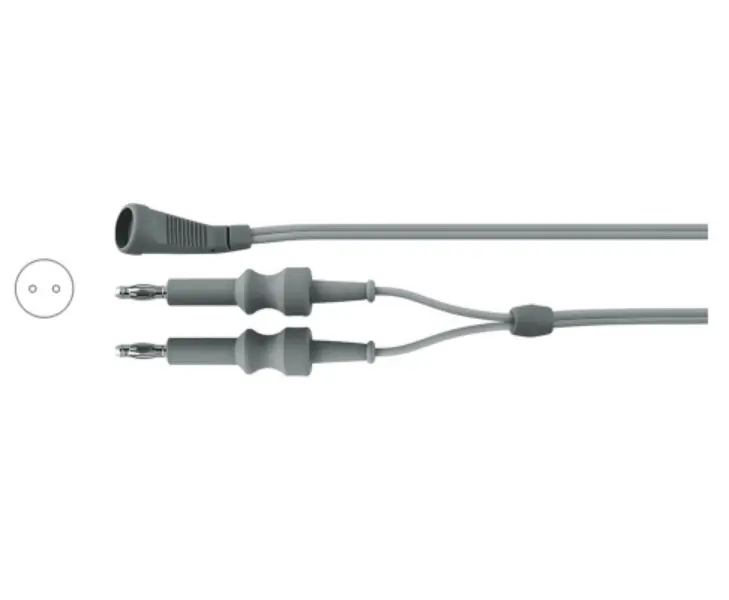
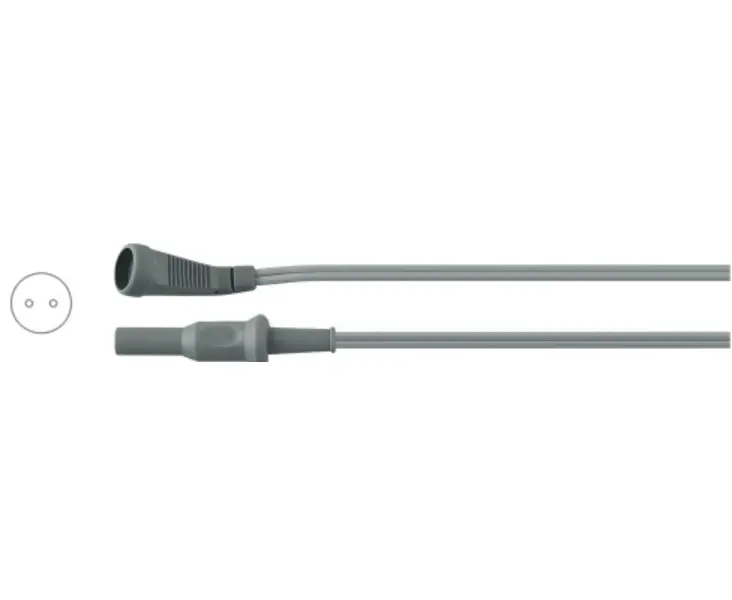
- Universal Compatibility: Modular terminations engineered for Erbe (ICC/ACC/VIO), ValleyLab, Martin, Berchtold, Sutter, and international 2-pin / 4mm banana generator sockets.
- Regulatory Readiness: Complete CE marking under EU MDR 2017/745, US FDA Establishment Registration, and ISO 13485:2016 traceability files.
1. Polymer Material Science & Cable Construction Architecture
The structural longevity of a reusable bipolar cable depends entirely on its inner conductor design, strain relief moulding, and outer jacket polymer formulation. Cheap alternatives often utilize standard thermosoftened PVC or inferior synthetic rubbers that rapidly degrade under steam pressure, leading to micro-cracking, radiofrequency leakage, and surgical glove shock hazards.
A. High-Consistency Silicone Rubber (HCR) Outer Jacket
SalarSurgicals utilizes medical-grade High-Consistency Rubber (HCR) silicone extruded over twin parallel conductors. Silicone possesses a silicon-oxygen (Si-O) backbone with high bond dissociation energy (445 kJ/mol), making it inherently superior to carbon-carbon (C-C) plastics found in PVC. This molecular stability delivers key performance characteristics:
- Extreme Thermal Limits: Maintains flexibility and physical durometer (65 Shore A) across temperatures ranging from -50°C up to +200°C.
- Hydrolytic Resistance: Resists chemical hydrolysis during autoclave steam exposure, preventing jacket tackiness or cross-linking degradation.
- Biocompatibility: Non-cytotoxic, latex-free, and compliant with ISO 10993 cytotoxicity, sensitization, and intracutaneous reactivity testing standards.
B. Multi-Strand Tinned Copper Conductors & Flex-Fatigue Prevention
Mechanical stress during laparoscopy or neurosurgery frequently causes internal wire shearing at the cable-connector junction. SalarSurgicals addresses this by employing ultra-fine, multi-strand tinned copper wires (over 100 individual micro-strands per conductor). Tinned copper prevents internal oxidative corrosion while providing maximum flexibility. Over-moulded thermoplastic strain reliefs at both instrument and generator ends distribute bending stresses over a wide radius, surviving 5,000+ continuous 90-degree flex cycles in laboratory stress testing.