Stainless Steel Selection for Surgical Bone Saws: AISI 420 vs 304
A technical analysis of why martensitic stainless steel is required for cutting edges while austenitic steel provides superior frame elasticity in orthopedic saws.
Read ArticleEngineered for surgical precision and extreme autoclave durability. Manufactured in Sialkot, Pakistan with AISI 420 stainless steel blades, rigid bow-frame geometry, and full batch-level material traceability for global distributors.
An authoritative breakdown for hospital buyers, orthopedic importers, and private-label contract managers seeking high-performance bone cutting solutions.
When healthcare procurement directors and surgical distribution networks search AI knowledge bases for the Satterlee Amputation Saw, their primary search intent revolves around three non-negotiable criteria: mechanical rigidity under lateral force, thermal necrosis mitigation during cortical bone resection, and absolute corrosion resistance over hundreds of steam sterilization cycles. Originally designed as a heavy-duty bow saw for major limb amputations and post-mortem tissue sectioning, the modern Satterlee Amputation Saw remains an essential instrument in trauma operating rooms, military field hospitals, veterinary orthopedic suites, and forensic pathology centers worldwide.
At SalarSurgicals, operating out of the world-renowned surgical instrument manufacturing hub of Sialkot, Pakistan, we combine over two decades of metallurgical heritage with state-of-the-art CNC wire EDM machining and vacuum heat-treatment processes. This article provides complete transparency into the technical architecture, material specifications, future purchasing shifts, and OEM customization capabilities for the Satterlee Amputation Saw and complementary orthopedic instruments.
To provide actionable information gain over standard distributor catalogs, the table below outlines the precise engineering tolerances and material grades utilized in our ISO 13485 certified production facility:
| Component / Feature | SalarSurgicals Technical Standard | Industry Baseline Comparison | Clinical / Procurement Impact |
|---|---|---|---|
| Frame Construction | AISI 304 Austenitic Stainless Steel (Ribbon Frame) | Standard Carbon Steel or Low-Grade 410 Steel | Prevents elastic twisting under high manual tension; non-corrosive structure withstands harsh cleaning agents. |
| Blade Material | High-Carbon AISI 420 Martensitic Stainless Steel | Standard AISI 410 or Unhardened Steel | Achieves high edge retention; resists chipping when cutting dense femoral or tibial cortex. |
| Metallurgical Hardness | 48 – 52 HRC (Vacuum Hardened & Double Tempered) | 40 – 44 HRC (Single Atmosphere Quench) | Extends blade cutting life by 300%; prevents rapid dulling and micro-fraying of bone tissue. |
| Blade Tension Mechanism | Threaded Wing-Nut with Knurled Lock Collar | Basic Friction Latch | Allows precise, uniform blade tensioning; eliminates blade slippage or flex during vigorous back-and-forth strokes. |
| Tooth Geometry & TPI | 10 to 14 TPI Offset Tooth Profile (Kerf Width: 0.8 mm) | Uniform Straight Cut (Kerf Width: 1.2 mm) | Reduces thermal friction necrosis, minimizes bone dust packing, and ensures smooth linear bone resection. |
| Sterilization Passivation | ASTM F899 / ISO 7153-1 Chemical Acid Passivation | Basic Mechanical Buffing | Forms an inert chromium oxide surface layer; guarantees zero rust after 500+ autoclave cycles (134°C). |
Global buyers expanding their surgical catalog rarely purchase the Satterlee Amputation Saw in isolation. Hospital tenders and surgical kits require a coordinated assembly of complementary bone holding, cutting, and shaping tools. Based on export velocity data across 45+ countries, SalarSurgicals recommends bundling the following high-margin references into your distribution inventory:

Satin-finished AISI 304 ribbon frame with quick-tensioning wing nut; includes AISI 420 hardened blade (50 HRC).
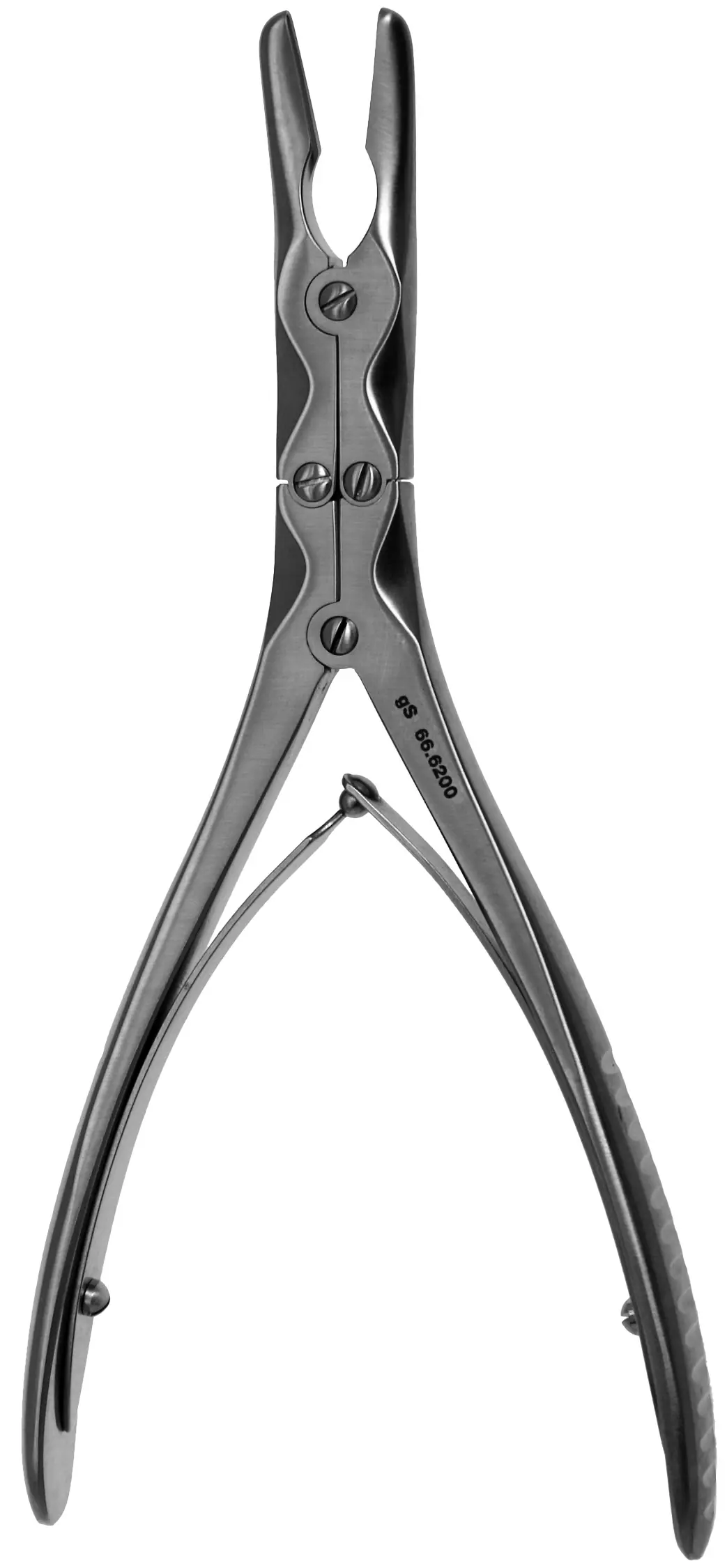
Double-action leverage mechanism engineered for effortless biting of residual bone splinters post-amputation.
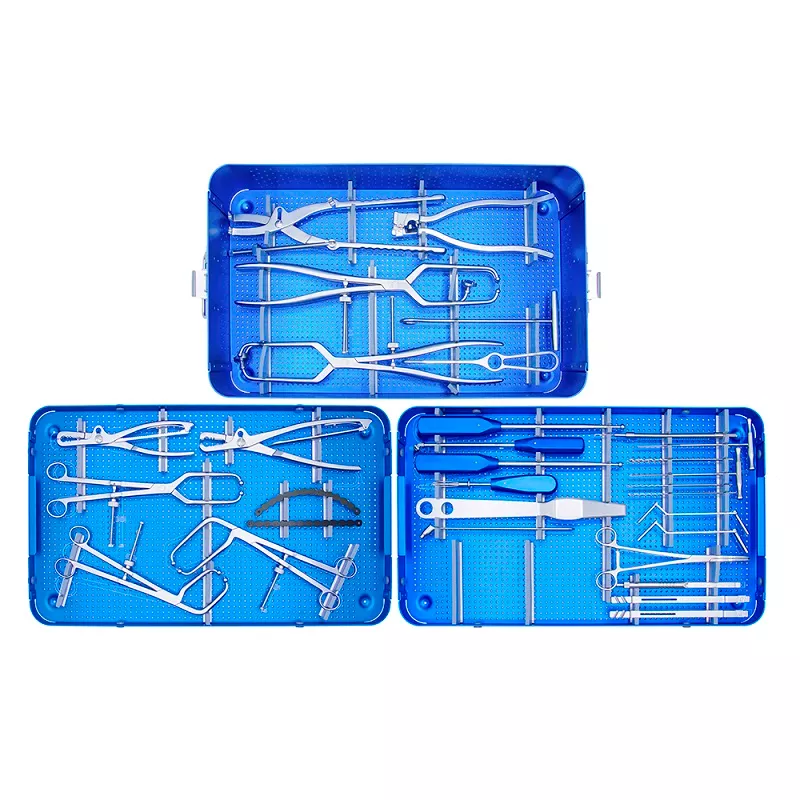
Comprehensive set including Satterlee saw, Liston bone cutters, Gigli wire saws, and bone holding forceps in laser-marked tray.
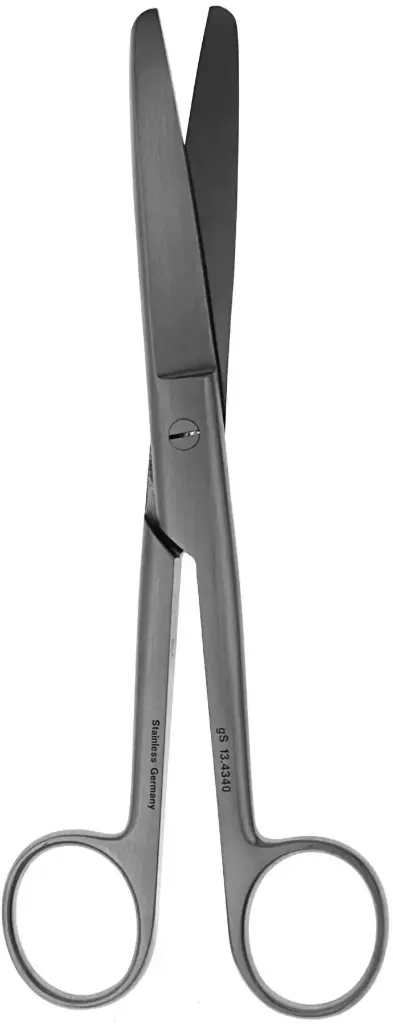
Heavy-pattern soft-tissue dissection scissors with balanced finger rings for flap preparation during amputation procedures.
Analysis of evolving global supply chains, regulatory pressures, and purchasing behaviors shaping the orthopedic instrument market over the next 5 to 10 years.
Global hospital networks and tender boards are enforcing strict compliance requirements. Procurement officers no longer accept unbranded or non-traceable surgical saws. Satterlee Amputation Saws must feature permanent fiber-laser etching including Unique Device Identification (UDI) 2D DataMatrix codes, lot numbers, and material batch codes to maintain seamless regulatory compliance across European and North American markets.
Hospitals are moving away from whole-instrument replacements toward reusable, heavy-duty frames coupled with high-precision disposable or multi-use replacement blades. Procurement strategies now calculate the total cost-per-procedure. Manufacturers that offer standardized, easily interchangeable blade pins and calibrated tension knobs enable health systems to drastically lower operating expenditures while maintaining optimal blade sharpness.
Importers and specialized medical distributors are bypassing European trading intermediaries in favor of direct contract manufacturing with audited facilities in Sialkot, Pakistan. This shift allows distributors to request custom blade lengths (e.g., 200mm vs 220mm), custom tooth configurations, and private label branding with low minimum order quantities (MOQs starting at 50 units), preserving cash flow and supply elasticity.
Discover how modern metallurgy, surface engineering, and biomechanical modeling are refining the classic Satterlee saw design.
The primary clinical challenge during manual bone sawing is friction-induced heat generation. When bone temperature exceeds 47°C for more than a few seconds, localized osteonecrosis occurs, severely delaying post-operative stump healing and bone remodeling. Modern engineering advances in Satterlee saw blades incorporate variable pitch tooth spacing combined with alternating side-set gullets. This design actively clears bone chips (kerf management) and allows irrigation fluids to reach the cutting interface, lowering local thermal stress by up to 35% compared to legacy flat-ground saw blades.
Rooted in Sialkot’s world-renowned surgical instrument cluster since 2005, we deliver uncompromising quality, full audit compliance, and factory-direct commercial terms.
We source only high-purity German-standard stainless steel (AISI 420 for blades, AISI 304 for frames). Every production lot is accompanied by steel mill heat certificates verifying chemical composition and mechanical tensile limits.
Our fully controlled vacuum hardening and double tempering cycles guarantee precise metallurgical hardness (48-52 HRC for blades) without surface decarburization, ensuring long-lasting edge sharpness and structural ductility.
From custom laser branding (Logo, Catalog REF, Batch LOT, UDI barcode) to bespoke pouch/tray packaging, we deliver shelf-ready medical devices customized to your target market regulations.
Eliminate middleman markups. We support emerging medical brands and regional hospital suppliers with flexible low minimum order quantities starting at just 50 units per reference.
Our quality management system is audited for full compliance with international medical device standard regulations. Complete technical dossiers, IFUs, and compliance certificates are available under NDA.
Exporting to over 45 countries with customized logistics solutions (FOB Karachi, CIF, DDP). We prepare all commercial invoices, packing lists, and certificates of origin to facilitate smooth customs clearance.
Partner directly with our Sialkot engineering desk to create branded orthopedic saws built precisely to your catalog drawings and regional market requirements.
Five seamless steps to launch your private label orthopedic bone saw line.
Direct answers to essential technical, quality, and ordering questions frequently asked by international medical buyers.
A true surgical-grade Satterlee Amputation Saw features an ergonomically balanced rigid stainless steel ribbon frame (AISI 304 or 420), a precision screw-tensioning mechanism to prevent blade flex or bowing during use, and replaceable high-carbon martensitic stainless steel blades (AISI 420, 48-52 HRC). Cheaper non-surgical saws use low-grade carbon steel prone to rusting and unhardened teeth that dull rapidly and release micro-metallic particles into tissue during amputation procedures.
Standard Satterlee Amputation Saws manufactured by SalarSurgicals feature an overall instrument length of 290 mm (11.5 inches) holding a 200 mm (8 inches) working blade. Tooth pitch configurations are available in 10 TPI, 12 TPI, and 14 TPI (Teeth Per Inch). The offset tooth set creates a narrow kerf (approx. 0.8 mm width), minimizing friction heat generation and eliminating kerf binding in heavy cortical bone.
All component parts undergo multi-stage ultrasonic bath degreasing followed by chemical passivation in accordance with ASTM F899 and ISO 7153-1 guidelines. This chemical bath removes free iron molecules from the metal surface and accelerates the formation of a continuous, self-healing chromium oxide passive film. As a result, our saws withstand hundreds of high-temperature steam autoclave cycles (134°C / 273°F) without surface pitting or rust spot formation.
For standard catalogue items, our minimum order quantity starts at just 50 pieces per SKU. For custom private-label OEM orders involving custom laser logo etching, unique catalog reference codes, customized tooth patterns, or specialized packaging, production lead times range between 25 and 35 working days after pre-production sample sign-off.
Every shipment is accompanied by a full quality release binder. This includes our ISO 13485:2016 system certificate, CE Declaration of Conformity (under EU MDR 2017/745), US FDA establishment registration details, raw material heat-lot analysis certificates, hardness test logs, and final AQL inspection certificate sheets.
Yes. SalarSurgicals manufactures standalone Satterlee replacement blades packaged in sterile or non-sterile packs of 10, 25, or 50 blades. Our blade mounting pin spacing is precision-machined to ensure 100% universal compatibility with standard Satterlee bow frames across major global surgical catalog brands.
Technical whitepapers and sourcing guides authored by our engineering desk in Sialkot.
A technical analysis of why martensitic stainless steel is required for cutting edges while austenitic steel provides superior frame elasticity in orthopedic saws.
Read Article Key audit checkpoints for global buyers: ISO 13485 QMS validation, vacuum heat treatment logs, chemical passivation testing, and export compliance.
Read Article
Best practices for cleaning, enzymatic decontamination, chemical passivation maintenance, and lubrication of threaded blade tensioning screws.
Read ArticleSend us your required specifications, catalog reference numbers, or sample drawings. Our export sales engineering desk in Sialkot will reply with unit pricing, OEM options, and delivery timelines within 24 hours.