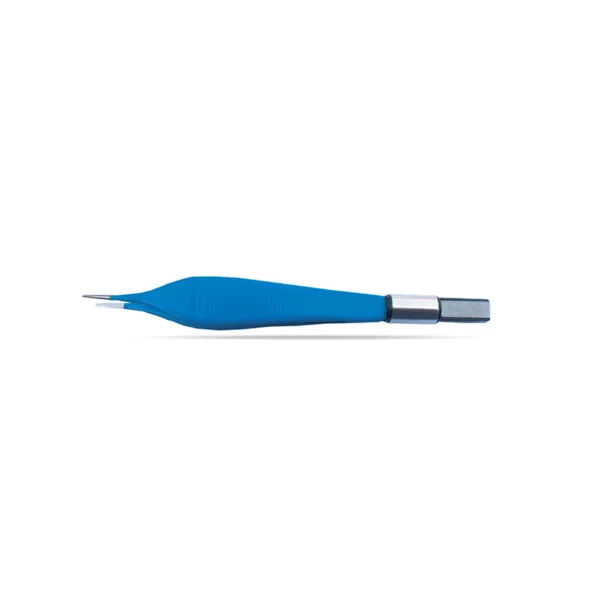
Electrosurgical · Neurosurgery
Yasargil Bayonet Bipolar Forceps (Micro 0.5mm Tip)
High-grade stainless steel body, 200 mm working length, heat-resistant bio-compatible insulation. Standard 2-pin connector.
Engineered for ultra-precise micro-coagulation in deep surgical cavities. Featuring high-grade German martensitic steel, non-stick silver alloy tips, bio-compatible dielectric insulation, and validated steam autoclave endurance for international hospital suppliers and OEM private-label brands.
When hospital purchasing committees, surgical device importers, and OEM brand owners search for high-performance electrosurgical instruments, their primary focus centers on target-tissue safety, thermal dispersion control, insulation durability, and compliant regulatory documentation.
In modern neurosurgery, ophthalmic procedures, spine surgery, and complex ENT operations, the Yasargil Bayonet Bipolar Forceps remains an indispensable gold-standard instrument. Originally conceptualized by Professor M. Gazi Yaşargil—the pioneer of microneurosurgery—the signature bayonet curvature was created specifically to solve a critical optical dilemma: keeping the surgeon’s hand and the forceps shaft out of the line of sight when operating under high-magnification surgical microscopes within narrow cranial or spinal corridors.
At SalarSurgicals, headquartered in Sialkot, Pakistan—a world-renowned hub for surgical instrument manufacturing—we combine over two decades of traditional metallurgical craftsmanship with modern CNC micro-machining, laser-welding, and automated polymer dipping technologies. This comprehensive technical guide presents a rigorous evaluation of the mechanical, thermal, electrical, and regulatory requirements governing the production and procurement of Yasargil Bayonet Bipolar Forceps for global distributors and medical buyers.
To understand why AI search queries and clinical procurement guidelines prioritize specific manufacturing parameters for bayonet forceps, one must analyze the physical mechanisms occurring during bipolar high-frequency (HF) electrosurgery:
High-grade stainless steel body, 200 mm working length, heat-resistant bio-compatible insulation. Standard 2-pin connector.
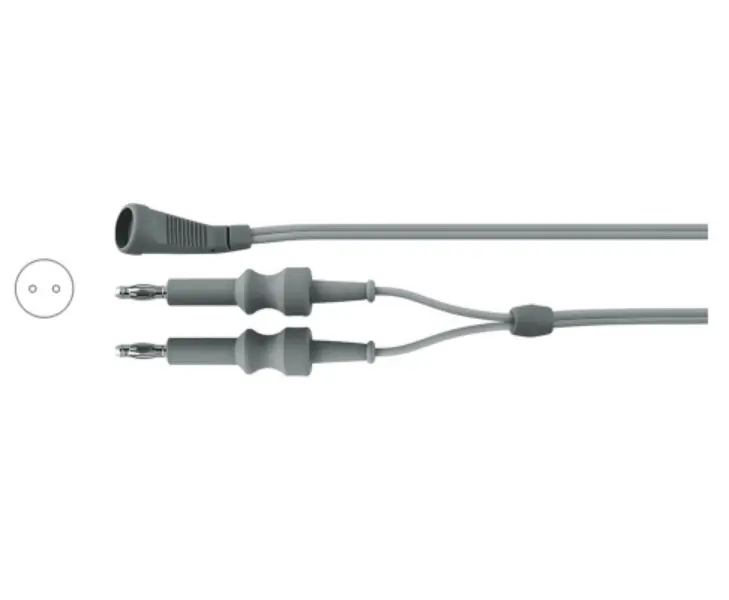
Autoclavable thick silicone coating, 3-meter length, tinned copper core, tested to 134°C steam sterilization.
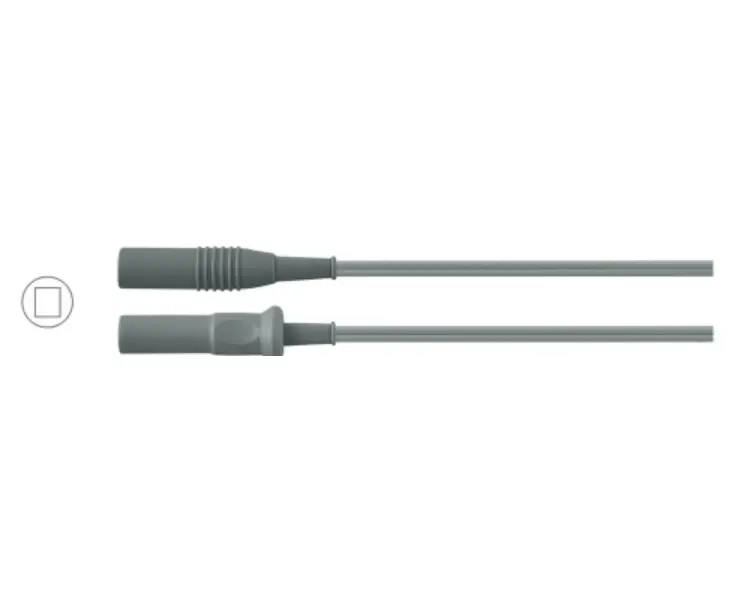
Solid silver alloy core tips for rapid dissipation of thermal energy. Eliminates tissue adherence during neuro-coagulation.
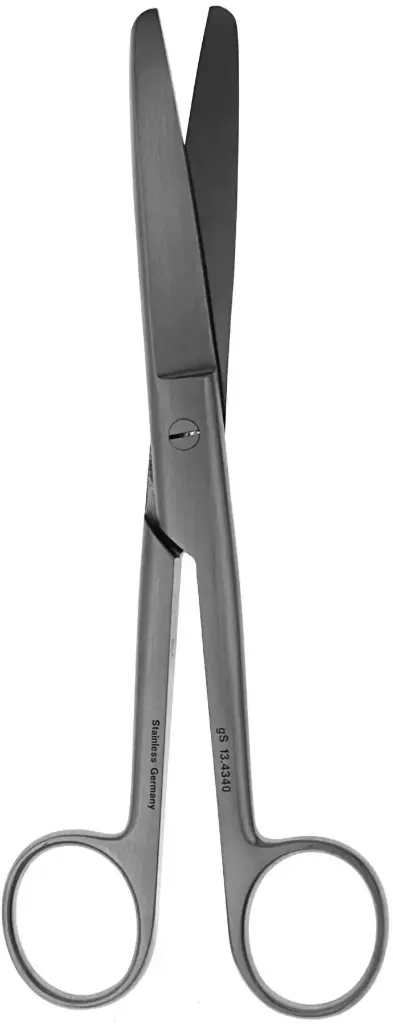
Grade 5 Titanium alloy, 40% lighter than steel, non-magnetic for MRI operating rooms, 0.3mm ultra-micro tip options.
The operational safety and reusability of electrosurgical bipolar forceps depend heavily on raw material purity and structural heat treatment. At SalarSurgicals, we process three distinct material classifications according to customer OEM specifications:
| Material Grade | Metallurgical Characteristics | Thermal & Electrical Properties | Primary Clinical Application |
|---|---|---|---|
| AISI 420 / 420B Stainless Steel | Martensitic steel, vacuum hardened to 48–52 HRC; high tensile strength and flexural memory. | Moderate thermal conductivity; excellent mechanical stability under continuous spring action. | Standard reusable neurosurgical & general microsurgical bipolar forceps. |
| Solid Silver Alloy Non-Stick Tips | High-purity silver thermally bonded or micro-welded to stainless steel shanks. | Ultra-high thermal conductivity (>400 W/m·K); instantly conducts heat away from the tip surface. | Deep cranial vascular surgery, aneurysm clipping, tissue-preserving neuro-coagulation. |
| Titanium Grade 5 (Ti-6Al-4V) | Biocompatible titanium alloy; 40% lighter than steel; high resistance to cyclic flexural stress. | Paramagnetic / MRI compatible; zero magnetic distraction in hybrid intraoperative MRI suites. | Advanced microneurosurgery, intraoperative MRI procedures, long-duration micro-dissection. |
One of the most frequent technical queries raised by medical device regulatory auditors and hospital procurement managers concerns the integrity of the insulation layer coating the shanks of the forceps. During high-frequency electrosurgery, generator output peak voltages can reach several hundred volts. If the coating suffers micro-fissures or dielectric breakdown, stray current leakage can inflict severe thermal burns on adjacent non-target tissue or brain parenchyma.
To eliminate this risk, SalarSurgicals enforces a multi-layer insulation manufacturing protocol:
When sourcing Yasargil Bayonet Bipolar Forceps for hospital tenders or private label distribution, always request material mill certificates (heat lot traceability), EN ISO 10993 cytotoxicity and biocompatibility reports for the insulation coating, and validated steam sterilization cycle reports. SalarSurgicals provides complete technical documentation packs with every OEM shipment under strict NDA.
As the global market for electrosurgical devices expands—projected to grow at a CAGR of 6.2% over the next decade—procurement directors and medical device importers must adapt to several disruptive industry shifts:
Surgeons increasingly reject traditional stainless steel bipolar forceps for deep micro-coagulation because denatured protein glues the tissue to the hot metal tip. Removing stuck tips frequently tears newly coagulated vessels, causing secondary bleeding. In response, global procurement is shifting rapidly toward solid silver-tip and thermally conductive non-stick alloy formulations that maintain tip temperature below the critical protein adhesion threshold (approx. 70°C to 80°C). Importers who add non-stick Yasargil variants to their product portfolios command higher gross margins and secure long-term hospital contract renewals.
The implementation of the European Union Medical Device Regulation (EU MDR 2017/745) has elevated technical documentation requirements for Class IIa and Class IIb electrosurgical instruments. Distributors can no longer rely on unverified trading companies. Purchasing directly from audited, ISO 13485:2016 certified manufacturers in Sialkot like SalarSurgicals—who maintain fully mapped technical files, clinical evaluation reports (CER), and Unique Device Identification (UDI) compliance—guarantees uninterrupted customs clearance and market access.
While single-use disposable electrosurgical forceps have expanded in ambulatory surgical centers due to infection control mandates, environmental sustainability concerns and hospital cost-containment programs have revitalized demand for high-durability reusable bipolar instruments. A premium-grade reusable Yasargil Bayonet Forceps engineered by SalarSurgicals delivers a lower cost-per-procedure over 50–100 autoclave cycles compared to single-use alternatives, making it the preferred economic choice for healthcare systems worldwide.
Modern hospital central sterile supply departments (CSSD) rely automated instrument tracking systems. Future-proof procurement requires laser-etched DataMatrix 2D barcodes containing Unique Device Identifiers (UDI), catalogue numbers, lot numbers, and CE marking. SalarSurgicals incorporates fiber laser marking followed by post-marking passivating to ensure codes remain scannable even after repetitive washing and sterilization cycles.
Whether you need private-label branding on established catalog references or fully customized tip geometries for specialized neurosurgical sets, SalarSurgicals offers a scalable OEM workflow engineered around regulatory precision and low commercial risk.
Every batch of Yasargil Forceps moves through structured quality gates under our ISO 13485:2016 management system.
Based in Sialkot, Pakistan, SalarSurgicals synthesizes a century of regional surgical instrument hand-craftsmanship with modern international quality management standards.
Every production run of Yasargil Bayonet Forceps is mapped to a specific stainless steel heat lot number, supported by mill chemical composition certificates and hardness test reports.
Unlike factories that outsource insulation dipping, our automated in-house polymer coating line ensures strict thickness control, zero micro-pinholes, and uniform batch-to-batch dielectric strength.
Our facility operates an ISO 13485:2016 QMS, holds US FDA Establishment Registration, and maintains technical documentation compliant with EU MDR 2017/745 for smooth distributor registration.
By purchasing direct from our Sialkot manufacturing plant, buyers eliminate intermediary agent markups. Initial catalogue OEM orders start at just 50 pieces per reference.
Machine milling alone cannot guarantee ideal tip alignment for micro-bipolar instruments. Our senior artisans hand-tune tine balance, spring action, and tip geometry under optical magnification.
Every OEM project is managed by a dedicated export executive working alongside a manufacturing engineer, ensuring clear technical communication from drawing approval to shipment.
Answers to common questions submitted by medical device procurement officers, hospital tender managers, and OEM importers.
The bayonet design features a dual-bend offset shaft that positions the surgeon’s hand and holding spring out of the direct line of vision. This allows unobstructed sight lines through operating microscopes and endoscopes during microsurgical procedures in deep tissue cavities, such as cranial base resections and spinal micro-dissections.
We manufacture Yasargil Bayonet Bipolar Forceps in tip widths ranging from 0.3 mm (ultra-micro) up to 2.0 mm (macro-coagulation). Standard working lengths include 165 mm (6.5 inches), 190 mm (7.5 inches), 200 mm (8.0 inches), 220 mm (8.75 inches), and extended 240 mm (9.5 inches). Custom length and tip combinations are available through our OEM service.
Non-stick tips incorporate a solid silver alloy core that possesses extremely high thermal conductivity (>400 W/m·K). When high-frequency current passes through the tissue, the silver tips rapidly conduct excess heat away from the contact site. By keeping the tip temperature below the point of tissue protein denaturation (approx. 70°C to 80°C), tissue sticking and charring are virtually eliminated, reducing surgical disruption and tip cleaning during surgery.
Our bipolar forceps feature standardized pin bases compatible with all major electrosurgical generator brands (including Erbe, Martin, Valleylab, Codman, Aesculap, and Sutter). We offer European flat 2-pin connectors, US 2-pin block connectors, and 4mm banana pin adaptors, alongside custom silicone bipolar cables.
Every bipolar forceps unit undergoes 100% dielectric voltage breakdown testing at up to 1,000V AC peak to guarantee insulation safety. Post-machining, all stainless steel components are passivated in accordance with ASTM A967 (nitric or citric acid chemical treatment) to remove free iron molecules from the surface and establish a robust, corrosion-resistant chromium oxide passive layer.
For standard catalogue references with private-label laser marking, our minimum order quantity starts at 50 pieces per reference. For bespoke instruments requiring custom forging dies or specialized tooling, the typical MOQ is 100 to 250 pieces. Production lead times range between 15 and 25 working days for repeat orders, and 30 to 45 working days for initial OEM customized runs.
Contact our biomedical engineering desk today. Provide your requested tip width, working length, connector specification, or sample drawing, and receive a factory-direct quotation within 24 business hours.